
First Time Turning on the Heat? Differentiating Normal Dust Burn-Off from Electrical Issues
That First Chilly October Morning: Why Your Heater Smells Like It's Burning
When that first chilly October morning in the Coachella Valley finally arrives, our team at Absolute Air Conditioning and Heating knows you might find yourself asking a critical question. Knowing what to do your First Time Turning on the Heat? Differentiating Normal Dust Burn-Off from Electrical Issues is a necessary skill for any homeowner when a sudden, alarming odor fills the hallway. You walk to the thermostat, switch the system from cooling to heating, and within minutes, a distinct burning smell begins pouring out of your vents. It is an incredibly jarring sensory experience that immediately triggers a fight-or-flight response. Your first instinct might be to panic, assuming the furnace is catching fire, but in our experience serving Palm Desert, the reality is often much less dramatic.
If you need professional heating services or emergency heating repair in Palm Desert, our team is ready to help.
The core decision you face in this moment is knowing whether to immediately shut off the system to prevent an emergency, or simply wait for a harmless layer of dust to clear out of the ductwork. While a burning smell is incredibly common during the initial seasonal startup, distinct odors require entirely different responses. A musty, dusty scent usually means your system is just shaking off the summer cobwebs. However, a sharp, chemical, or plastic-like odor signals a genuine hazard. By understanding exactly what is happening inside your HVAC cabinet, you can de-escalate your own panic while keeping your home and family completely safe.
Why Coachella Valley HVAC Systems Accumulate So Much Summer Dust
To understand why your heater smells like a dusty campfire, you have to look at what the system has been doing for the better part of a year: absolutely nothing. At Absolute Air Conditioning and Heating, we consistently see how heating elements sit completely dormant during the extended Coachella Valley cooling season. While your air conditioner has been working overtime, the internal heating components—specifically the heat exchanger and the burner assembly—have been sitting in the dark, quietly collecting debris.
The Desert Environment Factor
Palm Desert and the surrounding Coachella Valley feature a uniquely arid climate combined with frequent, intense wind events. These seasonal winds kick up massive amounts of fine particulate matter. Even with high-quality air filters in place, microscopic desert dust, pet dander, and household lint inevitably find their way into the inactive portions of your HVAC system over the long summer. Because the furnace cabinet is not completely airtight, this fine dust settles in a surprisingly thick, even layer across the cold metal surfaces of the heat exchanger.
The Ignition Bake-Off
When you finally switch your thermostat to heating mode on that first chilly October morning, the system undergoes a rapid temperature transformation. The burners ignite, and the heat exchanger goes from room temperature to several hundred degrees in a matter of seconds. As this metal heats up, it instantly bakes the accumulated layer of settled debris. The fine desert dust literally incinerates on contact. The resulting smoke and odor are then pushed directly into your home's ductwork by the blower fan. Our technicians always remind customers that this is a completely normal mechanical process. It is simply the system cleaning itself off, not a sign of mechanical failure or impending danger.
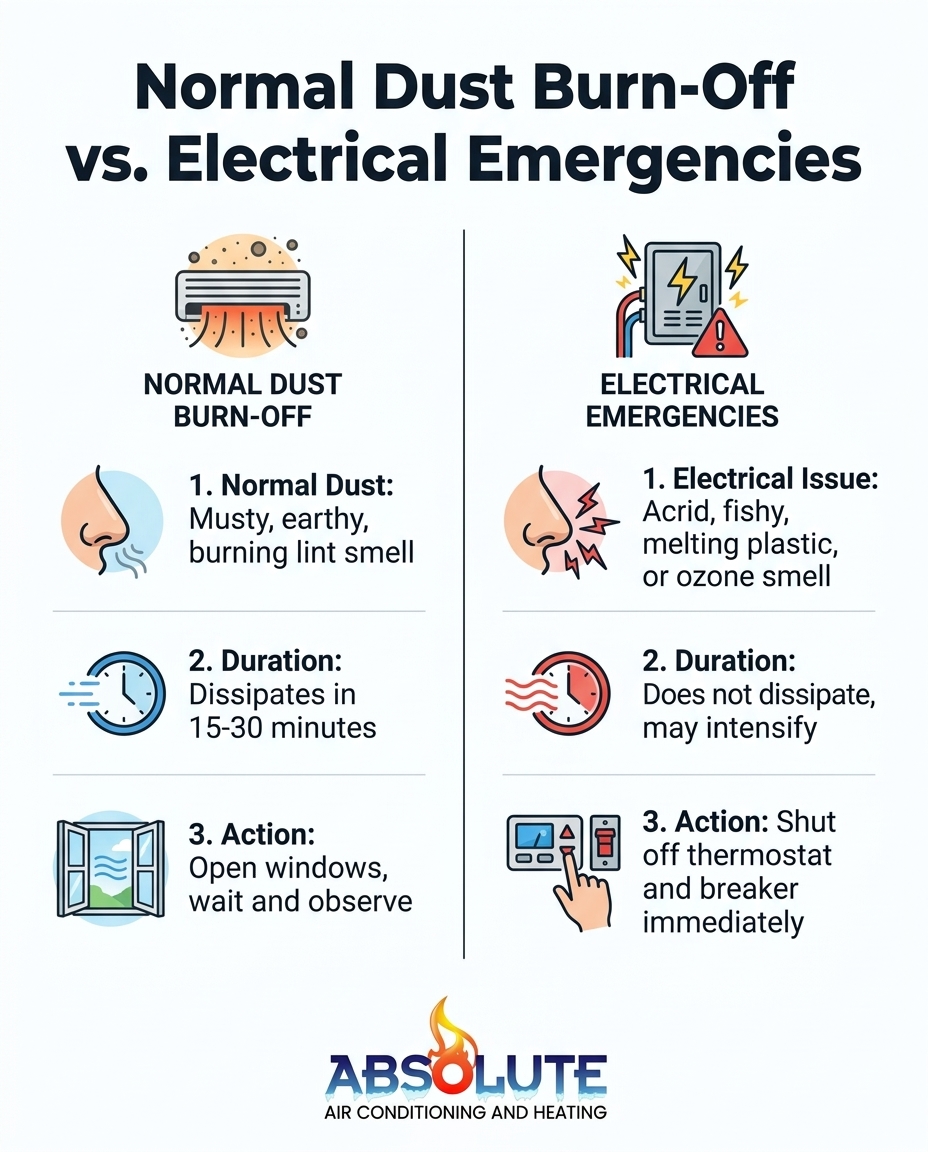
Sensory Checklist: Normal Dust Burn-Off vs. Electrical Emergencies
Because visual smoke is rarely present during the early stages of an HVAC issue, your sense of smell is your most valuable diagnostic tool. Knowing exactly what to sniff for can mean the difference between opening a window and calling for emergency intervention. Use the following sensory checklist to immediately identify your specific odor.
• Primary Scent — Normal Dust Burn-Off: Musty, earthy, or smells like burning lint and old hair. — Electrical Emergency: Acrid, sharp, chemical, or smells like melting plastic.
• Specific Odors — Normal Dust Burn-Off: Smells like a hot vacuum cleaner or a dusty attic space. — Electrical Emergency: Can smell "fishy," like urine, or like an ozone thunderstorm.
• Duration — Normal Dust Burn-Off: Dissipates entirely within 15 to 30 minutes of continuous operation. — Electrical Emergency: Does not fade. Often grows stronger and more pungent over time.
• Physical Reaction — Normal Dust Burn-Off: Mildly annoying, might cause a slight sneeze. — Electrical Emergency: Burns the nostrils, causes eye watering, triggers headaches.
• Required Action — Normal Dust Burn-Off: Open windows, wait, and observe the system. — Electrical Emergency: Shut off the thermostat and breaker immediately.
By comparing the smell in your home to this chart, you can quickly categorize the threat level. Normal dust burn-off is an earthy nuisance, while electrical failures produce harsh, unnatural chemical scents that demand immediate respect.
The 15 to 30-Minute Rule for Safe Dust Burn-Off Observation
As a trusted local educator in the Coachella Valley, our team at Absolute Air Conditioning and Heating wants to give homeowners a practical, non-alarmist rule to follow before they spend money on a service call. If you have identified the smell as musty dust rather than melting plastic, you can safely monitor the system using the 15 to 30-minute rule. This gives the furnace enough time to complete its natural cleaning process.
1. Open your windows for cross-ventilation: Before doing anything else, open a few windows near the main living areas. This allows the incinerated dust particles to escape the home rather than recirculating through your return vents.
2. Leave the system running continuously: It is highly tempting to turn the heater off as soon as you smell the odor. However, turning the system on and off repeatedly will only prolong the burn-off process. The heat exchanger needs to reach its maximum temperature to fully bake off the debris.
3. Set a timer for 15 to 30 minutes: Establish a strict time boundary. Under normal circumstances, the burning dust odor should noticeably decrease and disappear entirely within this half-hour window.
4. Evaluate the air quality: If the smell persists beyond this timeframe, or if it suddenly shifts from a dusty smell to a sharp chemical odor, it elevates from a normal occurrence to a potential issue that requires professional attention.
If you consistently struggle with heavy dust accumulation in your home, it might be worth exploring indoor air quality services to help reduce the amount of fine particulate matter circulating through your ductwork year-round.
Identifying the Acrid Smell of Melting Wire Insulation
While dust is harmless, electrical failures are not. It is vital to know exactly what a true emergency smells like so you can act decisively. Electrical fires in HVAC systems rarely produce visible smoke immediately. The heavy metal cabinet contains the early stages of the malfunction, making odor your primary—and sometimes only—warning sign.
The Chemistry of Overheating Wires
Most electrical wiring inside your furnace is coated in PVC (polyvinyl chloride) insulation. When an electrical component begins to draw too much amperage, or when a connection comes loose, the wire heats up rapidly. As the PVC insulation begins to melt, it off-gasses specific chemicals known as amines. To the human nose, these amines smell distinctly "fishy" or strongly like urine. If you turn on your heater and smell dead fish or melting plastic, you are not smelling dust—you are smelling the chemical breakdown of wire insulation.
The Danger of Hidden Arcs
Aging components, loose terminal connections, or improper previous wiring jobs can also lead to electrical arcing. This happens when electricity jumps across a gap between two conductors. Arcing superheats the surrounding air, creating a sharp, metallic "ozone" smell. It is the exact same scent you might notice in the air right after a heavy lightning storm. Whether you smell fish, melting plastic, or ozone, these odors indicate severe electrical distress. Re-evaluating your setup with essential HVAC installation tips in mind can help you understand why proper initial wiring is so critical to preventing these long-term hazards. Remember: a chemical or electrical scent will never fade over time like dust; it will only grow stronger as the wires continue to melt.
Emergency Safety Protocols: What to Do If You Suspect an Electrical Issue
If your sensory checklist points to an electrical problem, or if the musty dust smell persists well beyond the 15 to 30-minute safe observation window, you must take immediate action. Just as mechanical failures demand urgent attention during extreme weather—like one local homeowner who reached out to our team during an unseasonably freezing fall night when their aging furnace began emitting a strong burning plastic odor, prompting us to dispatch a technician immediately to safely secure the system—winter electrical issues require the exact same urgency.
1. Immediately turn the thermostat to the "Off" position: Stop the system from calling for heat. This halts the immediate sequence of operations, though power may still be flowing to the unit.
2. Locate your home's electrical panel: Find your main breaker box and locate the dedicated breaker labeled for your HVAC system or furnace.
3. Flip the dedicated breaker to cut all power: Push the breaker firmly to the "Off" position. This completely severs the electrical current flowing to the compromised wires, stopping the melting process and eliminating the fire risk.
4. Do not attempt to open the furnace cabinet: Never try to inspect the wiring, circuit boards, or blower motor yourself. The internal capacitors hold dangerous electrical charges even after the breaker is flipped, posing a severe shock hazard.
5. Contact a licensed professional: Call our team at Absolute Air Conditioning and Heating for emergency diagnostics. Only a trained technician has the tools to safely test for grounded wires, failed relays, or short circuits.
Preventing the Fall Furnace Panic with Pre-Season Preparation
The best way to handle the anxiety of the first chilly October morning in the Coachella Valley is to prevent the burning smell from happening in the first place. At Absolute Air Conditioning and Heating, we always tell our customers that proactive pre-season preparation entirely eliminates the guesswork of furnace startup.
The Critical Air Filter Swap
Before you even think about switching the thermostat to heating mode, you must swap out your air filter. Over the long summer, your filter has trapped massive amounts of dust, pollen, and pet dander. Starting your heater with a clogged filter restricts airflow, which causes the heat exchanger to run significantly hotter than designed. This not only makes the dust burn-off smell much worse, but it also puts unnecessary strain on your blower motor.
The Value of Professional Inspections
Routine professional fall maintenance includes safely cleaning the heat exchanger and burner assembly before the initial ignition. When our technicians perform this service, we remove the accumulated desert dust manually, meaning there is nothing left to incinerate when you finally turn the system on. Furthermore, these routine inspections catch frayed wires, loose connections, or failing electrical components before they have a chance to melt or spark.
When it comes time to completely replace an aging system, careful selection and professional installation make all the difference. One local customer spent time interviewing six different contractors before choosing Absolute Air Conditioning and Heating to install two new TRANE systems last fall. We spent two full days completing the installation to ensure every detail met their high expectations. You can achieve that same peace of mind for your existing system by scheduling routine heating maintenance before the cold weather sets in.
Frequently Asked Questions About Fall Heating Startup Smells
How long does the burning dust smell last from a heater?
Typically, the burning dust odor dissipates within 15 to 30 minutes of continuous operation. As the heat exchanger reaches its maximum temperature, the accumulated debris quickly incinerates and clears out of the system. It may take slightly longer if the system is turned on and off repeatedly, as the furnace never reaches the sustained heat required to finish the process.
What does an electrical fire smell like in HVAC?
An electrical fire in your heating system smells distinctly acrid, resembling melting plastic or harsh chemicals. Surprisingly, overheating PVC wire insulation often produces a strong fishy or urine-like odor due to the release of amines. If you detect any of these unnatural scents, it is a clear indicator of melting components, not harmless dust.
When should I turn off my heater if it smells?
You should turn off your heater immediately if the smell is electrical, chemical, or resembles melting plastic. If the odor is simply musty dust, you should turn the system off only after the safe 15 to 30-minute observation window has passed and the smell persists without fading. Always err on the side of caution if you are unsure.
Should I be worried if my heater smells like burning plastic?
Yes. Burning plastic is never a normal operational smell for any HVAC system. This specific odor strongly indicates melting wire insulation, a failing capacitor, or a foreign plastic object that has fallen into the ductwork and is resting against the heat exchanger. Shut off the breaker immediately and call a professional.
Can dust burn-off trigger my smoke alarms?
It is rare, but it is certainly possible if the dust accumulation is severe. If your return vents are located very close to sensitive smoke detectors, the initial blast of incinerated particulate matter can occasionally trigger an alarm. Opening windows during the first startup helps prevent this from happening.
Why does my heater smell like fish or ozone?
Fish odors come directly from overheated PVC wire insulation breaking down under extreme electrical loads. Ozone smells, which mimic the air after a lightning strike, indicate electrical arcing or sparking within the cabinet. Both of these odors require immediate system shutdown and professional diagnostics.
Get Peace of Mind with Professional Heating Diagnostics
Navigating your First Time Turning on the Heat? Differentiating Normal Dust Burn-Off from Electrical Issues doesn't have to be a stressful event. By paying close attention to the specific odors coming from your vents, you can confidently determine whether your system is just shaking off the summer dust or crying out for help. Remember that while dust burn-off is a brief, harmless nuisance that clears up in under half an hour, electrical odors demand immediate respect and swift action at the breaker box.
You deserve the satisfaction of knowing your heating system is operating safely and efficiently for the winter ahead. If you have run through the sensory checklist, waited out the observation window, and still have lingering doubts about what you are smelling, do not take chances with your home's safety. Encourage peace of mind by scheduling a professional diagnostic check with Absolute Air Conditioning and Heating to ensure your furnace is ready to keep you warm all season long.
Serving the Entire Coachella Valley

The Real Cost of Ignoring Your Attic HVAC Unit's Fall Inspection
After a grueling summer, minor wear and tear in an attic HVAC unit can quickly snowball into a major winter breakdown. See why skipping a seasonal checkup puts your entire system at risk.
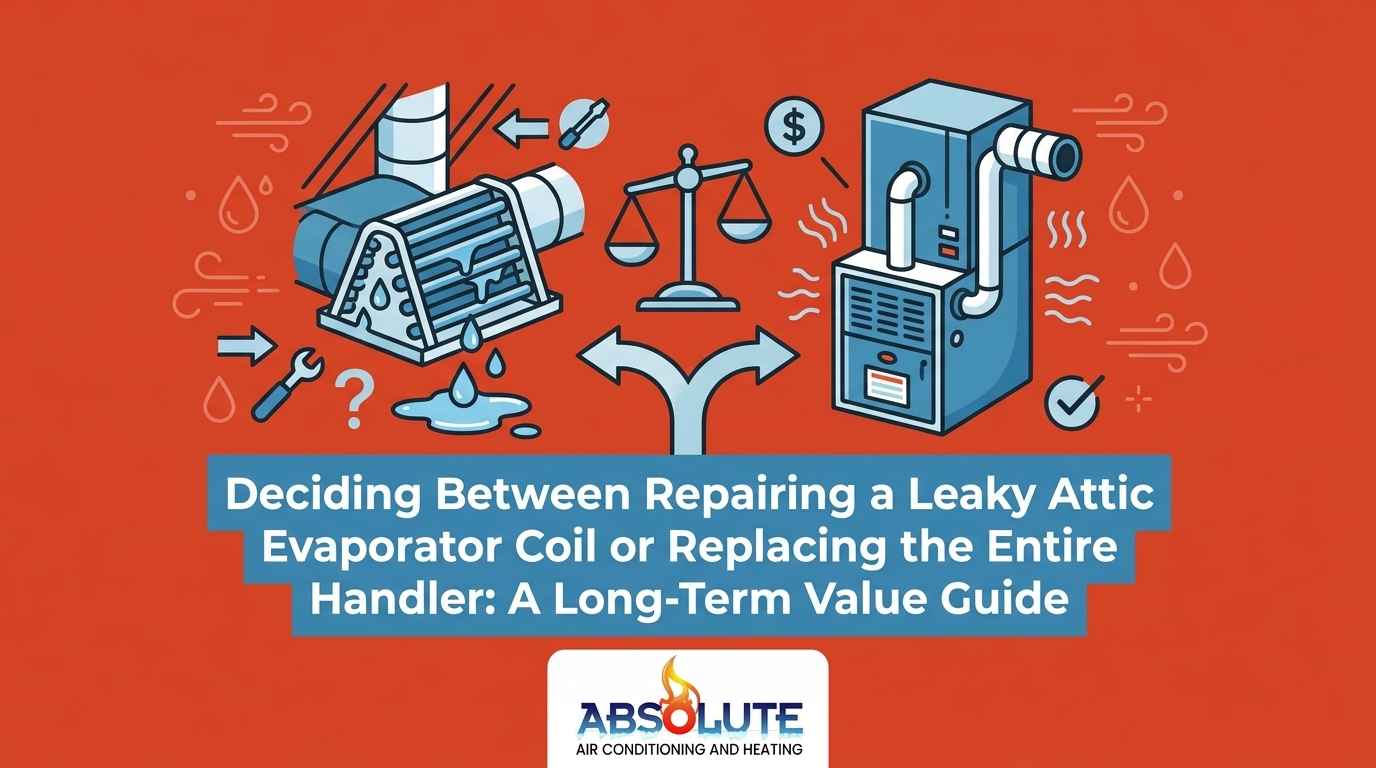
Deciding Between Repairing a Leaky Attic Evaporator Coil or Replacing the Entire Handler
Facing a refrigerant leak as the seasons change? Weigh the long-term value and technical viability of a drop-in coil repair versus upgrading your entire air handler.
Why September is the Critical Window for Testing Your Furnace's Ignition Sequence
Summer heat leaves dormant heating components vulnerable to failure. Testing the ignition system in early fall prevents a sudden no-heat emergency when nighttime temperatures drop.

