

The Impact of Palm Desert's September Monsoonal Moisture on Your AC's Condensate Line
Surviving the Late-Summer Shift: When Dry Heat Turns to Heavy Humidity
As the peak summer temperatures begin to soften, understanding the impact of Palm Desert's September monsoonal moisture on your AC's condensate line becomes critical for protecting your home. Late summer in the Coachella Valley brings a sudden, sticky weather shift that catches many homeowners completely off guard. You are used to your air conditioning system battling dry, relentless heat for months, but as the seasons transition, the atmosphere changes drastically. The air grows heavy, the humidity spikes, and your hidden cooling equipment is suddenly forced to perform a completely different type of heavy lifting.
For expert air conditioning services to prepare your system for this seasonal shift, or if you need immediate AC repair in Palm Desert, Absolute Air Conditioning and Heating is ready to help.
While you feel this sticky humidity on your skin, your attic air conditioning equipment bears the mechanical brunt of the weather change. The sudden influx of September monsoonal moisture turns your cooling system into a massive water-extraction machine. Systems that were perfectly fine managing dry heat in July can quickly become overwhelmed. When drain lines are pushed past their capacity, the immediate risk is sudden, messy ceiling leaks. Establishing a routine of proactive professional intervention before this property damage occurs is the smartest move a homeowner can make during this late-summer transition.
The Mechanics of Monsoonal Moisture: How Humidity Overwhelms Your System
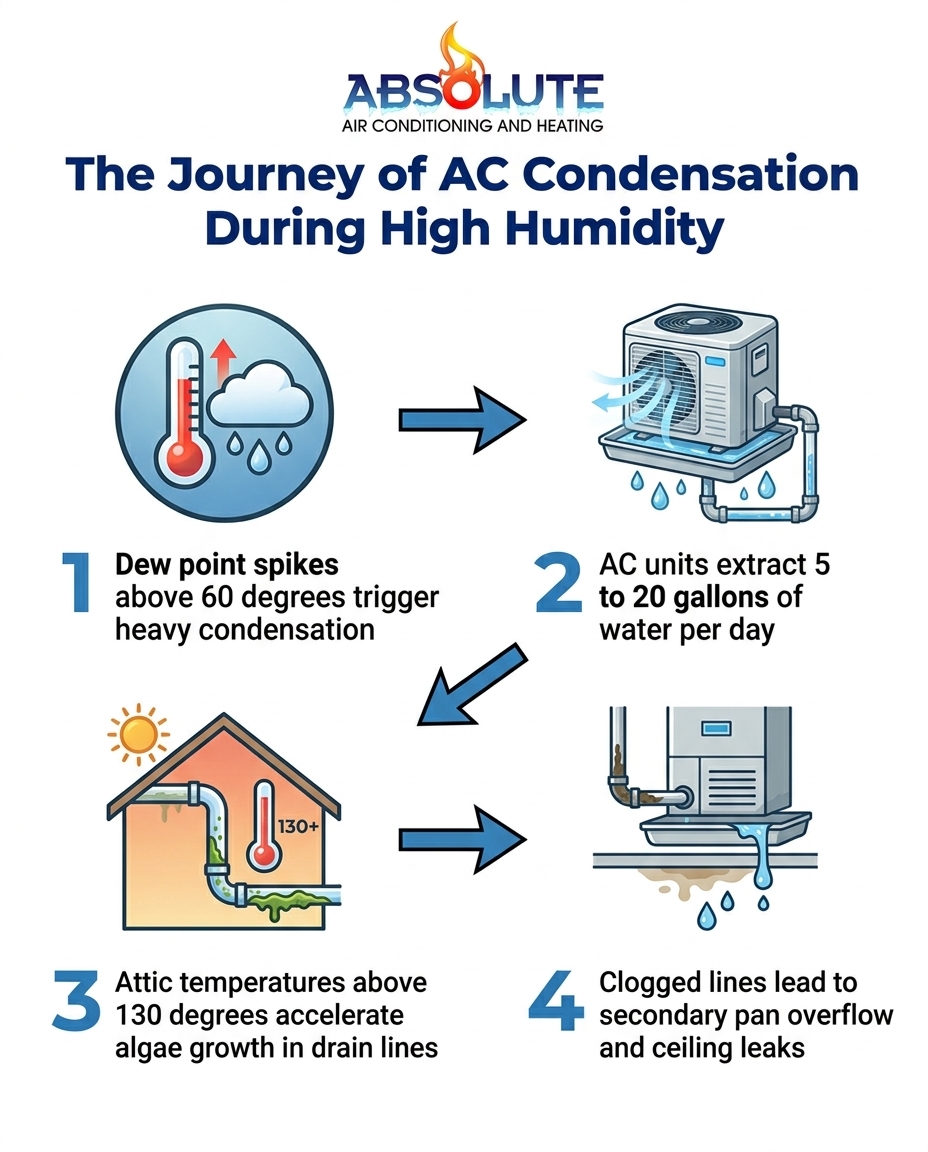
To understand why late summer is so stressful for your cooling equipment, you have to look at the science of condensation. During the early summer months, the desert air is famously dry. Your air conditioner focuses almost entirely on lowering the temperature. However, as September monsoonal moisture rolls into the region, dew points frequently spike above 60 degrees. This suddenness rapidly changes how your AC operates.
As your system draws in this warm, sticky air and passes it over the freezing-cold indoor coil, massive amounts of water condense on the metal fins—much like water beads forming on the outside of a cold glass of iced tea on a hot afternoon. During these high-humidity spikes, a standard residential central air conditioner can extract anywhere from 5 to 20 gallons of water per day. That is a staggering volume of liquid that must safely flow out of your home through a pipe no wider than a golf ball.
• June/July Extreme Dry Heat — Primary AC Function: Temperature reduction — Daily Water Extraction: Minimal (under 5 gallons) — Drain Line Stress Level: Low
• September Monsoonal Moisture — Primary AC Function: Cooling and Dehumidification — Daily Water Extraction: High (5 to 20 gallons) — Drain Line Stress Level: Severe
From Cooling to Dehumidifying
During these sticky weeks, your evaporator coil essentially acts as a whole-house dehumidifier. This sudden influx of moisture forces the system to work much harder to keep you comfortable. Because humid air holds heat more effectively than dry air, your thermostat might read a cool temperature, but the house still feels uncomfortable if the moisture isn't removed. This is often a contributing factor to why your AC unit runs non-stop after sunset. There is a direct, unavoidable correlation between your indoor comfort and the gallons of water draining from your unit. If that water cannot escape freely, the entire cooling process breaks down.
The Hidden Danger Above: Vulnerabilities of Attic HVAC Installations
The sheer volume of water produced during a humidity spike is only half of the problem. The other half lies in where that water is being generated. Palm Desert homes with attic HVAC installations face a unique, localized risk because heavy, water-generating equipment is positioned directly over your living spaces. A ground-level unit that overflows simply creates a harmless puddle in the dirt. An attic unit that overflows creates an immediate, expensive ceiling emergency.
The Algae Incubation Chamber
Your attic is a brutal environment. During the day, attic temperatures can easily exceed 130 degrees. This extreme, trapped heat creates the perfect incubation chamber for biological growth. Here is how a typical drain line failure progresses during the late summer:
1. The Dust Accumulation: Throughout the dry months of June and July, fine desert dust bypasses your air filter and settles in the drain pan and condensate line.
2. The Moisture Introduction: September monsoonal moisture hits, dumping gallons of warm water into that dusty pan.
3. The "Mud" Effect: The dry summer dust mixes with the sudden heavy condensation, creating a thick, sludgy mud.
4. The Biological Bloom: The 130-degree attic heat bakes this muddy water, causing algae and biological slime to grow at an accelerated rate, turning a slow-draining line into a complete, impenetrable blockage.
When the primary line clogs, water spills into a secondary drain pan. However, if that secondary pan has been neglected, is rusted, or is improperly angled, it will quickly fail, sending gallons of water directly onto your drywall.
Recognizing the Warning Signs of an Overwhelmed Condensate Line
Because these systems are hidden away in dark, sweltering attics, homeowners rarely see a problem developing until it is too late. However, your cooling system will usually give you a few subtle hints that it is struggling to manage the September monsoonal moisture. Catching these symptoms early can mean the difference between a routine maintenance call and a major drywall repair project.
Here are the primary warning signs to watch for in Palm Desert homes with attic HVAC installations:
• Musty or biological odors: If you notice a damp, dirty sock smell coming from your air vents when the system kicks on, it usually means stagnant water and algae are sitting in your drain pan. This is a clear indicator that you may need professional indoor air quality services alongside a drain clearing.
• Unexplained water stains: Keep an eye on the ceiling near your AC return vent. Even a faint, yellowish water ring or slightly bubbling paint indicates that the secondary drain pan is already overflowing.
• Unexpected system shutdowns: Modern air conditioners are equipped with a safety float switch. If water backs up in the drain line, this switch trips and shuts the entire system down to prevent a flood. If your AC suddenly stops working during a humid afternoon, a clogged line is a highly likely culprit.
• Gurgling or slurping sounds: Listen closely to the refrigerant lines or the PVC drain pipes. A gurgling sound often means air is struggling to pass through a pipe that is partially blocked by sludge or standing water.
Why DIY Drain Clearing is a Risky Gamble for Attic Units
When faced with a clogged drain line, some homeowners are tempted to look up quick fixes online. While clearing a ground-level drain might seem straightforward, attempting DIY maintenance on attic installations is a significant gamble that often ends in property damage or physical injury. The sheer complexity of navigating a cramped, truss-filled space makes it a job strictly for licensed professionals.
The Physical Danger: First and foremost is the extreme environment. Navigating a 130-degree attic environment requires specific safety protocols. Heat exhaustion can set in within minutes, and one misstep off a joist can send you crashing through the ceiling into your living room.
The Risk to Your Equipment: The PVC pipes used for condensate drains become incredibly brittle after years of baking in the desert heat. Applying too much pressure, or using improper tools like wire hangers or high-pressure air bursts, can easily crack the pipe. Worse, improper tools often just push a thick sludge clog deeper into the plumbing system where it becomes impossible to reach.
The Chemical Hazard: Online forums frequently suggest pouring harsh chemicals, bleach, or heavy-duty drain cleaners down the condensate line. This is a terrible idea. These corrosive chemicals can eat away at the thin metal of your evaporator coil, permanently damaging the unit and instantly voiding your manufacturer's warranty. A licensed professional has the right specialized vacuums and safe, non-corrosive treatments to evaluate and clear the entire condensate management system safely.
Securing Your Home with a Pre-Fall Professional Tune-Up
As the intense summer weather begins to break, transitioning out of peak cooling season does not mean you can ignore your equipment. In fact, the late-summer humidity spike makes a pre-fall professional tune-up absolutely urgent. This is the time to clear out the summer dust, remove biological growth, and ensure your system is prepared for the upcoming heating season.
As seasoned local experts, Absolute Air Conditioning and Heating understands the unique toll the Coachella Valley's late-summer monsoons take on hidden attic equipment. A typical pattern we see is when a local homeowner reaches out during a brutal stretch of summer—like a recent case in Palm Springs where temperatures were regularly topping 110 degrees—needing someone who could provide honest, reliable service without the runaround. A technician arrived promptly, diagnosed the struggling system, and got it back on track, giving the customer a dependable team they could count on. That same level of detail-oriented care applies to preventing water damage before it starts.
What a Professional Condensate Clearing Includes
When you schedule AC maintenance specifically tailored for the transition out of summer, a technician performs a comprehensive evaluation of your water management components. This process moves you from reactive worry to proactive peace of mind:
1. Safe Algae Removal: Technicians use specialized, high-suction vacuum equipment to pull clogs out of the line safely, rather than pushing them deeper.
2. Safety Switch Testing: The safety float switch is manually tested to ensure the automatic shutoff will actually work if an emergency occurs.
3. Drain Pan Evaluation: The secondary drain pan is carefully inspected for rust, micro-leaks, and proper sloping so that it functions correctly if the primary line ever fails.
4. Line Flushing and Treatment: The lines are flushed with safe, industry-approved treatments that prevent algae from returning during the remaining humid weeks of September monsoonal moisture.
Frequently Asked Questions About AC Condensation and Humidity
Does high humidity cause AC to leak?
High humidity causes the AC to produce significantly more condensation, which can lead to a leak if the drain line is clogged or the pan is damaged. When the air is heavy with moisture, your system extracts gallons of water daily. If the pathways meant to carry that water away are blocked by dust or algae, the water has nowhere to go but over the sides of the drain pan.
How do I know if my AC condensate line is clogged?
Signs include water stains on the ceiling, a musty smell from vents, or the AC turning off automatically due to a triggered float switch. You might also hear a gurgling sound coming from the indoor unit. If your system runs fine but suddenly shuts down during the hottest, most humid part of the day, a backed-up drain line is the most common culprit.
Why is my AC leaking water from the ceiling?
This typically indicates that an attic-based AC unit has a clogged primary condensate line, and the secondary drain pan has overflowed or failed. Because Palm Desert homes frequently use attic installations, the equipment sits directly above your drywall. Once the safety pan fills up, the water seeps through the insulation and ruins the ceiling below.
What happens if your AC drain line is clogged?
Water backs up into the drain pan. If the safety switch fails, it will overflow, potentially causing severe water damage to ceilings and walls. Beyond structural damage, standing water in the drain pan becomes a breeding ground for mold and bacteria, which is then circulated throughout your home's breathing air.
How much water should an AC drain during late summer in the desert?
During monsoonal humidity spikes, it is normal for a central AC to drain 5 to 20 gallons of water per day, emphasizing the need for a clear drain line. While you might only see a small trickle during the dry heat of June, the volume increases exponentially when September monsoonal moisture arrives, severely testing your unit's plumbing.
Protect Your Ceiling Before the Next Humidity Spike
The hidden danger of attic units during late-summer humidity is a threat that no homeowner should ignore. Allowing September monsoonal moisture to overwhelm a neglected condensate line is a fast track to ruined drywall, structural damage, and stressful cleanup. You do not have to wait for a mysterious water stain to appear above your hallway to take action.
Securing the peace of mind that comes with a professionally cleared condensate line is simple. By addressing the unique vulnerabilities of Palm Desert homes with attic HVAC installations now, you ensure your system runs cleanly and safely through the remainder of the warm season. Protect your home and schedule your pre-fall tune-up today. For dependable, detail-oriented AC repair in Palm Desert, trust the experts who know exactly how to handle the desert's most challenging weather shifts.
Serving the Entire Coachella Valley


Assessing Your Home's Heating Needs: When a Heat Pump Outperforms a Gas Furnace in the Desert
Don't wait for the first freezing night to replace your aging heater. See why a high-efficiency heat pump often beats a traditional gas furnace for unique desert climate swings.

Why Your Heat Pump Blows Cold Air on the First Chilly Palm Desert Morning
Turning on your heat pump on a chilly October morning only to feel a cool breeze can cause instant panic. Understand the science behind this harmless temperature illusion versus an actual breakdown.

The Real Cost of Ignoring Your Attic HVAC Unit's Fall Inspection
After a grueling summer, minor wear and tear in an attic HVAC unit can quickly snowball into a major winter breakdown. See why skipping a seasonal checkup puts your entire system at risk.

