
Preparing Your Palm Desert Rental Property's HVAC for Snowbird Season
The Hidden Toll of Extreme Summer Heat on Vacant Palm Desert Properties
Preparing Your Palm Desert Rental Property's HVAC for Snowbird Season is a task that often catches absentee owners off guard when a house has been sitting empty since May. Your thermostat is dialed up to a conservative setting, the doors are locked, and you assume the air conditioning system is resting safely. However, the reality of property management in the desert is far more complicated. Leaving a home vacant does not mean the mechanical systems experience zero wear and tear. In fact, unnoticed issues like dried-out drain lines, baked electrical components, and heavy dust infiltration develop silently over the summer months. To ensure your property is ready for incoming tenants, scheduling professional heating services is a necessary step to catch these hidden problems before they escalate.
A typical pattern we see is out-of-state landlords assuming a system is perfectly ready for winter simply because it survived the summer without triggering a smart thermostat alert. Palm Desert experiences over 100 days a year above 100°F, creating a brutal environment for rooftop package units and external components, even when the home is completely empty. The intense radiant heat beats down on the metal casing, baking the internal wiring and rubber belts day after day.
This creates a distinct decision point for absentee owners. You must determine the specific professional checks required before winter tenants arrive, rather than relying on a generic fall checklist. A standard residential tune-up assumes the system has been running normally in an occupied home. A vacant property requires a specialized approach to reverse the unique degradation caused by prolonged stagnation in extreme ambient temperatures.
The Mechanical Reality of 'Minimal Cooling' Settings
Most property managers follow the standard advice of setting the thermostat to 85°F or 90°F to protect drywall, cabinetry, and appliances from extreme thermal expansion. While this is the correct approach for the home's interior, it places an immense, often misunderstood burden on the HVAC equipment.
Here is the mechanical reality: an 85°F indoor setting still requires the air conditioner to fight against 115°F ambient outdoor temperatures. The system is constantly battling a massive temperature differential. This leads to hundreds of hidden run hours throughout the summer. Because the home is unoccupied, no one is there to notice if the system starts short-cycling, if a fan motor begins to struggle, or if the airflow drops.
As the trusted local eyes and ears for out-of-state property owners who cannot physically monitor this summer wear and tear, we consistently find that minimal cooling settings stress the equipment in ways that demand comprehensive AC maintenance before the cooling season officially ends.
Component Degradation in Idle Systems
When a system runs infrequently but under extreme thermal stress, specific components degrade much faster than they would in a heavily used, occupied home.
• Thermal stress on electrical components: Capacitors and contactors are highly sensitive to heat. Sitting in a metal box on a roof that reaches 140°F causes the internal fluids of a capacitor to expand and degrade, leading to sudden failure when the system is finally called upon to run heavily.
• Lubrication breakdown in motor bearings: Infrequent cycling allows the lubrication in blower and condenser fan motors to settle. When combined with extreme heat, this grease can dry out, causing the bearings to grind and eventually seize.
• Direct desert sun exposure: UV rays and extreme ambient heat cause the rubber insulation on wiring to become brittle and crack, creating potential short circuits. Rubber drive belts in older units can dry rot and snap upon startup.
• Occupied (75°F Setting) — Primary Mechanical Stressor: High run hours, continuous operation — Typical Hidden Damage: Filter clogs, standard mechanical wear
• Vacant (85°F Setting) — Primary Mechanical Stressor: High ambient heat, infrequent cycling — Typical Hidden Damage: Dried lubrication, baked capacitors, brittle wiring
• Completely Off (Not Recommended) — Primary Mechanical Stressor: Extreme interior/exterior thermal baking — Typical Hidden Damage: Melted plastics, warped components, severe dry rot
Dried Condensate Lines and the Risk of Odors or Overflows
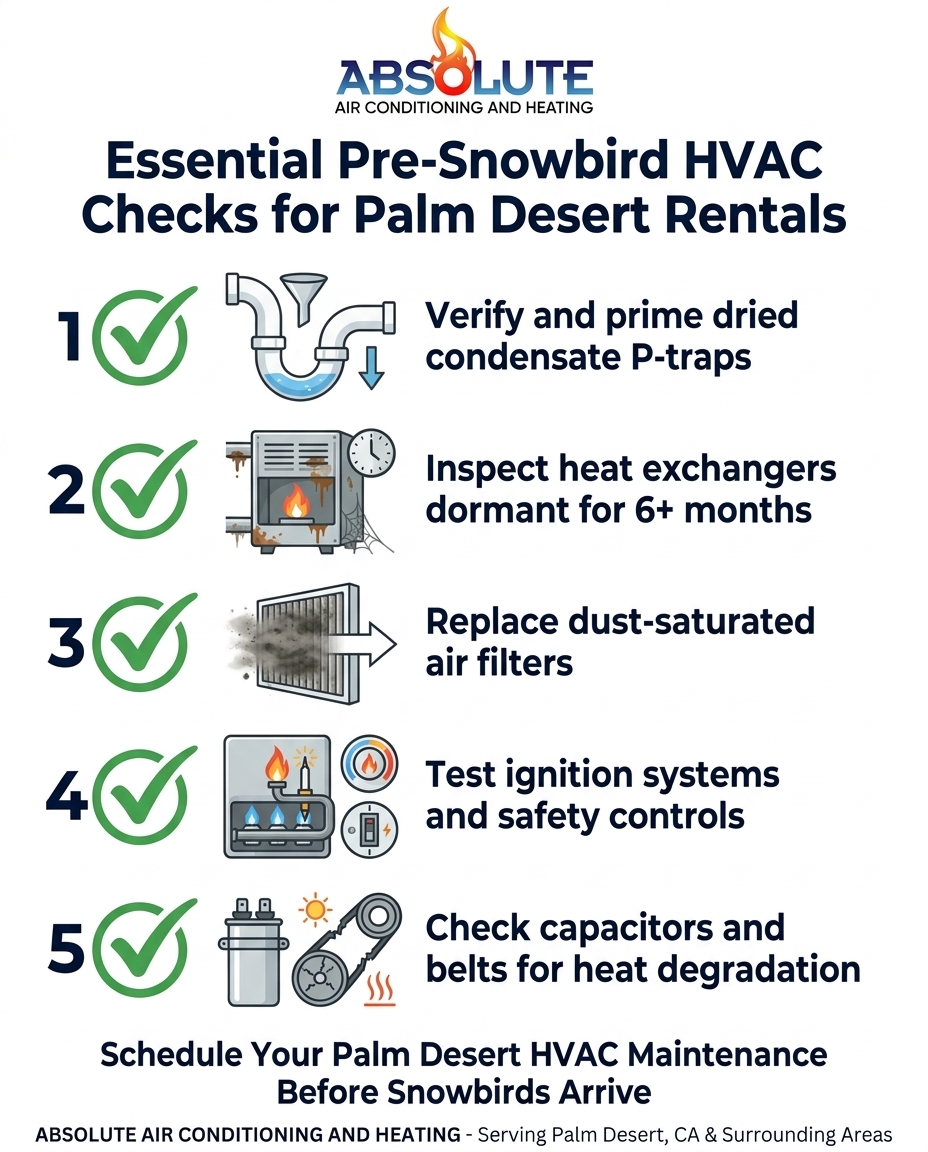
One of the most common and disruptive issues discovered during a September pre-snowbird arrival inspection involves the HVAC system's condensate drainage. Every air conditioning system has a condensate drain line that removes moisture pulled from the indoor air. Built into this line is a P-trap, a curved section of pipe designed to hold a small amount of water.
This trapped water serves a highly specific purpose: it creates a seal that prevents foul sewer gases or outside air from being sucked backward into the HVAC system and blown throughout the home. In an occupied house, the AC runs frequently enough to continuously replenish this water. In a vacant Palm Desert home set to 85°F, the system runs less often, and the extreme ambient heat causes the water in the trap to evaporate entirely.
Once the P-trap dries out, two major risks emerge. First, stagnant, foul odors can permeate the indoor air, greeting your incoming tenants with a smell resembling rotten eggs or sewage. Second, when the trap dries out, the residual dust and algae inside the pipe harden into a solid blockage. When the snowbird tenants arrive and immediately drop the thermostat to 72°F, the system begins pulling massive amounts of moisture from the air. Because the drain line is now clogged with hardened debris, the water has nowhere to go, resulting in an immediate overflow that can damage ceilings, walls, and flooring.
Resolving this requires a licensed technician to professionally prime the trap, flush the condensate line with specialized solutions, and verify proper drainage before the system is switched back to heavy daily use.
Combating Dust Infiltration and Stagnant Air Quality
The Coachella Valley is known for its fine, pervasive blowing desert dust, especially during summer wind events. Even in a tightly sealed, unoccupied home, this micro-dust finds its way inside. Over the course of three to four months, it settles heavily throughout the property, but its impact on the HVAC system is particularly severe.
Because the indoor air is largely stagnant, particulates accumulate thickly on the evaporator coil and the blower motor blades. When the air handler does cycle on, it pulls this settled dust through the return ducts. Property owners often assume that because the home was empty, the air filter is perfectly clean. In reality, the filter has likely degraded or become completely saturated with fine desert silt.
Leaving a dust-saturated filter in place forces the blower motor to work significantly harder, driving up energy consumption and risking an overheat shutdown. Furthermore, poor indoor air quality is immediately noticeable to incoming tenants. A home that smells dusty and feels stale is a poor start to a long-term winter lease. Addressing this requires more than a simple filter swap; it requires implementing professional indoor air quality solutions to clean the coils, wipe down the blower assembly, and refresh the home's air system so it circulates clean, healthy air on move-in day.
Transitioning Safely from Extreme Cooling to Reliable Heating
As the desert moves into late autumn, the demand on the HVAC system shifts dramatically. The transition from extreme summer cooling to reliable winter heating requires a dedicated mechanical inspection, particularly for properties that have sat dormant.
The heating system—whether a gas furnace or the heating mode of a heat pump—has likely not been engaged for over six months. Firing up a dormant furnace without a professional safety check carries significant risks. Heat exchangers, which are responsible for safely containing combustion gases, are subjected to wide temperature swings. Over time, these metal components can develop microscopic cracks or rust.
Testing ignition systems, verifying gas pressure, and ensuring all safety controls are fully operational must be done before the first cold desert night. We must emphasize that these are strict, licensed professional tasks. Attempting to test gas valves, inspect heat exchangers for carbon monoxide leaks, or calibrate complex ignition sequences is not a DIY landlord project.
Critical Heating System Safety Checks
A September pre-snowbird arrival inspection focuses heavily on the safe operation of the heating sequence. The professional checklist includes:
• Burner assembly cleaning and inspection: Removing dust and debris that could cause delayed ignition or a fire hazard.
• Carbon monoxide risk mitigation: Thoroughly inspecting the heat exchanger and flue pipe for any signs of cracking, rust, or blockage.
• Thermostat calibration for winter settings: Ensuring the system responds accurately to heating demands and that emergency heat functions operate correctly.
• Electrical terminal tightening: Checking all connections that may have loosened due to thermal expansion and contraction over the summer.
Preventing Move-In Day Failures and Protecting Rental Revenue
The mechanical realities of idle systems directly impact a landlord's primary concerns: tenant satisfaction and revenue protection. The stakes are incredibly high when a snowbird tenant arrives for a long-term winter stay. Walking into a hot, stagnant house, or experiencing a heater malfunction on their first chilly night, instantly damages the landlord-tenant relationship.
When systems fail upon arrival, owners are often forced into paying costly weekend or after-hours emergency rates, which cuts directly into the property's rental yields. Furthermore, waiting for parts during the busy fall transition season can leave tenants uncomfortable for days, potentially leading to demands for rent concessions or canceled leases.
We see this pattern frequently in absentee property management. One property owner reached out during autumn after years of requiring general A/C and heating service and repair for their rentals. By having a professional handle every service and repair impeccably over the years, the customer remained completely satisfied with the reliability of their systems, avoiding the stress of sudden failures. Proactive AC maintenance for multi-family properties and single-family vacation rentals provides the assurance that the system has been professionally cleared, tested, and optimized prior to the lease start date.
Frequently Asked Questions About Vacant Property HVAC Care
What temperature should a vacant house be left at in Palm Desert?
Following general Department of Energy guidelines adapted for extreme desert climates, it is recommended to set a vacant home's thermostat between 85°F and 90°F during the summer. This range prevents severe heat damage to the home's interior—such as peeling paint, warped cabinet doors, and damaged appliances—while effectively managing energy costs. Turning the system completely off in Palm Desert can cause interior temperatures to exceed 120°F, which is highly destructive to the property.
How do you prep an idle HVAC system for new tenants?
Preparing an idle system requires a comprehensive professional inspection rather than just turning the thermostat down. A licensed technician must replace dust-saturated air filters, prime the dried-out condensate P-trap to prevent clogs, and inspect electrical components that have been baking in the summer heat. Additionally, the technician will test the heating sequence to ensure the furnace or heat pump is ready for safe winter operation.
Why do HVAC condensate lines dry out in vacant homes?
Condensate lines dry out due to a lack of consistent moisture generation combined with high ambient evaporation rates. In an occupied home, showering, cooking, and lower thermostat settings cause the AC to pull significant moisture from the air, keeping the P-trap full. In a vacant home running minimally at 85°F, very little moisture is extracted, and the intense desert heat quickly evaporates whatever water remains in the trap.
Should I leave the AC on in an empty house in summer?
Yes, you should absolutely leave the AC running in an empty house during a Palm Desert summer. Allowing the interior to reach extreme temperatures causes significant thermal expansion and contraction, which can destroy drywall seams, ruin hardwood floors, and melt plastic components on appliances. Maintaining a minimal cooling setting protects your real estate investment from severe environmental damage.
How often should rental property HVAC be serviced?
Rental properties in extreme climates require bi-annual servicing to maintain reliability. Because of the unique stresses placed on the equipment, maintenance should be heavily weighted toward the pre-snowbird arrival window in the fall, ensuring the system transitions safely from cooling to heating. A second check in the spring prepares the system to endure the upcoming summer vacancy.
When is the best time to schedule pre-snowbird maintenance?
September is the critical window for scheduling pre-snowbird maintenance. Booking during this time ensures your property is fully prepped before the massive October and November rush, when HVAC companies are inundated with emergency calls from arriving tenants. Proactive September scheduling guarantees your system is ready the moment the lease begins.
Secure Your Rental's Reliability Before the Season Begins
Managing an absentee property requires a clear understanding of how extreme environments affect mechanical systems. A clear, authoritative breakdown of idle HVAC issues ensures landlords know exactly what technical checks to request before the winter season begins. Assuming a system is fine just because it was left on a minimal setting is a risk that often results in move-in day disasters and frustrated tenants.
By partnering with a local expert who understands the specific toll the desert climate takes on vacant homes, you can prevent these hidden issues from turning into expensive emergencies. Protect your rental revenue and ensure a smooth transition for your incoming snowbirds by scheduling professional heating maintenance in Palm Desert during the critical September pre-snowbird arrival window.
Serving the Entire Coachella Valley

The Real Cost of Ignoring Your Attic HVAC Unit's Fall Inspection
After a grueling summer, minor wear and tear in an attic HVAC unit can quickly snowball into a major winter breakdown. See why skipping a seasonal checkup puts your entire system at risk.
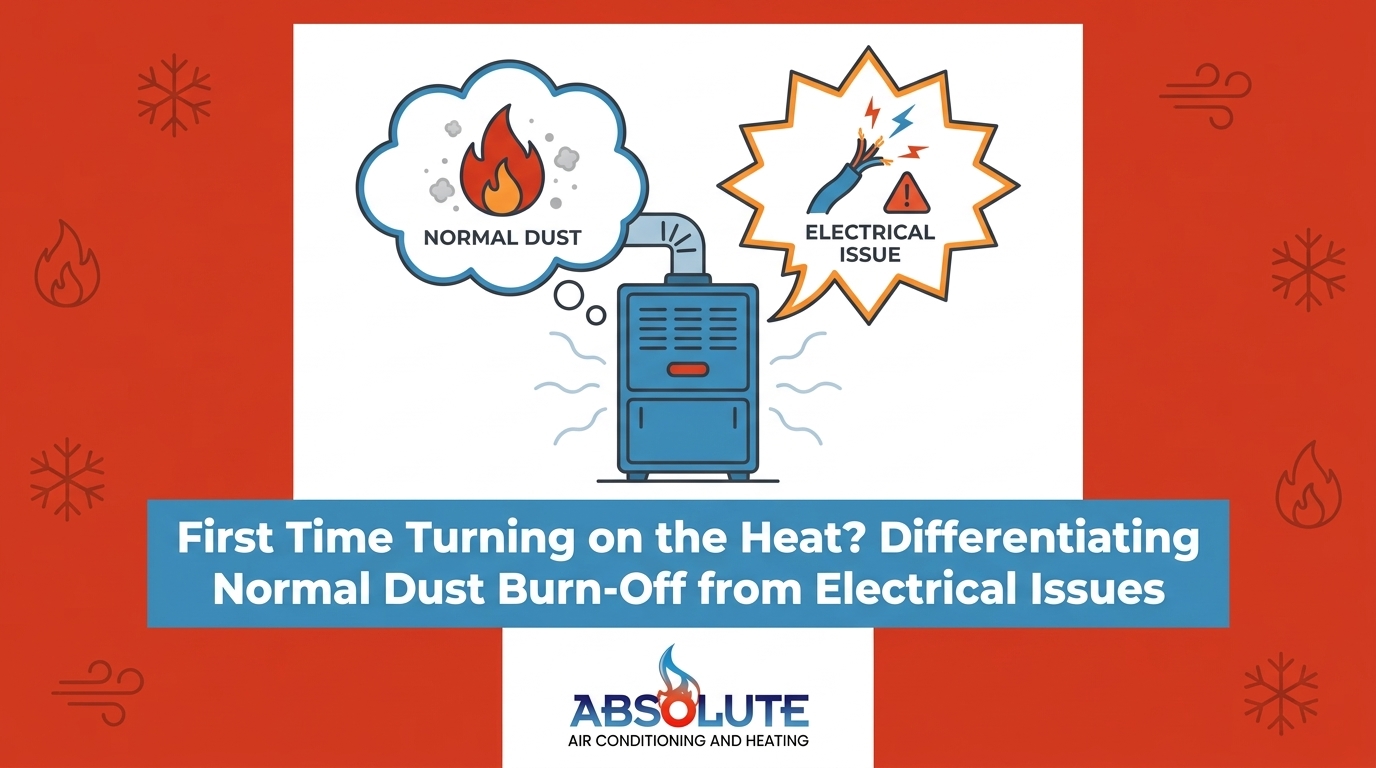
First Time Turning on the Heat? Differentiating Normal Dust Burn-Off from Electrical Issues
That burning smell on the first chilly morning usually triggers panic. Find out how to tell harmless baking dust from a dangerous wire, and know exactly when to shut your system down.
Deciding Between Repairing a Leaky Attic Evaporator Coil or Replacing the Entire Handler
Facing a refrigerant leak as the seasons change? Weigh the long-term value and technical viability of a drop-in coil repair versus upgrading your entire air handler.

