

The Real Cost of Ignoring Your Attic HVAC Unit's Fall Inspection
The Hidden Threat Above: Why Summer Survival Doesn't Guarantee Winter Reliability
At Absolute Air Conditioning and Heating, we know that understanding the real cost of ignoring your attic HVAC unit's fall inspection is the first step toward protecting your home this season. Your air conditioner has just finished running a marathon. After months of battling brutal temperatures, you might feel a sense of relief knowing the system survived another intense cooling season. Because you are likely fatigued from high summer energy bills, the temptation to skip a seasonal check-up is completely understandable. If the system is still blowing air, it seems logical to leave it alone.
Here is the thing our team frequently explains to homeowners: surviving the summer is not the same as being prepared for the winter. Ignoring the wear and tear your system just endured introduces a concept we call "mechanical math." Mechanical math is a simple equation where minor, undetected component strain inevitably adds up to a major system failure. A slightly dry bearing or a partially clogged wheel does not fix itself. Instead, it forces the entire system to work harder, pulling more electricity and generating more internal heat until a critical part finally breaks.
Attic-mounted units face environmental extremes that systems located in garages or basements simply do not experience. Up in the rafters, your equipment battles trapped heat, restricted airflow, and heavy dust accumulation. Addressing these issues early through professional heating services resets your system's baseline before the weather changes. Before you turn on your furnace for the first time in Palm Desert CA, an immediate inspection is necessary to ensure those hidden summer battle scars do not turn into a winter emergency.
The Hostile Environment of Your Desert Attic
Out of sight usually means out of mind. Because you rarely visit your attic space, it is easy to forget just how extreme the conditions get up there. Throughout the summer, your attic transforms into a hostile environment that actively degrades mechanical components.
The 50-Degree Temperature Differential
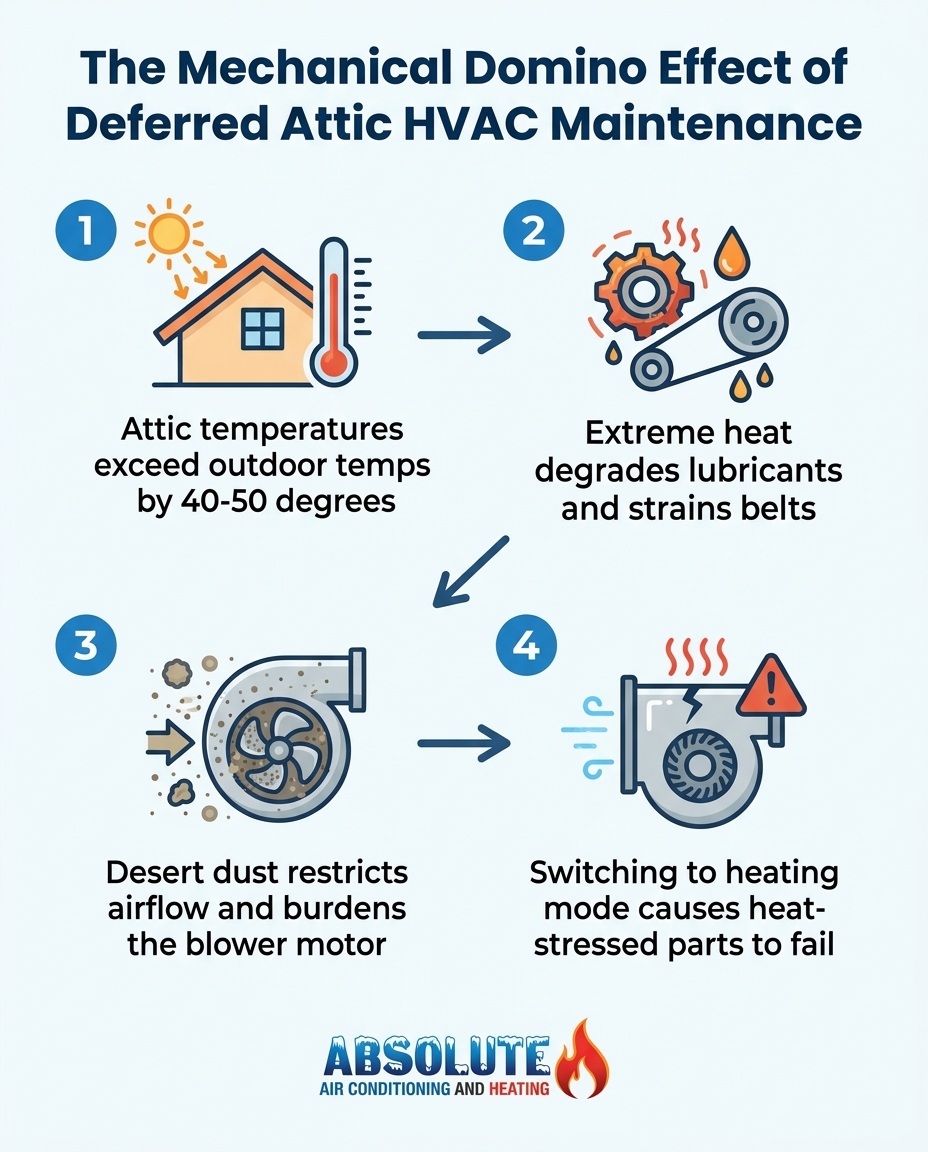
With summer temperatures regularly exceeding 110°F in Palm Desert CA, our service technicians routinely measure attic environments that act like giant ovens. Because heat rises and roof shingles absorb solar radiation, the air trapped inside your attic can easily exceed ambient outdoor temperatures by 40 to 50 degrees. This means your HVAC equipment is often forced to operate in a 150-degree environment.
The thermal load: This massive temperature differential places an incredible thermal load on the air handler. The metal casing absorbs the heat, transferring it directly to the sensitive internal components. Your system is not just fighting to cool your home; it is fighting to survive the environment it lives in.
Baking Lubricants and Straining Belts
Mechanical parts require proper lubrication to move smoothly. The extreme heat baking your HVAC unit accelerates the degradation of these essential lubricants.
• Dried-out bearings: Factory-applied grease inside the blower motor bearings slowly thins out and evaporates under constant high heat. Without this protective layer, metal grinds against metal.
• Increased friction: As lubricants fail, friction increases. The motor has to pull more electrical current just to spin at its normal speed, which generates even more heat from the inside out.
• Weakened belts and wiring: Constant exposure to extreme heat causes rubber drive belts to become brittle and stretch. It also stresses electrical connections, causing wires to expand and contract until terminal connections become loose.
The Mechanical Domino Effect: From Desert Dust to System Strain
In our years of servicing Coachella Valley homes, we've noticed that mechanical failures rarely happen overnight. They follow a predictable sequence of events. In a desert climate, this domino effect almost always starts with a single, microscopic culprit: dust.
How Particulates Choke Airflow
Fine desert dust in the region naturally infiltrates attic spaces through vents and tiny gaps in the roofline. Over months of operation, this heavy particulate load creates an insulating blanket on sensitive components.
1. The initial buildup: Dust bypasses standard filters and settles directly onto the blower wheel blades.
2. Altered aerodynamics: The blower wheel relies on a very specific cup shape to scoop air. When dust fills that cup, the wheel loses its aerodynamic edge.
3. Restricted breathing: The system can no longer push the correct volume of air through the ductwork. It begins to suffocate, drastically reducing your home's overall heating and cooling efficiency.
A thorough post-summer evaporator coil inspection is vital to catch this buildup before it completely chokes the system's airflow.
The Silent Burden on Your Blower Motor
The blower motor is usually the first major domino to fall. When airflow is restricted by dust and dirt, the motor does not simply give up. It tries to compensate.
The silent killer: To push air past the blockages, the blower motor works significantly harder. This draws higher electrical amperage. The combination of high amp draw, dried-out bearings, and a 150-degree attic environment pushes the motor to its absolute breaking point. Because the system is technically still pushing some air into your living room, this severe strain goes entirely unnoticed until the motor eventually burns out completely.
Why the Transition to Heating is the Ultimate Danger Zone
The most vulnerable time for your attic unit is the October cooling-to-heating transition. This seasonal shift acts as a critical stress test for an already weakened system. Switching from air conditioning to heating is not a seamless process for the machinery; it demands entirely different operational loads.
The Shock of Shifting Demands
When you turn on the furnace or heat pump for the first time, you are asking a tired system to change its routine completely.
• Different pressure dynamics: Heating mode often requires the blower motor to push air across a hot heat exchanger rather than a cold evaporator coil. Warm air has a different density, which changes the static pressure inside the ductwork.
• New component engagement: Parts that have sat dormant for eight months—like gas valves, igniters, and specific relays—are suddenly called into action.
• The startup surge: The initial electrical surge required to start these dormant components often exposes summer damage that was barely holding together.
Uncovering Hidden Summer Damage
A blower motor that was on the brink of failure during the last week of summer will likely seize completely when tasked with heavy winter heating demands. The heat-stressed parts finally snap under the new operational loads.
This is the direct path from ignored maintenance to a sudden breakdown. While scheduling a minor tune-up in the fall might feel like a slight inconvenience, it is nothing compared to the severe disruption of a total system failure on a freezing December night. When a catastrophic failure happens in the middle of a holiday weekend, our dispatch team sees homeowners forced to rely on emergency heating repair just to keep their families warm.
• Late Summer — System Status: High friction, low lubrication, heavy dust — Mechanical Risk Level: Moderate (Struggling but running)
• October Transition — System Status: Changing static pressure, initial startup surge — Mechanical Risk Level: High (Stress test on weak parts)
• Deep Winter — System Status: Continuous heating cycles on failing motor — Mechanical Risk Level: Critical (Imminent breakdown)
Breaking the Cycle with a Preventative Maintenance Plan
The only reliable way to stop the mechanical domino effect before it starts is through consistent, proactive care. Waiting for a part to physically break guarantees the most extensive and stressful mechanical failures possible.
Shifting from Reactive to Proactive Care
Reactive maintenance means you only call a professional when your home is uncomfortably hot or freezing cold. By the time a system stops working, the damage has usually spread from one small, inexpensive part to major, complex components. Proactive care focuses on preserving a working system rather than reviving a dead one.
Regular professional check-ups reset the system's baseline. A technician clears away the desert dust, re-lubricates moving parts, and tightens electrical connections that rattled loose over the summer. One local homeowner experienced this exact benefit during a routine fall inspection of their A/C and furnace with our team. The technician performed a prompt, thorough check of the entire system and took the time to answer questions about new products. The customer was so impressed by the attention to detail and the clear explanation of their system's health that they signed up for a yearly maintenance package right then and there.
Enrolling in a preventative maintenance plan provides true peace of mind. It ensures your attic unit has been thoroughly vetted, cleaned, and calibrated before the temperature drops, extending the overall lifespan of the equipment.
Proactive Expertise: Catching Minor Wear Before Catastrophic Failure
Navigating and diagnosing complex attic HVAC systems requires specialized knowledge. A professional inspection goes far beyond just swapping out an air filter. It involves precise mechanical diagnostics to ensure every component is operating within safe factory specifications.
The Transparent Mechanical Math
Our team at Absolute Air Conditioning and Heating takes a highly transparent, proactive approach to system health. We believe in demonstrating a commitment to catching small issues early through expert diagnostics, saving our customers from the stress of emergency replacements. When one of our technicians inspects your system, they map out the progression of wear and tear so you understand exactly what is happening in your attic.
• Testing motor amperage: Technicians use multimeters to measure exactly how much electricity the blower motor is pulling. If the amp draw is higher than the manufacturer rating, it proves the motor is fighting excess friction.
• Checking electrical connections: Every wire and terminal is inspected for signs of heat discoloration or looseness, preventing potential electrical shorts.
• Inspecting for friction wear: Belts, bearings, and pulleys are physically examined for cracking, drying, or improper alignment.
By showing you the exact numbers and explaining the mechanical math, our technicians build trust through honest, clear explanations. You get to see exactly how replacing a minor, worn-out part today prevents a catastrophic, full-system replacement tomorrow in Palm Desert CA.
Secure Your Comfort Before the Winter Chill Arrives
Proactive maintenance remains your absolute best defense against the mechanical domino effect. The extreme heat and dust of the summer have already taken their toll on your attic unit, but you have the power to stop that wear and tear from turning into a winter disaster. Addressing component strain during the October cooling-to-heating transition ensures your system will provide reliable, efficient warmth all season long. Do not wait for a breakdown to force your hand. Reach out to our local experts to schedule your heating maintenance in Palm Desert and secure your home's comfort before the cold weather truly sets in.
Frequently Asked Questions
Is fall HVAC maintenance really necessary for attic units?
Yes, we highly recommend it for attic units because they endure extreme summer temperatures that accelerate mechanical wear. The trapped heat dries out lubricants and weakens belts much faster than in a garage or basement unit. A fall inspection resets the system and prepares it for the different demands of winter heating.
What happens mechanically if you skip a furnace inspection?
Skipping an inspection allows minor friction and dust buildup to compound over time. The blower motor is forced to work harder to push air, which increases its electrical amp draw and internal heat. Eventually, this constant strain causes the motor to seize or electrical components to burn out completely.
Why is fall HVAC maintenance important after a hot summer?
A brutally hot summer pushes your cooling system to its absolute limits, often leaving parts worn, dusty, and out of calibration. Fall maintenance addresses this specific summer fatigue before the system is shocked by the sudden shift to heating mode. Catching this wear early prevents sudden breakdowns during the first cold snap.
What is included in a professional fall furnace tune-up?
A professional tune-up includes a comprehensive safety and performance check of the entire system. Technicians test motor amperage, inspect electrical connections, clean the blower assembly, and check the heat exchanger for safe operation. They also re-lubricate moving parts to eliminate excess friction.
How often should an attic HVAC unit be serviced?
An attic HVAC unit should be professionally serviced twice a year. You need one inspection in the spring to prepare for the heavy demands of summer cooling, and another in the fall to prepare for winter heating. This biannual schedule is the best way to combat the extreme temperature swings found in attic spaces.
Can desert dust in my attic really cause my heating system to fail?
Yes, fine desert dust is a major cause of mechanical failure in HVAC systems. The dust coats the blower wheel blades and clogs internal components, severely restricting the system's ability to breathe. This forces the unit to run longer and hotter, eventually leading to major component burnout.
Serving the Entire Coachella Valley

First Time Turning on the Heat? Differentiating Normal Dust Burn-Off from Electrical Issues
That burning smell on the first chilly morning usually triggers panic. Find out how to tell harmless baking dust from a dangerous wire, and know exactly when to shut your system down.
Deciding Between Repairing a Leaky Attic Evaporator Coil or Replacing the Entire Handler
Facing a refrigerant leak as the seasons change? Weigh the long-term value and technical viability of a drop-in coil repair versus upgrading your entire air handler.
Why September is the Critical Window for Testing Your Furnace's Ignition Sequence
Summer heat leaves dormant heating components vulnerable to failure. Testing the ignition system in early fall prevents a sudden no-heat emergency when nighttime temperatures drop.

