
Desert Dust and Your Evaporator Coil: A Post-Summer Inspection Framework
Surviving the Summer: The Hidden Toll on Your HVAC System
Your air conditioner is running nonstop, but the house still feels uncomfortably warm, bringing us to a critical topic for local homeowners: desert dust and your evaporator coil: a post-summer inspection framework. After months of battling extreme heat, your cooling system has likely kept your home comfortable, but that constant operation hides a growing problem deep inside the equipment. Surviving the peak temperatures of July and August is only half the battle. As we transition into September, a new threat emerges: the heavy, abrasive particulate matter blown in by late-summer haboobs and high winds.
To learn more about how we keep local systems running at peak performance, explore our Air Conditioning Services.
Many homeowners assume that if the air conditioner turns on and produces cool air, the system is perfectly healthy. However, the hidden damage inside the unit tells a different story. The extreme heat strains electrical components and blower motors, while the late-summer wind events push massive amounts of microscopic dust into your home's ductwork. This creates a critical decision point for anyone living in the Palm Desert and Coachella Valley area: you can either address this hidden wear and tear now, or risk a sudden breakdown and spiked energy bills when the system is forced to work twice as hard.
The Two Phases of Summer Wear and Tear
Understanding the toll the summer takes on your HVAC system requires looking at the season in two distinct phases. Each phase attacks your equipment in a different way.
• Peak Heat (June - August) — Primary Threat: Extreme high temperatures — Impact on HVAC System: Continuous operation, thermal stress on capacitors, and high refrigerant pressures.
• Late Summer Transition (September) — Primary Threat: Haboobs and high wind events — Impact on HVAC System: Massive influx of PM10 and PM2.5 particulates overwhelming standard filtration.
As the intense heat breaks and the late-summer dust storm season begins, the physical environment around your home changes. The wind kicks up fine sand and dirt, pushing it through every tiny gap in your home's envelope. This transition period is exactly when your system is most vulnerable, making a proactive inspection the smartest move you can make for your home's comfort and efficiency.
How Fine Desert Dust Bypasses Standard Filters
The first line of defense for your indoor air quality is your HVAC filter, but not all dust is created equal. To understand why your system is struggling, we have to look at the mechanics of particulate matter. Desert dust is highly abrasive and incredibly fine, heavily composed of silica and microscopic particles categorized as PM10 and PM2.5. These numbers refer to the size of the particles in microns—so small that they are completely invisible to the naked eye.
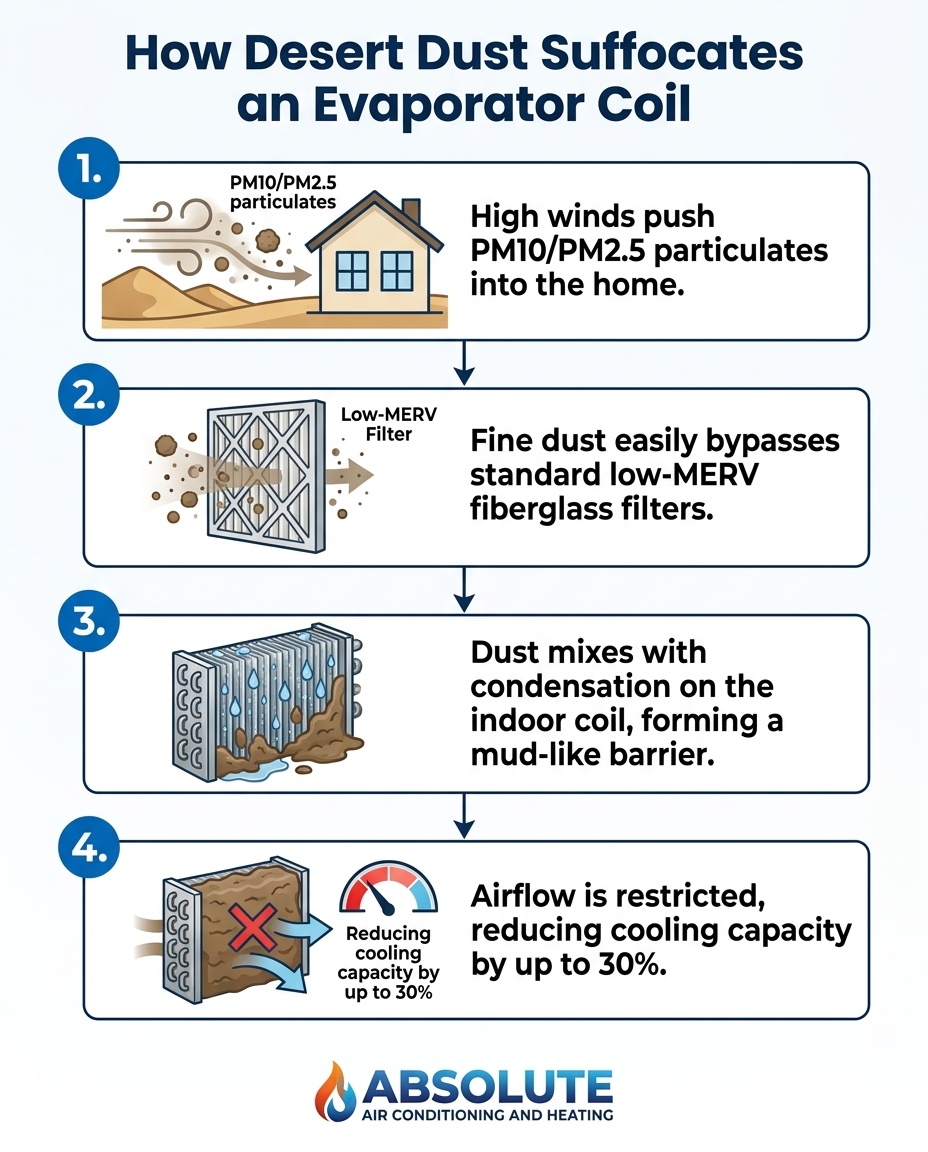
When high winds hit the Coachella Valley during the late-summer and early-fall dust storm season, this fine dust is forced into your home. A typical pattern we see is homeowners relying on standard, low-MERV fiberglass filters. These cheap, see-through filters are designed to catch large debris like pet hair and heavy lint, but they are entirely ineffective against microscopic desert sand. The high-velocity air from your blower motor pulls the fine dust right through the fiberglass mesh, allowing it to bypass the filter completely and enter the air handler.
This bypassed dust creates two distinct problems. First, it degrades your indoor air quality, circulating irritants that can trigger allergies and respiratory issues. Second, it directly attacks the health of your HVAC system. Upgrading your filtration strategy is a core component of effective indoor air quality services, ensuring that these microscopic threats are captured before they can cause internal damage.
Outdoor Condenser Dust vs. Indoor Evaporator Dust
It is helpful to distinguish between the dust outside your home and the dust inside your system. The outdoor condenser unit sits in the yard and gets coated in heavy dirt, leaves, and debris. You can easily see this buildup on the metal fins. However, the indoor evaporator dust is much more insidious. Because it has bypassed the filter, it is composed of ultra-fine particles that settle deep inside the dark, damp environment of your indoor air handler. As a local contractor, we understand the unique abrasive composition of Coachella Valley dust, and we know exactly how quickly it can compromise an otherwise healthy system.
The Anatomy of a Suffocated Evaporator Coil
To grasp the severity of this hidden dust problem, you need to know how your indoor evaporator coil actually works. Located inside your air handler or furnace, the evaporator coil is a series of copper tubes covered in delicate aluminum fins. Cold liquid refrigerant flows through these tubes. As warm indoor air blows over the coil, the refrigerant absorbs the heat, and the newly cooled air is pushed back into your living space.
During this heat exchange process, the coil also acts as a dehumidifier. It pulls moisture out of the warm air, causing condensation to form on the metal fins. Under normal conditions, this water simply drips down into a drain pan and flows outside. But when fine desert dust bypasses your filter, the situation changes drastically. The microscopic dirt hits the wet, sticky surface of the evaporator coil and immediately adheres to it. Over weeks of high winds in the Palm Desert and Coachella Valley region, this mixture of fine dust and condensation bakes into a thick, insulating layer of mud.
This mud layer is devastating to your system's performance. According to data from the Department of Energy, a dirty evaporator coil can reduce a system's cooling capacity by up to 30%. The dirt acts like a heavy blanket, preventing the warm air from actually touching the cold metal. Because the heat transfer process is blocked, the system is forced to run longer and consume significantly more energy just to reach the temperature set on your thermostat.
The strain of a suffocated coil can easily push an older system past its breaking point. During a severe summer heatwave where temperatures averaged 116°F, one local homeowner experienced major malfunctions with an aging air conditioning unit. Because the system was struggling so hard to breathe and cool the home, technicians had to be dispatched twice just to keep the unit limping along until a full replacement could be secured a week later. This level of extreme strain is exactly what happens when airflow is restricted. Whether your equipment is located in a dedicated closet or you are installing an air handler in a Palm Desert attic, keeping that indoor coil clean is non-negotiable for system longevity.
Warning Signs Your AC is Struggling After a Dust Storm
Because the evaporator coil is sealed inside a metal cabinet, you cannot simply look at it to see if it is covered in mud. However, your HVAC system will display several clear symptoms when it is struggling to breathe. Homeowners should monitor their equipment closely during the late-summer and early-fall dust storm season. If you notice any of these red flags, it is time to call for an inspection before a minor restriction turns into a major breakdown.
• Longer, more frequent cooling cycles: If your air conditioner seems to run constantly without ever shutting off, even when the outside temperatures are relatively mild, the system is struggling to remove heat from the home.
• Weak airflow coming from the supply registers: Hold your hand over a vent. If the air feels like a weak trickle rather than a strong, steady breeze, the blower motor is fighting against a clogged coil or a heavily soiled filter.
• Warm air blowing from the vents: When the thick layer of dust prevents the refrigerant from absorbing heat, the air blowing out of your vents will feel lukewarm or completely unconditioned, especially during the hottest part of the day.
• Signs of ice or frost on the refrigerant lines: This is a major warning sign. When airflow is severely restricted, the evaporator coil gets too cold because there is no warm air passing over it. The condensation freezes, turning the entire coil into a solid block of ice.
• Unexplained spikes in your utility bill: A system that runs 30% longer to achieve the same amount of cooling will consume significantly more electricity, causing a noticeable jump in your monthly energy costs.
Ignoring these symptoms will only compound the damage. A frozen coil can cause liquid refrigerant to flow backward into the outdoor compressor, destroying the most expensive component in your entire system. If you spot any of these signs, reaching out for professional AC repair is the safest way to prevent a catastrophic failure.
Why September is the Critical Window for HVAC Recovery
For many parts of the country, fall HVAC preparation means getting ready for freezing temperatures and snow. In the high desert, the transition season serves a completely different purpose. September is a critical equipment recovery phase. Your system just survived months of brutal, triple-digit heat, and now it is taking on heavy loads of abrasive dust. Treating this transition as just a routine check-up is a mistake.
Waiting until winter or next spring to address the buildup inside your air handler allows the mud-like dust to harden on the coil. This compounds the wear and tear on your blower motor, which has to work increasingly hard to push air through the restriction. By 'resetting' the system in September, you clear away the summer's damage and restore the equipment to its baseline efficiency.
The Desert Fall Prep Difference
Homeowners in the Palm Desert and Coachella Valley region face unique climate challenges that require a specialized approach to seasonal maintenance.
• Focuses on winterizing outdoor units and protecting against ice. — Desert Fall Prep (Coachella Valley): Focuses on recovering from extreme heat and mitigating dust damage.
• Primarily concerned with testing furnace ignition systems. — Desert Fall Prep (Coachella Valley): Prioritizes deep cleaning the indoor coil to remove baked-on PM10 particulates.
• Often delays AC maintenance until the following spring. — Desert Fall Prep (Coachella Valley): Addresses AC wear immediately to prevent compounding issues during mild fall days.
For homes equipped with heat pumps, this September recovery window is even more vital. A heat pump uses the exact same indoor coil for both cooling and heating. When the system switches over to heating mode in the winter, a coil that is still choked with summer dust will severely restrict warm airflow, driving up your heating costs and stressing the compressor. Clearing the coil now ensures a smooth, efficient transition no matter what the weather does.
The Post-Summer Inspection Framework: What Professionals Look For
Cleaning an evaporator coil is not a DIY project. The aluminum fins are incredibly thin and easily crushed by vacuum attachments or stiff brushes. Furthermore, the thick layer of baked-on dust requires specialized, non-corrosive chemical treatments to dissolve safely. Attempting to clean it yourself can result in severe damage, refrigerant leaks, or voided warranties. Instead, rely on a structured, professional framework during the late-summer and early-fall dust storm season.
1. Diagnosing airflow restrictions and static pressure: A technician will begin by measuring the static pressure across the air handler. This diagnostic test tells the professional exactly how hard the blower motor is working and pinpoints where the airflow restriction is located.
2. Inspecting the indoor coil: The technician will carefully open the sealed cabinet to inspect the evaporator coil. They are looking for compacted dust, signs of freezing, and any microbial growth in the dark, damp drain pan beneath the unit.
3. Safely applying specialized chemical cleaners: If the coil is coated in mud, the professional will apply a foaming, non-corrosive cleaner. This chemical is designed to safely dissolve the organic matter and abrasive silica without eating away at the delicate aluminum fins, allowing the debris to be flushed safely down the condensate drain.
4. Re-evaluating filtration strategies: Finally, the technician will assess your current air filter. If standard fiberglass filters are allowing PM10 particulates to bypass, they will recommend upgrading to a higher MERV rating or installing a dedicated media cabinet to better capture fine desert dust next season.
When a system is completely overwhelmed and neglected, a simple cleaning isn't always enough to reverse years of damage. In cases of severe, compounding failure, massive interventions are required. For example, a heavily compromised setup recently required a dedicated team to spend two full days installing two entirely new TRANE A/C and furnace systems just to restore proper airflow and reliable comfort to the home. You can avoid these drastic measures by scheduling routine AC maintenance in Palm Desert to catch dust buildup early.
Frequently Asked Questions About Evaporator Coils and Desert Dust
How does dust get on the indoor evaporator coil?
Dust reaches the indoor evaporator coil by bypassing low-quality air filters or being pulled through unsealed return ducts. The microscopic size of haboob dust (specifically PM2.5 and PM10 particles) allows it to easily evade standard, see-through fiberglass filters. Once past the filter, the high-velocity air from the blower motor carries the fine dirt directly into the damp environment of the air handler, where it sticks to the wet coil.
What are the signs of a dust-clogged AC coil?
The most common signs of a dust-clogged AC coil include drastically reduced airflow from your supply vents and higher-than-normal utility bills. You may also notice the system running constantly without satisfying the thermostat, or warm, unconditioned air blowing from the registers during the heat of the day. These symptoms indicate that the system is suffocating and unable to transfer heat properly.
Can a dirty evaporator coil cause the AC to freeze?
Yes, a dirty evaporator coil is one of the primary reasons an air conditioner freezes. The thick layer of dust restricts airflow, meaning there is not enough warm house air blowing over the cold copper tubes. Without that heat transfer, the coil drops below freezing, causing the normal condensation to turn into a solid block of ice, which further chokes the system.
Why is my AC struggling after a dust storm?
Your AC struggles after a dust storm because the sudden influx of fine particulates overwhelms your indoor filter, allowing dirt to coat the indoor coil. Simultaneously, the outdoor condenser coils get packed with heavy sand and debris, reducing their ability to release heat into the outside air. This combined indoor and outdoor restriction severely drops the system's overall efficiency and cooling capacity.
How often should evaporator coils be inspected in a desert climate?
In a high-dust desert climate like the Palm Desert and Coachella Valley region, evaporator coils should be inspected at least annually, though twice a year is highly recommended. A pre-summer check ensures the system is ready for the intense heat, while a post-summer inspection is critical for clearing away the heavy particulate buildup caused by severe late-summer wind events.
Reset Your System for Fall with a Professional Inspection
Surviving the extreme summer heat is an accomplishment for any HVAC system, but the lingering damage left behind by Coachella Valley dust storms cannot be ignored. Fine desert dirt bypassing your filters and baking onto the damp evaporator coil creates a massive restriction that drains your energy efficiency and threatens the lifespan of your equipment. Clearing away this summer dust before the cooler months arrive is the smartest way to protect your investment.
Instead of risking a sudden breakdown or higher utility bills, take action during this critical transition window. Scheduling a professional evaluation ensures that your system is safely cleaned, your airflow is restored, and your home is fully prepared for the season ahead. Reach out to a qualified local technician today to reset your equipment and enjoy reliable, efficient comfort all year long.
Serving the Entire Coachella Valley

How to Tell if Your Attic HVAC Unit is Undersized for Your Home's Heating Load
When the first cold snap hits, a system that runs constantly without warming your house is a major red flag. Find out if your equipment is fundamentally too small or just needs seasonal upkeep.

The Danger of Relying on Emergency Heat Mode During a Palm Desert Cold Snap
When a sudden fall chill hits, flipping your thermostat to emergency heat feels like a quick fix. Instead, you are bypassing your heat pump's efficiency and causing massive utility bills.

Why Absolute AC Recommends Sealing Your Attic Ductwork Before Winter
Unsealed ductwork in your attic can silently drain up to 30% of your home's heated air. Addressing these hidden leaks proactively is the key to maintaining reliable winter comfort in Palm Desert.

