

Heat Pump Installation in Palm Desert, CA
Is your heat pump failing or broken in the middle of a Palm Desert heatwave? Don’t suffer through the heat; our expert team offers fast, reliable heat pump installation services designed to restore your home’s comfort immediately. We understand the urgency of a malfunctioning heat pump in this extreme climate, and we’re here to provide quick solutions with affordable financing options tailored to your budget. Get your home cool and efficient again with our professional installation backed by comprehensive warranties. Contact us now to schedule your estimate and secure your new heat pump installation without delay.
Ready to Beat the Heat? Schedule Your Heat Pump Installation Today!
Don’t wait for your old system to fail completely. Our team is ready to respond quickly and install a high-performance heat pump that keeps your home comfortable year-round. Benefit from expert service, transparent pricing, and financing options that make upgrading easy.
Experiencing Unexpected Heat Pump Failures?
When your heat pump goes down on the hottest day of the year in Palm Desert, you want it fixed; fast! Discover reliable, quick installation services that can restore your comfort without delay. Call us or contact us online to schedule your estimate today to secure financing options that fit your budget.
- Quick response and installation, often within 24 hours.
- Expert installations ensure optimal efficiency and performance.
- Competitive pricing with transparent cost estimates available online.
All installations come with comprehensive warranties and options for financing to make things easy.
Securing Immediate Comfort and Efficiency
Living in the desert means your HVAC system is not a luxury; it is a life-support system. When a heat pump fails during a peak temperature spike, the interior of a home can become dangerous quickly. Absolute Air Conditioning and Heating provides expedited installation services designed to minimize downtime. The goal is to transition from a broken system to a high-performance unit with as little disruption to your daily life as possible.
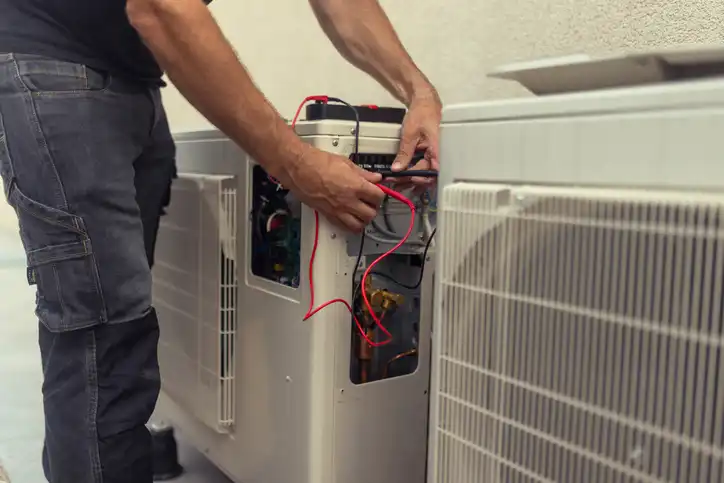
A modern heat pump installation involves more than just swapping out boxes. It requires a comprehensive assessment of the home’s current thermal envelope and cooling requirements. New systems operate differently than units manufactured ten or fifteen years ago. They offer variable-speed technology, higher pressure thresholds, and smarter thermostats. Securing a professional installation ensures that you are not just getting cool air again, but you are upgrading to a system that manages the unique, dry heat of the region more effectively.
When you schedule an installation, the scope of work includes a full evaluation of the existing infrastructure. This covers the electrical capacity, the condition of the refrigerant lines, and the integrity of the ductwork. If the existing ductwork is leaking, even the most expensive heat pump will fail to cool the home efficiently. The service provided encompasses the removal and responsible disposal of the old unit, site preparation, and the precise calibration of the new equipment.
The Installation Process: From Assessment to Airflow
A heat pump installation is a technical construction project that occurs within your home. The process follows a strict protocol to ensure the equipment meets manufacturer specifications and local building codes.
Site Preparation and Safety Checks
Before the new unit arrives, the workspace is prepped to ensure safety and accessibility.
- Technicians lay down drop cloths and protective gear to keep your home clean.
- Electrical disconnects are inspected to ensure they meet current code requirements.
- The pad where the outdoor condenser sits is leveled. If the pad has sunk or cracked over time, it is replaced to prevent vibration and noise issues.
Equipment Installation
This phase involves the physical connection of the indoor air handler and the outdoor condenser.
- The indoor unit is positioned, and the evaporator coil is carefully installed.
- Refrigerant lines are brazed using nitrogen purging. This step is critical; it prevents oxidation inside the copper lines, which can clog the sensitive valves of a modern heat pump.
- A vacuum pump is attached to the lines to remove all moisture and air, creating a deep vacuum measured in microns.
Electrical and Thermostat Integration
Modern heat pumps communicate digitally with thermostats to modulate performance.
- High-voltage and low-voltage wiring are connected and tested for proper voltage and amperage.
- The thermostat is installed and programmed. This includes setting up Wi-Fi features if applicable, and configuring the system for the specific staging of the heat pump.
- Sensors are calibrated to ensure the temperature reading on the wall matches the actual temperature of the room.
Final Commissioning
The system is not considered installed until it is running and tested.
- Technicians measure static pressure in the ducts to ensure airflow is not restricted.
- Refrigerant levels are fine-tuned based on "subcooling" and "superheat" calculations to ensure maximum efficiency.
- The system runs through a full cycle in both cooling and heating modes to verify operation.
Deciding Between Repair and Replacement
Homeowners often struggle with the decision to repair an aging unit or invest in a new one. While repairs can solve immediate issues, they often act as a temporary bandage on a system that is reaching the end of its useful life. In the extreme climate of Palm Desert, reliability is the primary factor in this decision.
The 50% Rule
A common industry standard is the 50% rule. If the cost of the repair approaches 50% of the value of a new system, replacement is generally the better financial move. This is particularly true if the unit is out of warranty. Spending thousands on a compressor for a 12-year-old unit is rarely a good investment, as other components are likely to fail soon after.
Efficiency Ratings (SEER2 and HSPF2)
New regulatory standards have introduced SEER2 and HSPF2 ratings, which measure efficiency more accurately than previous metrics.
- If your current system is rated SEER 10 or 12, upgrading to a SEER2 15+ system can result in significant energy savings.
- The energy reduction often offsets the monthly cost of financing a new installation.
- Older systems struggle to maintain temperature during 100°F+ days without running continuously, whereas high-efficiency units can maintain comfort using less energy.
Refrigerant Availability
Older heat pumps utilize R-22 refrigerant (Freon), which has been phased out due to environmental regulations.
- R-22 is becoming increasingly scarce and expensive.
- If an older unit develops a refrigerant leak, the cost to refill it can be astronomical.
- New systems use R-410A or A2L refrigerants, which are compliant with current laws and much more affordable to service.
Frequency of Breakdowns
If you have called for service more than twice in the last two years, the system is signaling that it is failing. Constant repairs add up, not just in money, but in time and stress. A new installation resets the clock, providing a manufacturer’s warranty that covers parts for ten years in most cases.
Local Considerations for Palm Desert Residents
Installing a heat pump in this specific region requires knowledge of local infrastructure, climate challenges, and regulatory requirements.
Permitting and Code Compliance
Palm Desert requires permits for HVAC replacements. This ensures that the installation meets safety standards regarding electrical connections and structural integrity.
- Professional installers handle the permit application and scheduling of the final city inspection.
- Compliance with Title 24 energy standards is mandatory in California. This may involve duct testing to ensure leakage is below a certain percentage.
- Non-permitted work can lead to fines and complications when selling the home in the future.
Electrical Infrastructure
Many older homes in the area may not have the electrical panel capacity to handle modern, high-capacity heat pumps alongside other modern appliances.
- Installers check the breaker panel amperage.
- Upgrades to the disconnect box or the wiring gauge may be necessary to meet safety codes.
Extreme Heat Performance
The equipment selected must be rated for high-ambient temperatures.
- Some standard units lose cooling capacity when the outdoor temperature exceeds 115°F.
- Systems installed in this area should be specifically chosen for their ability to maintain capacity in extreme heat.
- Placement of the outdoor unit matters; shading the condenser (without blocking airflow) can improve efficiency during the peak of summer.
Utility Rebates
Southern California utility providers frequently offer rebates for upgrading to high-efficiency electric heat pumps. These programs change annually but often incentivize the switch from gas heating to electric heat pumps or the upgrade of low-efficiency AC units. Checking current eligibility requirements is part of the planning process.
Why Technical Expertise Matters
The longevity of a heat pump is determined more by the quality of the installation than the brand name on the metal box. A top-tier unit installed poorly will fail sooner and run less efficiently than a mid-range unit installed perfectly. Absolute Air Conditioning and Heating prioritizes the technical precision required to get the maximum lifespan out of every system.
Ductwork Integrity
Connecting a new heat pump to comprise ductwork is a waste of energy.
- Technicians inspect the plenum and transition points.
- Air leaks are sealed to ensure the conditioned air reaches the living spaces, not the attic or crawlspace.
- Proper airflow prevents the coil from freezing and ensures the compressor does not overheat.
Vacuum and Charge
Moisture is the enemy of a heat pump. If the vacuum process is rushed, moisture remains in the lines. This moisture mixes with the oil in the compressor to create acid, which eats away at the windings and leads to "burnout."
- Technicians use micron gauges to verify a moisture-free system.
- Refrigerant is weighed in to the exact ounce specified by the manufacturer.
Post-Installation Support
The relationship does not end when the truck drives away.
- Homeowners receive a walkthrough of the new thermostat and system operation.
- Maintenance schedules are established to keep the warranty valid.
- Support is available for any questions regarding air filter changes or system behavior.
Restoring Your Home Environment
A functioning heat pump is the difference between a livable home and an unbearable one during the summer months. Delaying a necessary replacement often leads to higher energy bills and the risk of a total system failure at the most inconvenient time. By choosing a professional installation, you ensure that your home remains a sanctuary against the heat.
Investing in a new system provides peace of mind through reliable operation, improved air quality, and consistent temperatures. Whether replacing a breakdown or proactively upgrading for efficiency, the focus is always on delivering a solution that works for the long term. Trust Absolute Air Conditioning and Heating to handle your installation with the speed and precision your home deserves; schedule service today.
Don't wait for the heat to take over. Secure your new heat pump installation today.
Custom Heat Pump Installations Tailored To Property Requirements
System design and setup must be aligned for the installation to succeed. That’s why heat pump installation in Palm Desert, CA, by Absolute Air Conditioning and Heating follows a proven process, ensuring your equipment meets energy standards and space demands. Every install is completed to maximize performance and minimize future issues.
Invest in a system setup built to last with a team that delivers installation without compromise.

