

Heat Pump Maintenance in Palm Desert, CA
Is Your Heat Pump Failing to Keep Up With Desert Temperatures?
Is your heat pump not performing as it should, especially when trying to combat the extreme heat common to the Palm Desert, CA area? When your system struggles to maintain consistent temperatures or causes your energy bills to spike unexpectedly, we provide expert maintenance to ensure your system runs efficiently, even on the hottest days. Contact us today to schedule your comprehensive system tune-up or ask about our flexible financing options for larger repairs.
Neglecting the signs of a struggling heat pump often leads to compounded mechanical stress, resulting in catastrophic failure during the peak of summer or the chill of winter. Our decision-ready maintenance services are designed to restore factory specifications and maximize the output of your existing equipment.
- Enhance your system’s efficiency and reduce monthly energy costs immediately.
- Resolve common issues like poor heating, weak airflow, or loud mechanical noises.
- Extend the operational lifespan of your heat pump with routine expert care.
All services are performed by licensed professionals with full warranties on parts and labor.
What Is Included in Professional Heat Pump Maintenance
A heat pump is a complex mechanical system that manages both heating and cooling, meaning it runs year-round and sustains twice the wear and tear of a standard air conditioner. Professional maintenance goes far beyond a simple filter change. It involves a granular inspection and calibration of the thermodynamic and electrical components that drive your system.
- Coil Cleaning and Heat Transfer Optimization: The efficiency of a heat pump relies entirely on the transfer of heat between the indoor and outdoor air. In the desert environment, the outdoor coil is frequently subjected to dust, sand, and debris. Even a microscopic layer of dirt on the condenser coil acts as an insulator, trapping heat and forcing the compressor to work harder to reject it. Our service includes deep cleaning of both the evaporator and condenser coils to ensure maximum heat exchange, which directly correlates to lower amperage draw and reduced electricity usage.
- Refrigerant Charge Verification: Heat pumps require a precise level of refrigerant to operate correctly. If the charge is too low, the system cannot absorb enough heat; if it is too high, the compressor risks damage from liquid slugging. We utilize advanced gauges to measure subcooling and superheat levels, ensuring the refrigerant charge matches the manufacturer's exact specifications. This balance is critical for preventing the coil from freezing over and for maintaining adequate cooling capacity during triple-digit temperature days.
- Electrical Component Inspection: The electrical components of your heat pump are under constant stress, particularly during the startup cycle. We inspect and test capacitors, contactors, and relays to identify signs of pitting, corrosion, or wear. A weak capacitor can cause a "hard start," which strains the compressor and significantly shortens its life. Tightening all electrical connections prevents voltage fluctuations and overheating, which are common causes of sudden system failure.
- Reversing Valve Testing: The reversing valve is the component that distinguishes a heat pump from a standard AC, allowing it to switch between heating and cooling modes. If this valve sticks or fails, the system will be locked in one mode. We test the solenoid and the mechanical operation of the reversing valve to ensure reliable transitions between seasons.
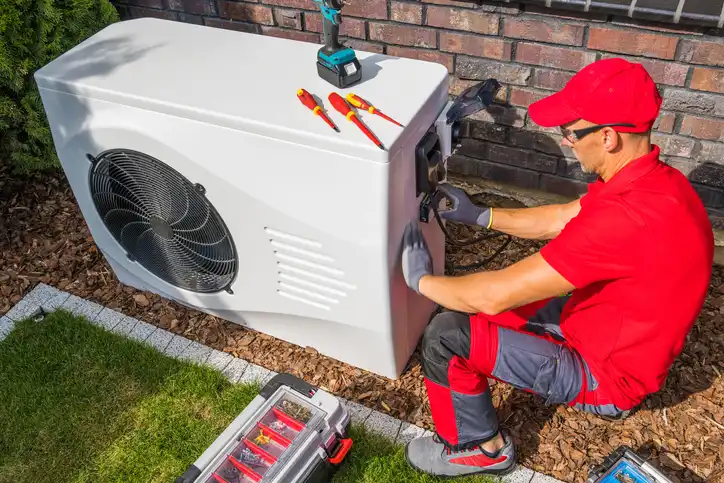
The Maintenance Process: Step-by-Step
Understanding how a technician services your equipment helps you verify the quality of work being performed. We follow a rigorous, checklist-driven process to ensure no component is overlooked.
- Initial System Evaluation: The process begins with a complete system run-through. The technician operates the heat pump in both heating and cooling modes (weather permitting) to listen for irregular sounds such as grinding, rattling, or hissing. We measure the temperature differential (Delta T) between the supply and return air. This metric provides an immediate baseline for how well the system is conditioning the air.
- Safety and Airflow Analysis: Safety is paramount. We inspect the condensate drain line to ensure it is free of blockages that could lead to water damage or mold growth. We also verify that safety switches, such as high-pressure and low-pressure cutoffs, are functioning correctly. Following this, we assess the blower motor wheel and belt (if applicable) for dust buildup, which can severely restrict airflow and reduce the volume of conditioned air reaching your living spaces.
- Lubrication and Calibration: Moving parts create friction, which generates heat and wear. We apply lubricant to motors and bearings where necessary to reduce friction and ensure smooth operation. The thermostat is also checked for calibration accuracy. If the thermostat reads the temperature incorrectly, the heat pump may run longer than necessary or cycle on and off too frequently (short-cycling), wasting energy.
- Final Performance Testing and Reporting: Once cleaning and adjustments are complete, the system is restarted and monitored until it reaches a stable operating state. We measure voltage and amperage again to verify that the system is running within safe parameters. Finally, you receive a detailed report of the findings, including the status of critical parts and any recommendations for proactive repairs to prevent future breakdowns.
When to Repair vs. Replace Your Heat Pump
Homeowners often face the difficult decision of whether to continue maintaining an aging unit or to invest in a replacement. While maintenance extends the life of the unit, there are distinct thresholds where replacement becomes the more financially sound option.
- The "Rule of 5000": A common industry standard for making this decision is the Rule of 5000. Multiply the age of your equipment by the estimated cost of the repair. If the total exceeds $5,000, replacement is generally recommended. For example, if your 12-year-old heat pump requires a $500 repair (12 x 500 = 6,000), it is likely time to replace it. Conversely, if a 5-year-old unit needs the same repair (5 x 500 = 2,500), repair is the logical choice.
- Frequency of Breakdowns: If you find yourself calling for service multiple times a year, the cumulative cost of these repairs will quickly outpace the cost of a new, high-efficiency system. Routine maintenance should prevent breakdowns; if a well-maintained system continues to fail, it indicates that major components like the compressor are nearing the end of their lifecycle.
- Efficiency Standards and Technology: Heat pump technology has advanced significantly in the last decade. Older units may have a SEER (Seasonal Energy Efficiency Ratio) rating of 10 or 12, whereas modern units can exceed SEER 20. In a climate with high cooling demands, upgrading to a higher SEER unit can result in energy savings that offset the monthly cost of financing a new system. If your current system uses R-22 refrigerant (Freon), which is phased out and extremely expensive to source, a refrigerant leak is a definitive signal to upgrade to a system using R-410A or newer refrigerants.
- Comfort and Performance Issues: If your heat pump runs continuously but never reaches the set temperature, or if some rooms are significantly hotter than others, the system may be undersized or the compressor may have lost compression. When maintenance and ductwork modifications cannot resolve these comfort issues, replacement allows you to install a properly sized unit that can handle the specific thermal load of your home.
Managing Heat Pumps in a Climate
Operating a heat pump in Palm Desert presents unique challenges compared to milder climates. The extreme temperature fluctuations and environmental factors require specific attention during maintenance.
- Combating Extreme Heat Load: During the summer, ambient temperatures frequently exceed 100°F. This high ambient temperature increases the head pressure in the refrigeration cycle, forcing the compressor to work at its peak capacity. Regular maintenance ensures that the condenser coil is perfectly clean to facilitate heat rejection. Even a slight reduction in airflow across the outdoor coil in this climate can cause the system to overheat and trip the thermal overload switch.
- Dust and Sand Intrusion: The desert environment is prone to wind-blown dust and sand. These particulates infiltrate the outdoor unit and can accumulate on the fan blades and motor windings. Over time, this buildup can unbalance the fan, causing vibration and noise, and insulate the motor, leading to overheating. Frequent inspection and cleaning of the outdoor cabinet are essential to prevent premature motor failure caused by desert debris.
- Winter Efficiency and Defrost Cycles: While winters are mild, temperatures do drop, and heat pumps must switch to heating mode. In some conditions, frost can accumulate on the outdoor coil. The heat pump has a defrost cycle to melt this ice. If the sensors controlling this cycle fail, the unit may freeze up completely or fail to defrost, reducing heating capacity. At Absolute Air Conditioning and Heating, we pay close attention to the defrost control board and sensors to ensure your home remains warm during chilly desert nights.
- Insulation and Ductwork Impact: In high-heat environments, the condition of your attic insulation and ductwork plays a massive role in heat pump performance. If ducts run through an unconditioned attic that reaches 140°F, any leaks in the return side will pull superheated air into the system, overwhelming the heat pump. During maintenance, checking the integrity of accessible ductwork helps ensure that the capacity of the heat pump isn't being wasted on heat gain from the attic.
Why Technical Expertise Matters for Heat Pumps
Not all HVAC technicians are equally proficient with heat pumps. These systems are more sophisticated than straight cool air conditioners because of the reversing mechanism and the dual-mode operation.
- Diagnostics vs. Parts Changing: A skilled technician uses diagnostic tools to identify the root cause of a problem rather than guessing and swapping parts. For example, a compressor failure might be a symptom of a blocked expansion valve or a refrigerant flood-back issue. Simply replacing the compressor without addressing the underlying cause will result in another failure. We focus on comprehensive diagnostics that look at the system as a whole.
- Understanding Airflow Dynamics: Heat pumps are sensitive to airflow. Insufficient airflow affects the temperature rise in heating mode and the temperature drop in cooling mode. Technicians must understand how to measure static pressure and adjust blower speeds to match the ductwork system. This ensures the system delivers the correct volume of air for the size of the home, preventing hot and cold spots.
- Regulatory Compliance and Safety: Handling refrigerants requires EPA certification to ensure environmental safety and compliance with federal laws. Furthermore, working with high-voltage electricity and gas (if it is a dual-fuel system) requires strict adherence to safety codes. Professional maintenance ensures that all work is compliant with local regulations and that your warranty remains valid. Manufacturers often require proof of annual maintenance to honor warranty claims on compressors and parts.
- Long-Term Reliability: The goal of our service is to provide you with a boring HVAC system—one that works quietly in the background without drama or surprise failures. By focusing on the details, from the tightness of a wire nut to the cleanliness of a drain pan, we ensure reliability. We serve the Palm Desert community with a commitment to technical excellence, ensuring that your comfort is never compromised by preventable mechanical failures.
Is your system overdue for a check-up? Don't wait for the next heatwave to discover a problem. Contact Absolute Air Conditioning and Heating today to schedule your heat pump maintenance.
Maintenance That Keeps Your Heat Pump Performing Efficiently
Even high-efficiency systems lose output without proper upkeep. Routine heat pump maintenance in Palm Desert, CA, from Absolute Air Conditioning and Heating ensures every component—from coils to sensors—is inspected and cleaned. This extends system life, reduces energy costs, and supports balanced indoor comfort.
Don’t let avoidable issues reduce performance—invest in a proactive maintenance routine.

