

Mini Split Installation in Palm Desert, CA
Beat the Palm Desert Heat with High-Performance Mini Split Installation
Beat the scorching Palm Desert sun with a reliable and efficient mini split system installed by our experienced team. We ensure a cool, comfortable home environment even on the hottest days, giving you precise temperature control where you need it most. Contact us today to schedule your load calculation and estimate.
- Same-day installation availability to quickly address your cooling needs before the heat spikes.
- High-efficiency systems tailored to save on energy bills even during peak summer usage.
- Expert service by technicians with over 30 years of local experience in desert climate control.
All installations are fully licensed, meet local Palm Desert code compliance, and come with comprehensive warranties for your peace of mind.
What to Expect From Your Ductless Cooling Solution
Choosing a ductless mini split system is a strategic investment in comfort and energy independence. Unlike traditional central air systems that require extensive renovation to extend ductwork, a mini split offers a streamlined solution for cooling specific zones, room additions, or homes where ductwork is impractical. When you commission a professional installation, the focus is on sizing, placement, and long-term efficiency.
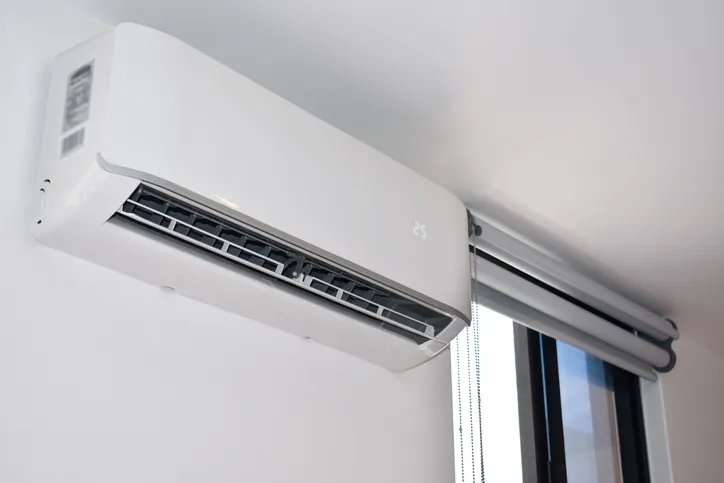
Absolute Air Conditioning and Heating provides a comprehensive installation package designed to withstand the extreme temperatures of the Coachella Valley. The scope of work involves more than simply mounting a unit on the wall. It requires a detailed assessment of the heat load in the specific room, factoring in window direction, insulation levels, and square footage. This ensures the unit installed has the correct British Thermal Unit (BTU) capacity to cool the space without short-cycling, which causes unnecessary wear on the compressor.
A professional installation includes the mounting of the indoor air handling unit, the placement of the outdoor condenser, and the secure running of the refrigerant lines, drain condensate piping, and electrical wiring connecting the two. You receive a system that operates quietly, filters air effectively, and provides immediate relief from the heat. The outcome is a zone-controlled environment where you dictate the temperature, separating your master bedroom, garage, or casita from the rest of the house’s thermostat.
The Technical Installation Process: Step-by-Step
A proper installation is critical to the longevity and efficiency of a mini split system. Inadequate installation can lead to refrigerant leaks, poor drainage, and inefficient power consumption. Our process adheres to strict manufacturer guidelines and local building standards to ensure the system performs optimally in desert conditions.
- Site Evaluation and Load Calculation: The process begins with a technical walkthrough. Technicians evaluate the proposed location for the indoor unit to ensure optimal airflow distribution. They also identify a suitable location for the outdoor condenser that allows for proper heat dissipation and meets local noise ordinances or HOA setbacks common in Palm Desert. A Manual J load calculation determines the exact tonnage required.
- Mounting the Indoor Unit: Technicians install a heavy-duty mounting plate on the interior wall. This plate must be perfectly level and secured to studs or reinforced anchors. If the unit is not level, the condensate drain may not function correctly, leading to water leakage inside the home. A precise hole is drilled through the wall to the exterior, sloping slightly downward to facilitate gravity drainage.
- Running the Line Set and Wiring: The refrigerant lines (insulated copper tubing), control wire, and drain hose are bundled and passed through the wall sleeve. Technicians carefully bend the copper tubing to avoid kinks that could restrict refrigerant flow. On the exterior, these lines are often encased in a "line hide" or decorative cover to protect them from UV degradation and maintain the home's aesthetic appeal.
- Setting the Outdoor Condenser: The outdoor unit is placed on a composite pad or mounted on wall brackets, depending on the ground conditions and airflow requirements. In the desert, keeping the unit off the ground helps prevent debris buildup and allows for better air circulation. The unit is bolted down to ensure stability during high winds.
- Connecting and Torquing: The refrigerant lines are connected to the service ports on the condenser. This step requires precision flaring tools and a torque wrench to tighten the connections to exact manufacturer specifications. Improper torque is the leading cause of refrigerant leaks.
- Vacuuming and Pressure Testing: Before releasing the refrigerant, technicians attach a vacuum pump to the system to remove all moisture and air from the lines. This is followed by a nitrogen pressure test. This step confirms the system is sealed and ready for operation. Moisture left in the lines can freeze or react with oil to create acid, damaging the compressor.
- Final System Commissioning: The refrigerant is released, and the electrical disconnect is powered on. Technicians run the unit in both cooling and heating modes, measuring the temperature differential (delta T) across the coil to verify performance. The user is then trained on how to use the remote control and maintain the washable filters.
When to Install a Mini Split vs. Repairing Existing Systems
Homeowners often face a choice between patching a failing cooling solution or upgrading to a mini split. While central air repair is viable for whole-home issues, specific scenarios make a mini split installation the superior financial and functional decision.
- Cooling Room Additions or Casitas: Extending existing ductwork to a new room addition, converted garage, or detached casita is often cost-prohibitive and technically difficult. It can also disrupt the pressure balance of your current HVAC system. A mini split operates independently, providing dedicated cooling to the new space without putting strain on your central unit.
- Addressing Hot Spots: Many two-story homes in the region suffer from uneven cooling, where upstairs bedrooms remain hot even when the downstairs is freezing. Installing a mini split in the primary bedroom allows you to sleep comfortably without super-cooling the entire house, reducing wear on your main unit and lowering energy costs.
- Replacing Window Units: Window AC units are noisy, inefficient, and pose a security risk. They also block natural light and allow air leakage around the frame. A permanent ductless system is significantly quieter, more secure, and offers far higher SEER (Seasonal Energy Efficiency Ratio) ratings, paying for itself over time through energy savings.
- Server Rooms or Home Offices: Electronics generate significant heat. If you have a dedicated home office or server room, a mini split can run year-round to protect sensitive equipment, independent of the rest of the home’s heating or cooling needs.
Navigating Local Requirements and Climate Factors
Installing HVAC equipment in Palm Desert requires adherence to specific regional codes and an understanding of the extreme local climate. Compliance ensures safety, efficiency, and the validity of your home insurance.
- California Title 24 Compliance: California’s energy code (Title 24) sets strict standards for HVAC alterations and installations. New systems must meet minimum efficiency requirements. Our installation process ensures all equipment meets or exceeds these SEER2 and HSPF2 ratings — check your tax rebate eligibility. In some cases, third-party verification or HERS testing may be required, which we facilitate.
- Permitting and Electrical Upgrades: Mechanical work generally requires a permit from the City of Palm Desert Building and Safety Department. This process verifies that the electrical circuit supplying the unit is dedicated and properly sized. Older homes may require an electrical panel upgrade or a new sub-panel to accommodate the amperage of the new heat pump, particularly if multiple heads are being installed.
- Desert Seasonality and Efficiency: The desert climate puts HVAC equipment under immense thermal load. Unlike coastal areas, Palm Desert sees ambient temperatures exceeding 115°F. Equipment must be rated for high-ambient operation. We select units with inverter-driven compressors that can ramp up or down to maintain temperature without the energy spikes associated with traditional on/off systems.
- Condensate Management: In dry climates, condensate production is lower than in humid areas, but it still occurs. However, in the desert, the primary concern is dust. Dust can mix with condensate to form sludge in drain lines. We ensure drain lines are properly pitched and accessible for cleaning to prevent blockages that could cause water damage.
- HOA Restrictions: Many neighborhoods in the area are governed by Homeowners Associations. These entities often have strict rules regarding the visibility of outdoor compressors and line sets. We plan installations to minimize visual impact, utilizing side yards or screening walls to comply with community architectural guidelines while maintaining necessary airflow for the unit.
The Advantages of Ductless Technology in Arid Zones
Ductless systems are uniquely safe and effective for the arid environment of Southern California. Traditional ducted systems can lose up to 30% of their energy through leaks and uninsulated ducts running through superheated attics. By eliminating ducts, mini splits deliver conditioned air directly into the living space with zero thermal loss.
- Filtration and Air Quality: Desert winds frequently kick up dust and allergens — learn about our ventilation services. Ductless indoor heads feature multi-stage filtration that traps dust, pollen, and particulates before they circulate. Because there is no ductwork to collect dust over the years, the air you breathe is cleaner and easier to maintain.
- Variable Speed Compressors: Inverter technology is standard in modern mini splits. Instead of shutting off when the room reaches the set temperature, the compressor slows down to maintain the climate. This prevents the uncomfortable temperature swings common with conventional systems and dramatically reduces electricity consumption—a vital consideration when electricity rates are high.
- Zoned Comfort Control: Every indoor unit operates on its own thermostat. This means you stop cooling unoccupied rooms. In a large desert home, this zoning capability translates to substantial savings. You can keep the living room cool during the day and the bedrooms cool at night, rather than cooling the entire square footage 24/7.
Securing Your Installation
Selecting the right equipment is only half the battle; the quality of the installation determines the lifespan of the unit. Absolute Air Conditioning and Heating prioritizes technical precision, ensuring that refrigerant charges are exact, voltages are stable, and mounting is secure. We handle the logistical details, from pulling permits to final inspection, providing a turnkey solution for your cooling needs.
Whether you are looking to cool a single sunroom or equip an entire home with a multi-zone system, our approach is grounded in technical expertise and local knowledge. Don’t let the heat compromise your comfort.
Call us now to discuss your project and secure a spot on our installation schedule.

