

Commercial HVAC in Palm Desert, CA
Commercial Climate Control Failures Impacting Your Business Operations
Facing the brunt of Palm Desert's severe heat or chilly evenings with an underperforming HVAC system creates immediate liability for your business. When temperature control fails, customer satisfaction drops, employee productivity plummets, and inventory risks spoilage, meaning you need immediate, reliable solutions more than ever. Contact us today to schedule an emergency diagnostic or to discuss financing options for a full system replacement.
- Ensure your ongoing comfort and operational continuity with prompt, reliable HVAC repairs and installation.
- Optimize your commercial HVAC’s efficiency to withstand the challenging desert climate and reduce overhead costs.
- Benefit from flexible financing options that allow you to secure necessary service without disrupting cash flow.
Licensed and up-to-date on all local building regulations; all installations come with full warranty assurance.
Responding to Extreme Climate Demands with High-Performance HVAC
Operating a business in the Coachella Valley requires more than standard temperature regulation; it demands a strategy for combating extreme thermal loads. Summer daytime temperatures consistently exceed 100°F, pushing commercial equipment to its absolute breaking point. In this environment, a standard air conditioning unit does not simply run; it fights a constant battle against ambient heat rejection. When a rooftop unit (RTU) or split system fails to keep up, the internal temperature rises rapidly, often rendering a workspace uninhabitable within hours.
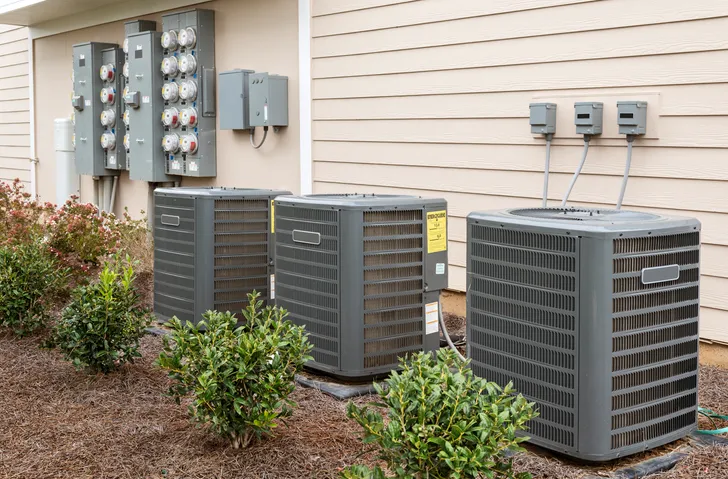
Absolute Air Conditioning and Heating understands that in Palm Desert, air conditioning is not a luxury—it is a utility as critical as electricity or water. The dry climate presents unique challenges. While humidity is generally low, the presence of airborne dust and sand can clog condenser coils rapidly, reducing heat exchange efficiency and forcing compressors to draw excessive amperage. This leads to premature component failure and spiked energy bills.
Commercial systems must be sized and maintained specifically for these conditions. Undersized units will run continuously without satisfying the thermostat, leading to "short cycling" and eventual burnout. Conversely, oversized units will cool the space too quickly without properly dehumidifying or circulating air, resulting in clammy, stagnant environments. The goal is to achieve a balanced thermal equilibrium that protects your assets and keeps your doors open, regardless of the reading on the thermometer.
What You Get: Comprehensive Commercial Systems and 24/7 Coverage
When you engage professional services for your commercial facility, you require a scope of work that covers the entire lifecycle of your climate control infrastructure. The focus is on minimizing downtime and maximizing the lifespan of capital equipment.
- Emergency Repair and Diagnostics: Equipment breakdowns rarely happen at convenient times. Access to 24/7 emergency repair ensures that a server room overheating at 2:00 AM or a restaurant cooling failure on a Friday night is addressed immediately. Technicians utilize advanced diagnostic tools to measure superheat, subcooling, and airflow static pressure to pinpoint the root cause of failure, rather than just swapping parts.
- System Design and Installation: Whether for new construction or a retrofit, proper system design is paramount. This includes load calculations that account for building orientation, window surface area, occupancy levels, and internal heat-generating equipment. Services cover the installation of Rooftop Units (RTUs), chillers, cooling towers, and variable refrigerant flow (VRF) systems tailored to your specific square footage and zoning needs.
- Preventative Maintenance Programs: In a desert environment, reactive maintenance is the most expensive strategy. Comprehensive maintenance agreements include chemical cleaning of condenser coils to remove compacted sand, belt tension adjustments, lubrication of bearings, and electrical connection tightening. This proactive approach prevents the small inefficiencies that compound into major system failures during heat waves.
- Indoor Air Quality (IAQ) Solutions: Commercial spaces often suffer from "sick building syndrome" if fresh air intake is not managed correctly. Solutions include the installation and calibration of economizers, high-efficiency particulate air (HEPA) filtration systems, and UV-C light sanitizers to reduce airborne pathogens and allergens within the ductwork.
- Ductwork Fabrication and Repair: Leaky ducts can account for significant energy loss. Services include inspecting ductwork for breaches, sealing joints with mastic, and fabricating custom transitions to ensure optimal airflow delivery to every zone of the building.
The Commercial Installation and Replacement Workflow
Replacing a commercial HVAC system is a major logistical operation that requires precise coordination to minimize disruption to your daily business activities. A professional approach ensures that the project moves from assessment to commissioning without unnecessary delays.
- Site Assessment and Load Calculation: The process begins with a physical survey of the facility. Technicians do not simply read the nameplate on the old unit; they perform a new Manual N load calculation. Building usage may have changed since the original installation—partitions may have been moved, or occupancy loads increased. This data dictates the tonnage and SEER/IEER rating required for the new system.
- System Selection and Procurement: Based on the assessment, options are presented that align with your budget and efficiency goals. This often involves selecting between single-stage, two-stage, or modulating compressors. High-efficiency units from trusted brands like Carrier or Lennox are sourced, ensuring availability and compliance with current energy standards.
- Logistics and Safety Planning: For rooftop installations, crane coordination is essential. The logistics team handles necessary street closure permits and coordinates with crane operators to lift the old unit off and set the new unit in place safely. Safety protocols are established to protect employees and customers during the lifting operation.
- Demolition and Retrofitting: The old equipment is disconnected and removed. Existing curbs and adapters are inspected. If the new unit has a different footprint, a curb adapter is fabricated to ensure a watertight seal. Electrical disconnects and gas lines are updated to meet current code requirements.
- Installation and Connection: The new unit is secured to the curb. Refrigerant lines are brazed with a nitrogen purge to prevent oxidation. Electrical lines are connected, and condensate drains are routed to appropriate discharge points. Economizers are installed and linked to the thermostat or building automation system.
- Commissioning and Testing: Simply turning the unit on is not enough. The system undergoes a rigorous commissioning process. Airflow is balanced across all registers. Refrigerant charge is fine-tuned to manufacturer specifications. All control sequences—including cooling, heating, and emergency shut-offs—are tested to verify operation.
The Financial Logic: When Replacement Beats Repair
Commercial property owners and facility managers constantly weigh the cost of immediate repairs against the capital investment of a new system. Making the wrong choice can lead to wasted budget on a "money pit" unit or unnecessary capital expenditure. There are clear metrics used to determine the most financially sound path.
- The 50% Rule: A widely accepted standard in commercial HVAC is the 50% rule. If the cost of the repair approaches or exceeds 50% of the value of the equipment (or the cost of a new unit), replacement is generally the smarter financial move. This is particularly true if the unit is out of warranty.
- The $5,000 Cap: For many businesses, any repair exceeding $5,000 triggers an automatic review for replacement potential. Major component failures, such as a burnt-out compressor or a cracked heat exchanger, often fall into this price range. Investing that amount into an aging system rarely yields a return on investment compared to putting it toward a new, warrantied asset.
- Age and Depreciation: In the harsh Palm Desert climate, the life expectancy of a commercial RTU is typically 10 to 15 years. If your system is over 12 years old and requires a significant repair, the likelihood of a secondary failure in the near future is high. Replacement resets the clock on depreciation and reliability.
- Energy Efficiency Ratios: Older units may operate at 8 or 10 SEER. Modern commercial units comply with stricter Department of Energy standards, often exceeding 14 or 16 SEER (and high IEER ratings for part-load efficiency). The energy savings alone from upgrading a 15-year-old unit can sometimes offset the monthly financing cost of a new system, effectively paying for the upgrade over time through lower utility bills.
- Refrigerant Phase-Outs: Older systems utilizing R-22 refrigerant are becoming prohibitively expensive to repair due to the global phase-out of this ozone-depleting substance. If your system leaks R-22, the cost of the refrigerant alone may justify upgrading to a system that uses R-410A or newer, compliant refrigerants.
Navigating Local Palm Desert Regulations and Seasonal Needs
Commercial HVAC projects in California are subject to some of the strictest building codes and energy efficiency standards in the country. Adhering to these local and state regulations is not optional; non-compliance can lead to failed inspections, fines, and the inability to sell or lease the property.
- Title 24 Compliance: California’s Title 24 energy standards mandate specific efficiency levels, insulation requirements, and control systems for commercial HVAC. This includes requirements for economizers (which use cool outside air to cool the building when possible) and demand-controlled ventilation. Professional installation guarantees that all documentation and acceptance testing forms are properly filed with the city.
- Permitting and Zoning: Replacing a commercial unit requires a mechanical permit from the local building department. Specific zoning laws regarding noise decibel levels may also apply, particularly if the commercial property borders a residential zone. Sound attenuation blankets or barriers may be required for units that exceed noise limits.
- Seasonal Preparation: The desert climate dictates a strict seasonal maintenance rhythm.
- Spring: The focus is on preparing for the extreme heat. This involves aggressive coil cleaning, checking refrigerant charges, and testing capacitors.
- Fall: As temperatures drop, the focus shifts to the heating cycle. Even in the desert, nights can be cold. Heat exchangers must be inspected for cracks to prevent carbon monoxide leaks, and gas pressure must be calibrated.
- Water Conservation: For facilities utilizing water-cooled chillers or cooling towers, local regulations regarding water usage and discharge are critical. Systems must be optimized to minimize drift and evaporation loss, aligning with regional water conservation efforts.
Why Local Businesses Choose Absolute Air Conditioning and Heating
Selecting a service provider is a decision that impacts the long-term viability of your facility. You need a partner who views your HVAC system as a critical business asset rather than just a machine to be fixed.
- Technical Expertise: Technicians undergo rigorous training and certification processes. They are well-versed in the complexities of commercial 3-phase power, low-voltage controls, and building automation integration. This expertise minimizes diagnostic time and ensures repairs are done correctly on the first visit.
- Brand Independence and Partnership: While maintaining strong relationships with major manufacturers like Carrier and Lennox, the focus remains on finding the right solution for the client. This allows for unbiased recommendations based on the specific architectural and operational needs of the building.
- Response Time and Reliability: In a commercial setting, time is money. A dedicated fleet of service vehicles stocked with common commercial parts ensures that most issues can be resolved immediately without waiting for supply house deliveries. The logistical capability to handle large-scale replacements or multi-unit change-outs sets the standard for local service.
- Transparent Communication: You receive clear, written estimates before any work begins. There are no hidden fees or surprise charges. The goal is to provide actionable data that allows you to make informed decisions about your property management budget.
Your business cannot afford to halt operations due to climate control failures. Whether you are dealing with an aging system that is driving up energy costs or an emergency breakdown that threatens your inventory, you need a solution that is fast, effective, and compliant with all local standards. Take control of your commercial environment today.
Contact us now to schedule your commercial HVAC consultation or emergency service.
HVAC Systems Built to Meet Commercial Demands
Commercial systems require scale, performance, and reliability. With commercial HVAC in Palm Desert, CA, Absolute Air Conditioning and Heating provides design, installation, and service for businesses that need dependable climate control. From tenant spaces to full-scale buildings, we deliver solutions that align with budget and operational requirements.
Support your business with commercial systems built for performance and durability.

