

Deciding Between Repairing a Leaky Attic Evaporator Coil or Replacing the Entire Handler
The Myth of the Quick Fix: Confronting a Leaky Attic Coil
A common myth in home maintenance is that swapping out a single broken part is always the smartest, most cost-effective solution. If you are Deciding Between Repairing a Leaky Attic Evaporator Coil or Replacing the Entire Handler, that myth can quickly lead you astray. When our technicians at Absolute Air Conditioning and Heating discover a refrigerant leak in a customer's system right in the middle of the September fall-prep transition, we know the temptation to just patch the problem is strong. Your cooling demands are still present, but the heating season is right around the corner, making it feel like a terrible time for a major system overhaul.
However, modern heating and cooling equipment operates as a delicate, balanced ecosystem. Treating a major component failure like a simple flat tire often creates a cascade of new problems. The decision point you face is crucial: do you invest in a drop-in coil repair on an aging system, or do you upgrade the entire air handler to secure long-term efficiency and reliability? Making the right choice requires looking past the immediate fix and understanding how your system will perform over the next decade.
For comprehensive guidance on your system options, exploring professional air conditioning services can help you navigate this complex decision with confidence.
The Reality of the September Transition
In our experience serving Palm Desert, the transition from summer to fall is a uniquely stressful time for your home's climate control system. Your equipment has just spent months battling extreme heat, and now it must prepare to switch gears for cooler weather. Finding a leak now means your system is already compromised. A quick fix might get cold air blowing again today, but it leaves you vulnerable to a complete breakdown when you need your system the most. Understanding the long-term value of a complete system upgrade versus a partial repair is the key to maintaining a comfortable, efficient home.
Understanding the Stress on Your Hidden Attic Equipment
Before you can make an informed decision about replacing parts, it helps to understand exactly what is happening in your attic. The evaporator coil is a critical component housed inside the indoor air handler. Its job is to absorb heat and humidity from the air inside your home. As warm indoor air blows across the freezing cold metal coils, the refrigerant inside absorbs the heat, and the newly cooled air is pushed back through your vents.
If you are unsure about what the AC unit in the attic is called, it is typically the air handler or the indoor portion of a split-system heat pump or air conditioner. Because this equipment is hidden away, it is easy to forget the extreme conditions it endures every single day.
Why Refrigerant Leaks Develop
Refrigerant leaks do not happen because the fluid simply "runs out." Your cooling system is a closed loop. Leaks occur because the metal components—specifically the copper or aluminum tubing in the evaporator coil—degrade over time. In our daily work across Palm Desert, our team sees firsthand how the intense thermal stress of a sweltering attic causes the metal to constantly expand and contract. Over years of operation, this microscopic movement weakens the joints and the metal itself.
Additionally, volatile organic compounds (VOCs) from common household products like cleaning sprays and air fresheners are pulled into the return vents. These chemicals react with the condensation on the evaporator coil, creating formicary corrosion. This corrosion eats tiny, pinhole leaks into the metal. Once a leak forms, your system loses its ability to absorb heat effectively.
Ignoring a leak is not an option. As the refrigerant level drops, your system runs longer and harder to reach the temperature set on the thermostat. This constant operation drives up your energy usage and places immense strain on the outdoor compressor. Eventually, the indoor coil will freeze into a block of solid ice, or the overworked outdoor compressor will fail entirely—turning a manageable problem into a catastrophic system failure.
Option 1: The Drop-In Coil Repair (Pros and Cons)
When faced with a leaking coil during the September fall-prep transition, the most immediate instinct is often to just replace the broken part. This is known in the industry as a "drop-in" coil replacement. The technician removes the leaking coil from the existing air handler cabinet and slides a new one into its place, leaving the old blower motor, insulation, and outdoor condenser intact.
While this might seem like a logical approach, it carries significant technical realities that every homeowner should weigh carefully. If you need immediate troubleshooting, professional AC repair in Palm Desert can help diagnose the exact location and severity of the leak.
The Pros of a Drop-In Replacement
• Faster turnaround: Swapping a coil generally takes less time than rebuilding the entire air handler setup.
• Targeted fix: You are addressing the exact component that failed without altering the rest of the indoor equipment.
• Short-term relief: It restores your cooling capacity immediately, helping you survive the lingering late-summer heat.
The Severe Risks of a Mismatched System
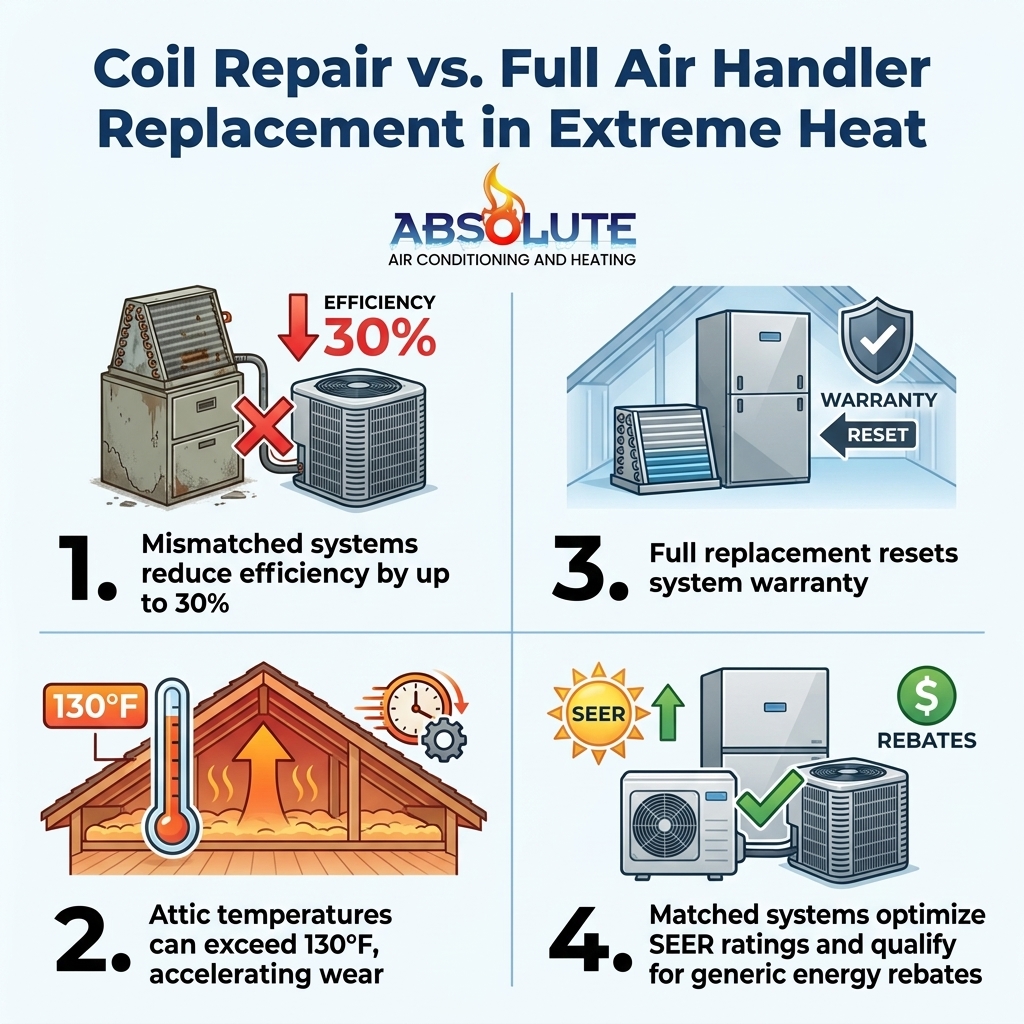
• Efficiency plummet: Pairing a brand-new, highly efficient evaporator coil with an older, less efficient blower motor and outdoor condenser creates a mismatched system. According to industry data, mismatched components can reduce your overall system efficiency by up to 30 percent.
• Premature failure: The new coil expects a certain volume of airflow that an aging blower motor often cannot deliver. This imbalance stresses the older parts, accelerating their eventual breakdown.
• Refrigerant compatibility issues: Older systems often use phased-out refrigerants like R-22 or older R-410A setups. Putting a modern coil into an obsolete system can lead to ongoing compatibility and pressure issues.
• Voided warranties: Manufacturers design their equipment to work as a matched set. Installing a new coil with an old outdoor unit often means you will not get the full manufacturer warranty on the new part.
The quick takeaway: A drop-in coil is a band-aid. It stops the bleeding today but often sets the stage for a much larger, more frustrating breakdown in the near future.
Option 2: Full Air Handler Upgrade for Long-Term Reliability
The alternative to a drop-in repair is a full air handler replacement. This involves removing the entire indoor unit—the cabinet, the blower motor, the evaporator coil, and the internal electronics—and installing a completely new, modern unit. While it is a larger undertaking, the technical and efficiency benefits are substantial, especially when preparing for the dual demands of the heating and cooling seasons.
The Benefits of a Fully Matched System
The Department of Energy (DOE) strongly recommends installing matched HVAC systems. When the indoor air handler and the outdoor condenser are designed to work together, they operate at peak efficiency. A full replacement ensures that the airflow, refrigerant pressures, and electrical demands are perfectly synchronized.
• Advanced blower technology: New air handlers feature variable-speed ECM (Electronically Commutated Motor) blowers. Unlike older motors that only run at one speed (blasting air or turning off completely), variable-speed motors adjust their output gradually. This provides superior humidity control, quieter operation, and significantly better indoor air quality.
• Upgraded cabinet insulation: Modern air handlers are built with advanced, foil-faced insulation that prevents energy loss and stops the cabinet from sweating in a hot attic.
• Resetting the clock: A full replacement resets your warranty. You gain peace of mind knowing that the entire indoor unit is protected for years to come, rather than just a single part.
Executing a full upgrade in a tight, blistering environment requires specialized skill. Our team at Absolute Air Conditioning and Heating brings specific expertise in navigating blistering hot attics and safely executing complex attic HVAC replacements. This level of professional care ensures that the new system is calibrated perfectly, even in the harshest conditions.
We see the value of this approach constantly. During a recent severe heat wave where Palm Desert temperatures averaged 116 degrees, we helped a local homeowner whose old AC unit began malfunctioning. Our technicians came out twice to keep the failing system running safely until a completely new, matched unit could be secured. The new system was installed a week later, finally providing reliable, uninterrupted cooling when it mattered most. For a resilient solution, professional AC installation and replacement is the most dependable path forward.
Side-by-Side Comparison: Repair vs. Replace
To make the best choice for your home during the September fall-prep transition, it helps to see the technical realities laid out side-by-side. Here is how a drop-in coil repair stacks up against a full air handler replacement.
• Expected Lifespan — Drop-In Coil Repair: Short-term (1 to 3 years before other old parts fail). — Full Air Handler Upgrade: Long-term (10 to 15+ years with proper maintenance).
• System Efficiency (SEER) — Drop-In Coil Repair: Often drops; mismatched parts can lose up to 30% efficiency. — Full Air Handler Upgrade: Optimized; delivers the full SEER rating it was designed for.
• Warranty Coverage — Drop-In Coil Repair: Limited to the single new coil; old parts remain unprotected. — Full Air Handler Upgrade: Full manufacturer warranty on the entire indoor unit.
• Airflow & Comfort — Drop-In Coil Repair: Relies on the aging, single-speed blower motor. — Full Air Handler Upgrade: Features modern variable-speed motors for superior comfort.
• Refrigerant Compatibility — Drop-In Coil Repair: May require adapters or struggle with upcoming R-454B transitions. — Full Air Handler Upgrade: Fully compatible with modern, environmentally friendly refrigerants.
The analytical view: Replacing just the coil leaves the heart of your indoor system—the blower motor and the control board—untouched and aging. If your system is already over ten years old, investing heavily in a single part rarely yields a good return on investment.
Why Extreme Desert Climates Accelerate HVAC Wear
Our technicians will be the first to tell you that it is impossible to make a sound decision without factoring in the environment where your equipment lives. In Palm Desert, we see daily how the climate plays a massive role in how long your HVAC components survive. A band-aid fix that might last five years in a mild coastal climate will often fail much faster in the desert.
The Attic Oven Effect
During the peak of summer, ambient outside temperatures regularly exceed 110 degrees. Because heat rises and gets trapped beneath your roofline, your enclosed attic space becomes an oven. Attic temperatures can easily exceed outside air temperatures by 40 to 50 degrees, pushing past 130°F on a regular basis.
This immense thermal load is brutal on older air handler cabinets. The standard insulation inside older units begins to degrade, dry out, and flake away. When the insulation fails, the extreme attic heat penetrates the cabinet, forcing the blower motor to work harder to push cold air into your home. The wiring becomes brittle, and the metal cabinet itself is subjected to constant thermal expansion.
In these harsh conditions, a simple coil drop-in is often a risky, short-lived solution. You are placing a brand-new coil inside an aging, poorly insulated metal box that is baking in 130-degree heat. Upgrading the entire air handler provides a modern, heavily insulated cabinet designed specifically to withstand extreme thermal loads, protecting the sensitive components inside and ensuring the cold air actually makes it into your living space.
Timing the Upgrade: The Advantage of the Fall Transition
Discovering a major system issue is never convenient, but finding it during the September fall-prep transition actually offers a strategic advantage. This window of time is the absolute best moment to make proactive, long-term decisions about your home comfort.
Why the Transition Period Matters
1. Handling Dual Demands: In early fall, your system must handle lingering late-summer heatwaves while also prepping for winter heating. Upgrading your air handler now ensures that your blower motor and indoor coils are ready to distribute warm air efficiently when the temperatures finally drop.
2. Avoiding Emergency Breakdowns: Waiting until the system completely fails usually means it will happen on the coldest night of winter or the hottest afternoon of the following summer. Proactive replacement eliminates the stress of emergency outages.
3. Incentive Opportunities: Upgrading to a fully matched, high-efficiency system often opens the door to financial incentives. Generic federal tax credits and local utility rebates may apply to qualifying high-efficiency upgrades, helping offset the investment of a full replacement.
4. Smoother Scheduling: The transition season is typically less chaotic than the peak of summer, allowing for more flexible installation timelines and thorough system testing.
Our team often helps homeowners make this proactive choice. In one recent case, we assessed an old system that clearly needed replacement, and our customer opted to have us install a new high-efficiency heat pump. The installation process went smoothly, and the new system was in place and tested well before the weather shifted. To keep your new investment running perfectly year after year, staying on top of routine AC maintenance is essential.
Make a Confident Choice for Your Home's Long-Term Comfort
While a quick coil repair might seem appealing when you first discover a leak, the reality of operating a mismatched system in a 130-degree Palm Desert attic tells a different story. A full air handler replacement offers superior reliability, optimized energy efficiency, and the peace of mind that comes with a fresh warranty. You do not have to guess which path is right for your home. Our team at Absolute Air Conditioning and Heating can provide a professional assessment to evaluate your existing equipment, measure your airflow, and confirm the best, most durable path forward. Schedule an inspection today to discuss high-efficiency replacement options and secure your family's comfort for the long haul.
Frequently Asked Questions
Is it better to replace the evaporator coil or the whole air handler?
Replacing the whole air handler is generally the better long-term investment if your system is aging. A full replacement ensures all components are perfectly matched, which maximizes energy efficiency and restores your full manufacturer warranty. A simple coil repair often leaves you with an older, less reliable blower motor that could fail soon after.
What happens if I put a new coil on an old AC unit?
Putting a new coil on an old unit creates a mismatched system that struggles to communicate effectively. This mismatch can reduce your overall cooling efficiency by up to 30 percent and put excessive strain on your older outdoor compressor. Over time, this imbalance often leads to premature failure of the older components.
Why is my air handler in the attic leaking water?
A leaking air handler in the attic is typically caused by a frozen evaporator coil that is melting, or a clogged condensate drain line. When the coil develops a refrigerant leak, it drops in temperature and turns surrounding humidity into a block of ice. As that ice melts, it overwhelms the drain pan and spills out into your attic space.
How long does an air handler last in a hot attic?
In our experience, an air handler in a hot desert attic typically lasts between 10 and 15 years with proper, regular maintenance. The extreme thermal stress—often exceeding 130 degrees—accelerates the wear and tear on blower motors and degrades the internal cabinet insulation much faster than in milder climates.
Can I just replace the evaporator coil and not the outdoor condenser?
Yes, it is physically possible to replace just the indoor coil, but it is rarely recommended for older systems. Doing so creates a mismatched setup that compromises efficiency and often voids the warranty on the new part. For optimal performance, the indoor coil and outdoor condenser should be replaced as a matched pair.
Do energy rebates apply if I upgrade my entire attic air handler?
Yes, many generic federal tax credits and local utility rebates require the installation of a fully matched, high-efficiency system to qualify. Simply replacing a single part like an evaporator coil usually does not meet the efficiency standards required by these incentive programs. You should always verify current generic rebate availability with your utility provider or a tax professional.
Serving the Entire Coachella Valley

The Real Cost of Ignoring Your Attic HVAC Unit's Fall Inspection
After a grueling summer, minor wear and tear in an attic HVAC unit can quickly snowball into a major winter breakdown. See why skipping a seasonal checkup puts your entire system at risk.
First Time Turning on the Heat? Differentiating Normal Dust Burn-Off from Electrical Issues
That burning smell on the first chilly morning usually triggers panic. Find out how to tell harmless baking dust from a dangerous wire, and know exactly when to shut your system down.
Why September is the Critical Window for Testing Your Furnace's Ignition Sequence
Summer heat leaves dormant heating components vulnerable to failure. Testing the ignition system in early fall prevents a sudden no-heat emergency when nighttime temperatures drop.

