

The Role of Your Attic Air Handler in Managing Indoor Air Quality
The Frustrating Cycle of Constant Dusting in Desert Homes
If you are constantly wiping down countertops only to find a new layer of grit hours later, understanding the role of your attic air handler in managing indoor air quality is the most important step you can take. At Absolute Air Conditioning and Heating, we hear this exact frustration from Palm Desert homeowners every week. Your AC is running nonstop, but the house still feels dusty, stale, and uncomfortable. Many homeowners blame the local wind, their cleaning habits, or their vacuum cleaner. They spend hours scrubbing surfaces, replacing standard air filters, and investing in expensive cleaning supplies, hoping to finally get ahead of the constant accumulation of dust.
Here is the thing: a pattern we see often is that the issue usually has nothing to do with your housekeeping. When dust reappears almost immediately after you clean, it points directly to a hidden mechanical flaw in your home's HVAC system. Specifically, the equipment operating out of sight above your ceiling is likely working against you. The air handler in your attic plays a critical, often overlooked role in the overall health of your home's environment.
Instead of just treating the symptoms inside your living space, our team recommends looking at the source of the airflow. If your home in Palm Desert is struggling with persistent airborne particulates, it is time to investigate the mechanical components driving that air. Exploring professional indoor air quality services can help you identify exactly how your hidden attic equipment is contributing to the dust settling on your furniture.
More Than a Blower: Your Home's Respiratory System
In our years servicing desert properties, we've found that most homeowners think of their air conditioning system as just a machine that makes cold air. However, your central HVAC system is actually the respiratory system of your entire house. The air handler is the central component—the "lungs" of the home—responsible for circulating every single cubic foot of indoor air multiple times a day. It does not just push air around; it actively manages the pressure, humidity, and cleanliness of the air you breathe.
To understand why this matters, you have to look at the two distinct sides of your ductwork:
• The Supply Side: This is the network of ducts that pushes conditioned, filtered air out into your living areas through the supply vents.
• The Return Side: This is the network that pulls stale air from your rooms back into the system to be filtered, cooled, or heated again.
The air handler sits right in the middle of this continuous loop. When this critical respiratory component is housed in a harsh, unconditioned attic space, it faces severe environmental stress. Attics in the desert can easily exceed 130 degrees in the peak of the afternoon. Housing sensitive mechanical equipment in this extreme environment creates specific vulnerabilities. If you are unsure about the terminology or what the AC unit in your attic is called, the key takeaway from our field experts is that this central hub dictates the quality of the air circulating through your bedrooms and living room.
The Hidden Physics of Negative Pressure in Your Attic
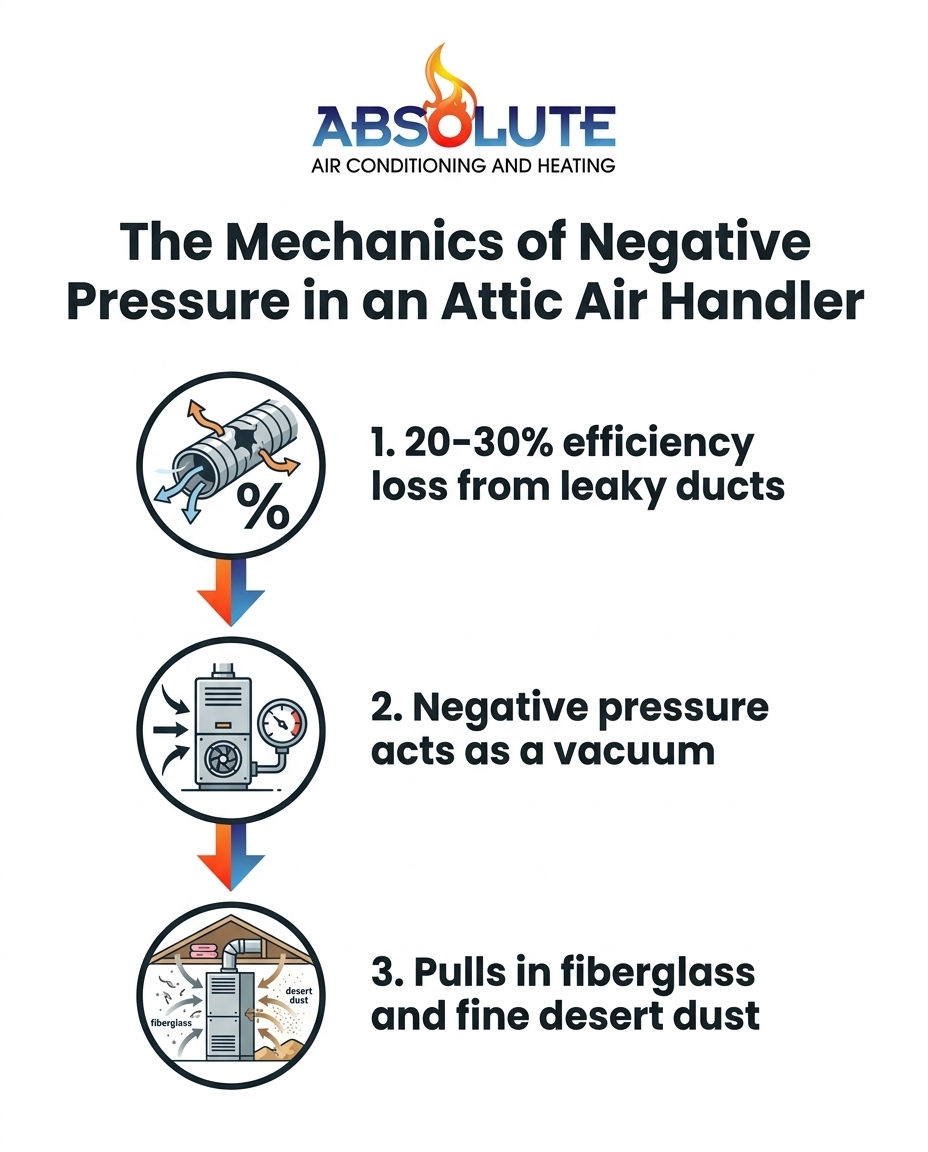
The core mechanical cause of poor indoor air quality that our technicians typically uncover comes down to a concept called negative pressure. In the context of an HVAC system, the return plenum—the section of the air handler that pulls air in from the house—operates under negative pressure. The powerful blower motor is actively sucking air toward itself. When the system is perfectly sealed, it only pulls air from inside your home, right through the designated air filter.
However, when small gaps, cracks, or unsealed joints develop on the return side of the air handler, that negative pressure acts exactly like a vacuum cleaner. Instead of just pulling air from your living room, the system forcefully draws unconditioned, contaminated attic air directly into the ductwork. Because this vacuum effect is so strong, it easily pulls in the surrounding environment before the air ever reaches your filter. According to the Department of Energy, and backed by what we see in the field daily, leaky ductwork and unsealed air handlers can reduce cooling and heating efficiency by 20 to 30 percent, all while severely compromising the air quality inside the home.
• Properly Sealed Air Handler — Airflow Source: Pulls 100% of air from living space return vents. — Impact on Indoor Air Quality: High. Air passes through primary filters as designed. — Efficiency Impact: Optimal. System runs shorter cycles.
• Unsealed/Leaky Air Handler — Airflow Source: Pulls air from living space AND the raw attic environment. — Impact on Indoor Air Quality: Poor. Injects raw dust and insulation into the home. — Efficiency Impact: Severe loss. 20-30% drop in energy efficiency.
How Seals Degrade Over Time
You might wonder how a system that was originally installed correctly could develop these hidden leaks. When our team inspects aging units, the answer always lies in the brutal attic environment. Several factors contribute to the breakdown of the seals around your air handler:
• Thermal expansion and contraction: The extreme heat of a desert attic causes the metal casing of the air handler and the ductwork to expand during the day and contract at night. This constant shifting breaks rigid seals over time.
• Vibration from the blower motor: Every time the system kicks on, the heavy blower motor vibrates. Over years of operation, this subtle shaking loosens mechanical connections and screws.
• Deterioration of old materials: Older installations often relied on standard cloth-backed HVAC tape or low-quality mastic. In extreme heat, these adhesives dry out, turn brittle, and eventually flake away, leaving open gaps right next to the blower motor.
What Exactly is Bypassing Your Filter?
When negative pressure turns your attic air handler into a vacuum, it is important to understand exactly what is being pulled into your living space. The contaminants in an unfinished attic are vastly different from standard household dust. Because Palm Desert's arid environment produces exceptionally fine dust particulates, these tiny abrasive particles easily infiltrate unsealed attic units.
We have pulled apart hundreds of leaky air handlers, and here is exactly what we routinely find bypassing your filter:
1. Fiberglass insulation particles: The floor of most attics is covered in blown-in or batt fiberglass insulation. When the return plenum leaks, the suction pulls loose, microscopic fiberglass fibers into the airstream, which are then blown directly into your bedrooms.
2. Microscopic desert dust and particulate matter: Attic vents are designed to let outside air flow through the roof space to keep it cool. This means the fine, powdery desert dust blown around outside settles heavily inside the attic. A leaky air handler sucks this raw, unfiltered dirt straight into your home.
3. Stale, superheated air: While attic air is drastically hotter in the summer, even during the early fall transition, pulling this warm, stale air into the cooling system forces the AC to work significantly harder just to overcome the heat it just ingested.
4. Pest debris: Unfortunately, attics are common spaces for insects or rodents to leave behind droppings and dander. A compromised return duct can pull these biological contaminants into the air supply.
The most frustrating part of this process is how these contaminants enter the system. In many configurations we repair, the physical leaks in the air handler's casing or the return plenum occur after the air has already passed through the filter slot. This means you could buy the most expensive, highly rated pleated filter on the market, and it won't make a difference. The raw attic air is bypassing the primary air filter completely and rushing straight into the blower motor to be distributed throughout your house.
The Futility of Standalone Air Purifiers
When faced with constant dusting and poor indoor air quality, we often talk to frustrated customers who invested in expensive, standalone room air purifiers. It makes logical sense: if the air is dirty, put a machine in the room to clean it. While these devices can be helpful for minor, localized issues, our IAQ specialists know they are fundamentally incapable of solving a mechanical HVAC leak.
The reason comes down to simple math and airflow volume. A high-end standalone room purifier might process 150 to 250 cubic feet of air per minute (CFM). Meanwhile, your central air handler is moving 1,200 to 2,000 CFM of air. If your central system is actively operating under negative pressure and injecting contaminated attic air into your home at high velocity, a small room purifier simply cannot keep up. It is the equivalent of trying to bail out a sinking boat with a teacup while the hull has a massive hole in it.
Until the physical leaks in the attic air handler are sealed, any filtration inside the living space is just treating a symptom. The central system will continue to overpower the room purifiers, leaving you frustrated with the ongoing accumulation of dust. True indoor air quality requires securing the perimeter of the ductwork first.
The September Transition: A Critical Window for IAQ
Timing plays a massive role in indoor air quality, and the September early fall transition is a particularly critical window we monitor for homes in the desert. As summer begins to fade, the shifting wind patterns characteristic of the early fall transition start to stir up significant amounts of outdoor airborne particulate matter. These winds easily carry fine dirt, pollen, and debris right through your home's exterior attic vents.
During this transition period, the volume of dust settling in your attic increases dramatically. If your air handler has degraded seals, the negative pressure will pull this seasonal influx of dust directly into your living space. Furthermore, this transition period is the perfect time for a pre-heating-season tune-up before the winter weather begins.
As the weather cools, homeowners tend to close their windows and rely heavily on their central heating system. If the air handler is pulling in fiberglass and dust, closing up the house tighter only traps those contaminants indoors. Addressing these hidden leaks during the September early fall transition ensures that your system is sealed, clean, and ready to provide healthy air before you lock down the house for the cooler months. Additionally, sealing ductwork and upgrading systems during this season can sometimes qualify homeowners for generally applicable utility incentive programs or energy tax credits, making it a financially smart time to act (we always advise verifying current programs with your utility provider or tax professional).
Professional Diagnostics: Sealing the Source
Fixing a leaky air handler is not a weekend DIY project with a roll of duct tape. It requires professional diagnostics to accurately locate the source of the negative pressure and apply permanent, code-compliant solutions. Our professionals use specialized tools, such as digital manometers, to measure the static pressure inside the ductwork. By analyzing these pressure readings, our technicians can pinpoint exactly where the return plenum or the air handler casing is pulling in unconditioned air.
Once the hidden leaks are identified, the sealing process involves applying proper, high-quality mastic sealant and mechanical fasteners. Unlike standard tapes that dry out in the desert heat, professional-grade mastic goes on wet and cures into a flexible, durable rubberized seal that can withstand the thermal expansion and vibration of the attic environment. Because Absolute Air Conditioning and Heating has a deep understanding of local desert HVAC challenges, our technicians know exactly how to secure and seal hidden attic equipment against the relentless intrusion of fine particulate dust.
Routine pre-heating-season maintenance is often when our team first discovers these hidden attic vulnerabilities. For example, a local customer recently reached out to us for a fall inspection and tune-up for their AC and furnace. Raymond, one of our expert technicians, performed a prompt, friendly, professional, and thorough evaluation of their system. By clearly explaining the system's overall health and airflow dynamics, Raymond helped the customer gain a deep understanding of their equipment. They inquired about new IAQ products and confidently signed up for a yearly maintenance package to keep everything running smoothly.
If a maintenance visit uncovers severe degradation in the equipment casing or return plenum, professional attic AC repair is the necessary next step to restore the system's structural integrity. Once the physical leaks are permanently sealed and the negative pressure issue is resolved, we can then discuss integrating advanced air filtration systems. When the ductwork is sealed, whole-home filtration can finally do its job effectively, capturing household allergens without fighting a constant influx of attic dirt.
When Repair is Needed
During the diagnostic process, we carefully identify when degraded seals require more extensive repairs rather than just a simple mastic application. If the return plenum has completely detached or the metal casing is compromised, structural repairs are necessary. Additionally, a leaky return system often causes the blower motor to overwork as it struggles to maintain proper airflow. Ensuring the motor hasn't sustained long-term damage from pulling in heavy debris is a key part of securing the system's future reliability.
Frequently Asked Questions About Attic Air Handlers and IAQ
Does the attic air handler affect indoor air quality?
Yes, in our experience, the attic air handler has a massive impact on indoor air quality. It acts as the central hub that circulates all the air in your home. If the unit has loose panels or unsealed joints, it will pull raw, unfiltered attic air—including dust and insulation—directly into your home's ductwork and blow it into your living spaces.
Why is my house so dusty even with an air purifier?
If your house remains dusty despite running air purifiers, your central HVAC system is likely pulling in dirt from the attic faster than the purifier can clean it. A standalone room purifier processes a very small volume of air compared to a central air handler. Until professionals seal the physical leaks in the attic return ducts, the dust will continue to accumulate.
Can attic insulation get into my air vents?
Absolutely. When the return side of the air handler develops leaks, it creates negative pressure that acts like a vacuum. We frequently see this suction pull loose fiberglass insulation fibers from the attic floor into the blower motor, which then distributes those irritating particles out through your supply vents.
Can a dirty air handler make you sick?
A severely contaminated air handler can certainly contribute to respiratory irritation and allergy symptoms. When the unit pulls in pest dander, fine desert dust, and stale attic air, it degrades the overall health of your indoor environment. Continually breathing in these bypassed contaminants can exacerbate asthma and cause lingering discomfort.
How do professionals safely seal an air handler in the attic?
Our professionals measure the static pressure to locate hidden leaks without damaging the equipment. We then use specialized, heat-resistant mastic sealant and mechanical fasteners to permanently close gaps in the casing and return plenum. This ensures a durable seal that won't degrade under the intense vibration and extreme heat of a desert attic.
Take Control of Your Home's Air Quality Today
True indoor air quality always starts with a sealed, efficient air handler. You cannot filter your way out of a mechanical leak. If your home feels constantly dusty and you are tired of wiping down surfaces every single day, it is time to stop relying on temporary fixes like standalone room purifiers. The root cause is likely hiding above your ceiling, pulling raw desert air into your living space.
By addressing the negative pressure in your attic equipment, you can finally enjoy a cleaner, healthier home environment. Take the first step toward permanent relief by exploring professional Palm Desert indoor air quality solutions with Absolute Air Conditioning and Heating. A comprehensive assessment from our team will provide a clear, physics-based explanation of your system's airflow and deliver the permanent physical seal necessary to protect the air your family breathes.
Serving the Entire Coachella Valley


The Real Cost of Ignoring Your Attic HVAC Unit's Fall Inspection
After a grueling summer, minor wear and tear in an attic HVAC unit can quickly snowball into a major winter breakdown. See why skipping a seasonal checkup puts your entire system at risk.
First Time Turning on the Heat? Differentiating Normal Dust Burn-Off from Electrical Issues
That burning smell on the first chilly morning usually triggers panic. Find out how to tell harmless baking dust from a dangerous wire, and know exactly when to shut your system down.
Deciding Between Repairing a Leaky Attic Evaporator Coil or Replacing the Entire Handler
Facing a refrigerant leak as the seasons change? Weigh the long-term value and technical viability of a drop-in coil repair versus upgrading your entire air handler.

