

Why September is the Critical Window for Testing Your Furnace's Ignition Sequence
The Shift from Summer to Fall: Preventing a Sudden No-Heat Emergency
As the late summer heat begins to wane, understanding why September is the critical window for testing your furnace's ignition sequence is the best way to prevent an unexpected breakdown on the first chilly night of the year. During the September pre-heating transition, the days in Palm Desert still feel incredibly warm, but late fall is just around the corner. This upcoming seasonal shift brings sudden, sharp nighttime temperature drops that catch many homeowners off guard.
At Absolute Air Conditioning and Heating, our team frequently sees the consequences of leaving a heating system turned off until you actually need it. Waiting for that first freezing night to flip the switch often reveals a frustrating reality: the furnace fails to ignite. After sitting completely dormant through months of extreme summer heat, your system's ignition sequence is its most vulnerable subsystem. By taking proactive steps now, you can secure reliable warmth before the cold weather truly settles in.
If you want to ensure your system is ready for the seasonal shift, exploring professional heating services and scheduling comprehensive heating maintenance in Palm Desert with our experienced technicians is the smartest move you can make this month.
• Peak Summer — System Status: AC running constantly; Furnace dormant — Primary Vulnerability: Dust accumulation on inactive heating sensors
• September Transition — System Status: Mixed usage; AC slowing down — Primary Vulnerability: Untested ignition components risking failure
• Late Fall / Winter — System Status: High heating demand at night — Primary Vulnerability: Sudden lockouts during sharp temperature drops
The proactive approach: Testing the mechanical transition now, rather than waiting for an emergency, gives you a crucial head start. The ignition sequence involves highly sensitive components that must work in perfect harmony to produce a safe flame. When these parts sit idle for six months, we find they require careful attention before they can safely handle the demands of winter.
The Hidden Toll of Extreme Summer Heat on Dormant Heating Components
The Problem: Our service technicians consistently find that even when your furnace is turned off, it is not immune to the harsh environment of a Palm Desert summer. Prolonged extreme summer temperatures create intense ambient heat stress on mechanical components, especially if your HVAC unit is located in an attic or a hot garage. While your air conditioning system is working overtime to keep the house cool, the heating components sit dormant in the dark.
The Cause: During those long months of inactivity, the blower motor is still circulating air through the cabinet to support the AC. This constant airflow carries fine airborne particulates and microscopic desert dust straight past the inactive heating elements. Over time, this dust settles directly onto the hot surface igniter and the flame sensor. If you have ever asked us why your AC runs non-stop after sunset during the summer, you know how much air is constantly moving through that system—and leaving dust behind on the heating side.
The Solution: Recognizing that dust acts as a powerful thermal and electrical insulator is the first step in protecting your system. Because Palm Desert is notorious for its fine, pervasive dust, we see dormant hot surface igniters and flame sensors uniquely stressed here compared to other climates. Addressing this hidden buildup before the heating season begins ensures that your system can read electrical currents accurately and ignite safely when called upon.
Understanding Your Furnace's Ignition Sequence: Igniters and Flame Sensors
To fully grasp why the September pre-heating transition is so critical, it helps to understand exactly what happens inside your furnace when the thermostat calls for heat. Modern furnaces do not use the old-fashioned standing pilot lights that burned continuously all year long. Instead, they rely on a highly precise, step-by-step electronic ignition sequence.
1. The Thermostat Call: You adjust the thermostat, sending a signal to the furnace control board that heat is required.
2. The Draft Inducer Motor Starts: A small fan turns on to clear residual gases out of the heat exchanger and ensure safe venting.
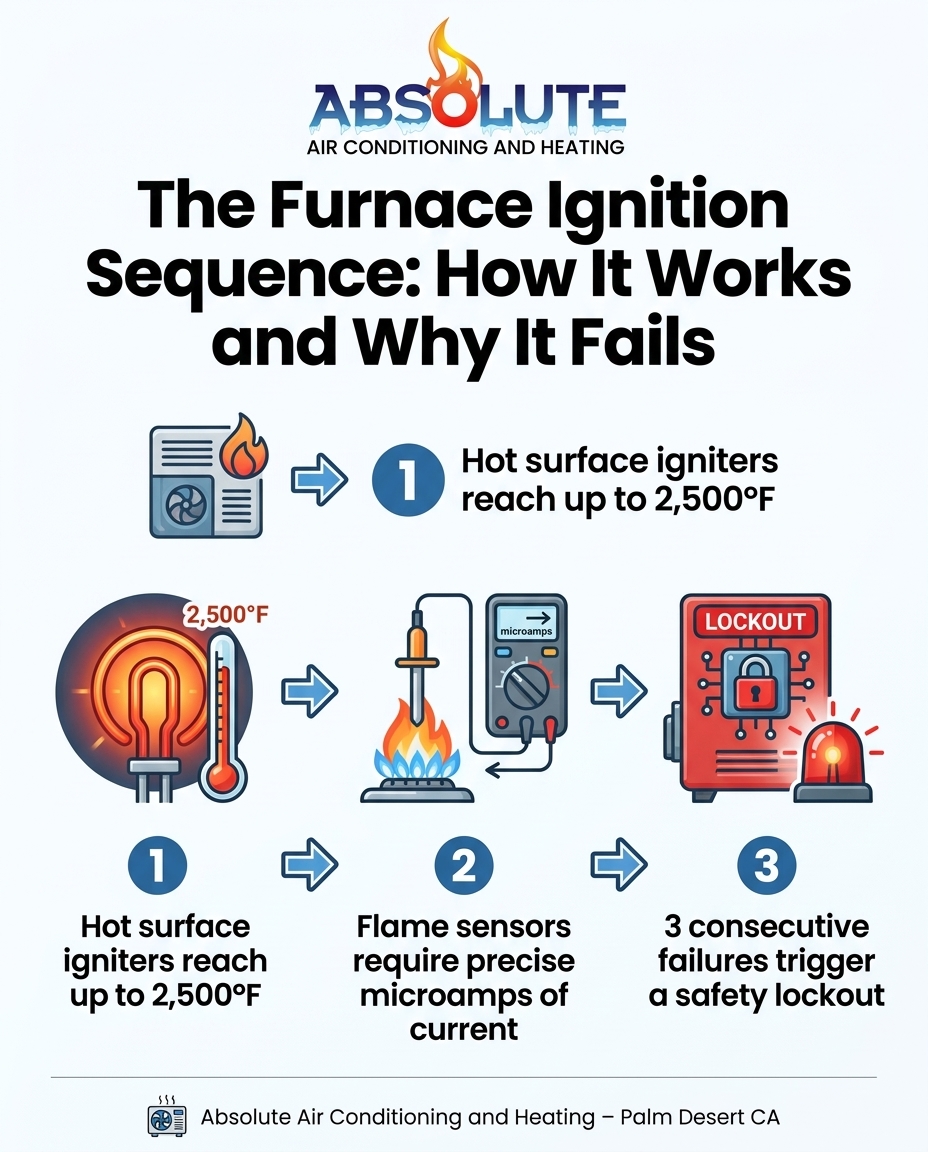
3. The Igniter Heats Up: The control board sends voltage to the hot surface igniter. This component, usually made of silicon carbide, rapidly heats up, glowing bright orange and reaching temperatures up to 2,500 degrees Fahrenheit.
4. The Gas Valve Opens: Once the igniter is at peak temperature, the gas valve opens, releasing fuel across the glowing igniter to create a flame.
5. The Flame Sensor Verifies: A small metal rod called the flame sensor sits directly in the path of the new fire. It relies on a tiny electrical current—measured in microamps—to detect a stable, continuous flame.
6. The Blower Motor Engages: Once the flame is verified as stable and safe, the main blower motor kicks on, pushing warm air throughout your home.
This sequence happens in a matter of seconds. If any single step fails, the entire process halts. The contrast between modern electronic ignition systems and older standing pilot lights highlights the incredible precision required today. While modern systems are vastly more energy-efficient and safe, their reliance on sensitive micro-electrical currents makes them highly susceptible to interference.
How Microscopic Desert Dust Triggers Ignition Failure
The mechanical precision of the ignition sequence is exactly why microscopic desert dust is so destructive. In our years of servicing HVAC systems across the Coachella Valley, we've seen firsthand how a hot surface igniter coated in a layer of summer debris acts as a blanket. As the igniter rapidly heats up to 2,500 degrees Fahrenheit, the uneven distribution of heat trapped by the dust causes the brittle silicon carbide material to expand irregularly. This rapid, uneven expansion makes the igniter highly susceptible to microscopic stress cracks. Once cracked, it will no longer glow hot enough to ignite the gas.
The flame sensor suffers a similar, yet electrical, fate. Even a microscopic layer of dust acts as a powerful electrical insulator on the metal rod. During the ignition sequence, the control board sends a tiny AC voltage to the sensor. The flame itself acts as a conductor, converting that AC voltage into a DC microamp signal that travels back to the board. If the sensor is dirty, the physical reaction is blocked.
The silent failure: Because the dust insulates the rod, the sensor fails to read the microamps of current. The control board falsely believes there is no flame, even if the gas actually ignited. For safety reasons, it immediately shuts the gas valve off to prevent unburned fuel from pooling in your home. This is a silent problem that builds up all summer long in Palm Desert, only revealing itself the very moment the system is called to heat the home.
The Three-Strike Rule: Why Your Furnace Locks Out
The Problem: When the ignition sequence is compromised by dust or cracked components, the furnace will not simply keep trying to light itself indefinitely. Modern heating systems are built with strict safety lockout features designed to protect your home from gas leaks and fire hazards.
The Cause: If the ignition sequence fails three times consecutively—usually because the dirty flame sensor cannot verify the fire, or the cracked igniter cannot start it—the control board will enact the three-strike rule. The system will completely disable all heating operations. This is known as a hard lockout.
The Solution: A hard lockout requires professional intervention to reset and diagnose safely. Our team at Absolute Air Conditioning and Heating frequently responds to these hard lockouts in late fall. If you reach this point, you will need professional furnace repair to restore functionality. Taking care of the system during the September pre-heating transition prevents this stressful scenario from occurring when you need warmth the most.
Recognizing the Signs of a Lockout
Homeowners often experience specific symptoms when the three-strike rule is engaged. Knowing what to look for can help you identify the problem quickly:
• Clicking noises without ignition: You may hear the thermostat click, followed by a relay click at the furnace, but no roaring sound of burners igniting.
• Short cycling immediately after startup: The system may fire up for three to four seconds, then immediately shut down as the flame sensor fails to register the fire.
• Flashing diagnostic LED lights: Most modern control boards feature a blinking LED light visible through a small sight glass on the lower door. A specific pattern of flashes indicates an ignition lockout code.
The Strategic Advantage of Proactive September Testing
Timing is everything when it comes to home comfort. September serves as the ultimate window of opportunity before the first true cold front hits the region. While the days remain warm, the steep day-to-night temperature swings typical of late fall in the desert are rapidly approaching. These sudden nighttime heating demands are incredibly stressful on untested, dormant mechanical systems.
Seasonal data from our own dispatch logs shows a massive spike in emergency no-heat calls throughout October and November. When the first freezing night arrives, every homeowner with an untested, dust-covered flame sensor discovers the problem at the exact same time. This sudden surge leads to inevitable local service delays, leaving families shivering in the dark while waiting for an available technician.
Proactively identifying a failing igniter now gives you a strategic advantage. It allows ample time for parts ordering without the stress of a freezing house. Furthermore, if an older unit requires broader attention, an early inspection provides the breathing room to evaluate whether a heater replacement makes more sense than a costly repair. Absolute Air Conditioning and Heating prioritizes preventing these sudden no-heat emergencies before the busy season begins, giving you the peace of mind that comes from knowing your system will work flawlessly on the first cold night.
What Happens During a Professional Ignition Sequence Inspection
Because the ignition sequence involves high voltages, extreme temperatures, and combustible gas, testing and cleaning these components is strictly licensed professional work. Attempting DIY repairs on a flame sensor or hot surface igniter poses severe safety risks to your home and family. When one of our trained technicians arrives in Palm Desert to evaluate your system, they follow a rigorous, step-by-step diagnostic process.
1. Visual and Physical Inspection: The technician carefully removes the burner compartment doors to inspect the hot surface igniter for microscopic stress cracks, discoloration, or white blistering, which indicate impending failure.
2. Microamp Measurement: Using specialized multimeters, the technician measures the exact microamps of direct current flowing through the flame sensor while the system is running. This confirms whether the sensor is reading the flame accurately or if resistance is building up.
3. Delicate Component Cleaning: If the sensor is dirty but structurally sound, the technician uses specialized, non-abrasive materials to delicately clean the metal rod, removing the microscopic desert dust without scratching the sensitive surface.
4. Safety System Verification: The technician forces the system through multiple heating cycles to ensure the gas valve opens and closes precisely on command, verifying that the safety lockout features are fully operational.
This level of thoroughness and cleanliness defines a professional service visit from our team. For instance, one local customer who required ongoing heating and AC service over the years noted that our technicians—Jen, Brian, and Andrew—handled every service impeccably, resulting in a consistently reliable system. That same meticulous attention to detail is exactly what protects your furnace during a fall inspection.
Frequently Asked Questions About Furnace Ignition Problems
Why is my furnace clicking but not igniting?
A clicking sound usually indicates that the control board is attempting to send power to the igniter or open the gas valve, but the sequence is failing to complete. During the September pre-heating transition, we often trace this to a cracked hot surface igniter that can no longer heat up, or a faulty relay switch. Because the system cannot verify a safe spark, it prevents the gas from flowing, resulting in a continuous clicking cycle without any actual heat production.
How do I know if my furnace flame sensor is bad?
The most common sign of a bad or dirty flame sensor is a furnace that lights successfully for a few seconds and then abruptly shuts off. The burners will ignite, but because the dust-coated sensor cannot read the microamps of current, the control board assumes the flame failed and kills the gas supply. If your system short-cycles immediately after producing a flame, our experts find the sensor is the most likely culprit.
Why do furnace igniters fail after sitting dormant?
Furnace igniters fail after dormancy primarily due to the accumulation of fine dust and debris on their surface over the summer. When the furnace is turned on for the first time in the fall, the igniter rapidly heats up to extreme temperatures. The layer of dust causes uneven thermal expansion across the brittle silicon carbide material, leading to microscopic stress cracks that permanently disable the component.
What happens if a furnace pilot light won't stay lit?
If you have an older furnace with a standing pilot light that refuses to stay lit, the thermocouple is usually failing to detect the heat of the flame. Similar to a modern flame sensor, the thermocouple is a safety device that shuts off the gas valve if it doesn't sense a fire. A pilot light that constantly goes out requires professional cleaning or a complete thermocouple replacement to restore safe operation.
Can extreme summer heat damage my furnace while it is turned off?
Yes, extreme ambient heat in attics and garages can accelerate the degradation of sensitive rubber and plastic components inside the furnace cabinet. Furthermore, while the furnace itself is turned off, the blower motor is often still pushing air for the AC system, pulling fine particulates across the dormant heating sensors. This combination of high ambient heat and constant dust exposure heavily stresses the ignition components before winter even begins.
Why shouldn't I try to clean my furnace flame sensor myself?
Cleaning a flame sensor requires opening the combustion chamber, exposing you to high-voltage electrical connections and raw gas lines. Additionally, the sensor rod is highly sensitive; using the wrong abrasive material (like heavy sandpaper) will permanently scratch the metal, causing it to attract soot and fail even faster in the future. Our Absolute Air Conditioning and Heating technicians have the correct diagnostic multimeters and specialized cleaning materials to perform this work safely.
Secure Your Comfort Before the First Cold Night Arrives
Testing your furnace's ignition sequence after a long, dusty summer is the single most effective way to guarantee your heating system will perform when you need it most. The microscopic dust that settles on your flame sensors and hot surface igniters throughout the season is a silent threat that only reveals itself when the temperature suddenly drops. By taking action during the September pre-heating transition, you bypass the inevitable local service delays that plague October and November.
The ultimate goal: Avoiding a sudden no-heat emergency in Palm Desert. Another long-time local homeowner recently noted that their ongoing heating service and repair needs have consistently been met with impeccable attention to detail by our team over the years. You deserve that same reliability and peace of mind.
Do not wait for the desert nights to freeze before discovering your furnace is locked out. Schedule a comprehensive professional inspection of your ignition sequence with Absolute Air Conditioning and Heating today, and secure your family's comfort long before the first cold front arrives.
Serving the Entire Coachella Valley

The Real Cost of Ignoring Your Attic HVAC Unit's Fall Inspection
After a grueling summer, minor wear and tear in an attic HVAC unit can quickly snowball into a major winter breakdown. See why skipping a seasonal checkup puts your entire system at risk.
First Time Turning on the Heat? Differentiating Normal Dust Burn-Off from Electrical Issues
That burning smell on the first chilly morning usually triggers panic. Find out how to tell harmless baking dust from a dangerous wire, and know exactly when to shut your system down.
Deciding Between Repairing a Leaky Attic Evaporator Coil or Replacing the Entire Handler
Facing a refrigerant leak as the seasons change? Weigh the long-term value and technical viability of a drop-in coil repair versus upgrading your entire air handler.

