
AC Repair in Indian Wells, CA
Restore Your Indoor Comfort When the System Fails
Facing the intense desert heat in Indian Wells with a malfunctioning air conditioner transforms your home from a sanctuary into a safety hazard within hours. You require immediate technical intervention to diagnose the failure and restore cool airflow before the indoor temperature becomes unbearable. Contact us immediately to schedule a certified technician for urgent repair services.
Absolute Air Conditioning and Heating understands that cooling failures in the Coachella Valley are not merely inconveniences; they are emergencies that require rapid deployment. We prioritize your call to ensure your system is back online without unnecessary delays.
- Immediate response protocols with 24/7 availability for critical failures.
- Highly rated local technicians equipped to fix your AC on the first visit.
- Clear, upfront pricing structures with absolutely no hidden fees.
All services are performed by licensed professionals backed by comprehensive labor and parts warranties.
Comprehensive Diagnostics and Immediate Repair Solutions
When a technician arrives at your property, the objective is to identify the root cause of the breakdown accurately and execute a lasting repair. A surface-level fix often leads to recurring issues, especially under the strain of temperatures. Our approach involves a systematic evaluation of the entire cooling infrastructure to ensure that the repaired unit can withstand the demands of the season.
The scope of repair services covers every mechanical and electrical component within your HVAC system. This includes addressing issues with the compressor, which acts as the heart of the system, and ensuring the refrigerant levels match manufacturer specifications. Low refrigerant levels often indicate a leak that must be sealed before recharging; simply adding fluid without fixing the leak is a temporary and costly stopgap.
Our technicians arrive with fully stocked service vehicles containing the most common parts required for immediate restoration. This inventory strategy minimizes downtime, as we rarely need to leave the site to source components.
Standard repair protocols include:
- Electrical Component Replacement: Fuses, relays, capacitors, and contactors frequently fail due to heat fatigue. We test amperage draws and replace compromised electrical parts to prevent system shorts.
- Refrigerant Leak Detection and Recharge: We utilize advanced sniffer tools and dye tests to locate microscopic leaks in the copper lines or coils, ensuring the system holds pressure before recharging.
- Compressor Troubleshooting: We analyze the compressor for hard starts, grounding issues, or mechanical seizing. If the compressor is viable, we install hard start kits to assist ignition; if it is compromised, we discuss replacement options.
- Airflow and Fan Correction: A seized condenser fan motor or a broken blower motor belt results in zero cooling. We repair or replace motors to restore proper air movement over the coils.
- Thermostat Calibration: Sometimes the issue lies in the control interface. We verify that the thermostat is sending the correct signals to the furnace and condensing unit.
- Condensate Drain Cleaning: Clogged drain lines can trigger overflow safety switches that shut down the entire system. We clear blockages and treat the line to prevent algae growth.
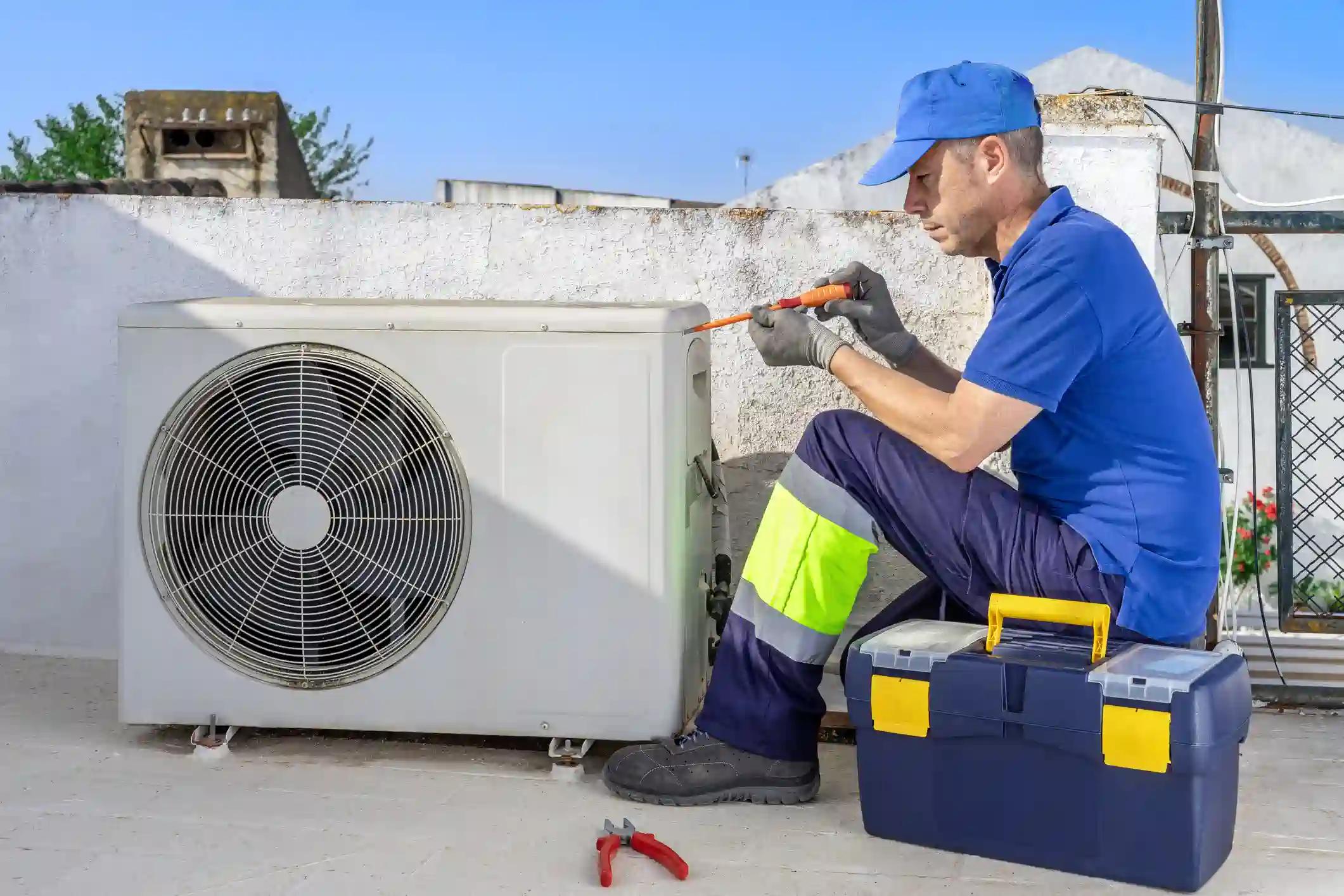
The Technical Repair Process: Step-by-Step
Understanding the workflow helps you anticipate what happens during a service visit. The process is designed to be transparent, efficient, and technically rigorous. We do not guess; we measure, test, and verify.
- Initial Site Assessment: Upon arrival in Indian Wells, the technician parks in a designated area and respects your property. They begin by discussing the symptoms you have noticed, such as strange noises, warm air blowing from vents, or short cycling.
- System Diagnostics: Using multimeters, pressure gauges, and temperature probes, the technician tests the system's vital signs. This involves measuring the temperature split (the difference between return and supply air), checking static pressure in the ductwork, and verifying voltage stability.
- Detailed Findings Report: Once the issue is isolated, you receive a clear explanation of the failure. The technician outlines the specific part that failed, why it failed, and the total cost to rectify the issue. You approve the work before any tool touches the equipment for repairs.
- Execution of Repairs: The technician proceeds with the approved work. This may involve brazing copper lines, wiring new capacitors, or cleaning dirty coils that are restricting heat transfer.
- The "Three-Minute Rule" and System Testing: After the repair is complete, the system is not just turned on; it is stress-tested. We observe the "three-minute rule" (or similar manufacturer delays) to ensure the compressor does not short-cycle. We verify that the system reaches the target temperature and that the repairs hold under load.
- Site Cleanup and Final Walkthrough: The work area is cleaned of any debris, old parts, or packaging. The technician demonstrates that the system is functioning correctly and provides a digital or physical service report for your records.
Repair vs. Replacement: Making the Financial Decision
Homeowners often face the difficult choice between repairing an aging unit or investing in a modern replacement. This decision should be based on data and financial logic rather than sales pressure. In the HVAC industry, specific metrics help determine the most cost-effective path forward.
One standard method for evaluating this decision is the "$5,000 Rule." Multiply the age of your equipment by the estimated cost of the repair. If the total exceeds $5,000, replacement is generally the wiser investment. For example, if your unit is 12 years old and the repair costs $500, the total is $6,000, suggesting that money would be better spent on a new system with a warranty.
Critical factors to consider include:
- Age of the System: The average lifespan of an air conditioner in extreme desert climates is often shorter than the national average, typically ranging from 10 to 15 years. If your system is approaching or exceeding this range, major repairs are often throwing good money after bad.
- Frequency of Breakdowns: If you have required repairs more than once in the last two seasons, the system is likely entering a phase of rapid degradation. Cumulative repair costs often exceed the price of a down payment on a new, high-efficiency unit.
- R-22 vs. R-410A Refrigerant: If your system utilizes the phased-out R-22 (Freon) refrigerant, repair costs involving refrigerant will be astronomically high due to scarcity. Upgrading to a system that uses modern refrigerants is inevitable and financially prudent.
- Energy Efficiency Ratios (SEER): Older units may have a SEER rating of 10 or 12. Modern standards require higher efficiency. Replacing a 10 SEER unit with a 16+ SEER unit can reduce cooling bills by 30% to 50%, providing a return on investment that offsets the installation cost over time.
- Compressor Integrity: If the compressor fails and the unit is out of warranty, replacement is almost always the correct choice. The compressor is the most expensive component, and replacing it in an old unit is risky.
Navigating Local Climate and Regulatory Requirements
Operating an air conditioning system in the Coachella Valley presents unique challenges that do not apply to milder climates. The extreme heat load requires systems to run for extended periods, placing immense stress on capacitors and motors. Maintenance and repair protocols must account for this specific environmental strain.
Regional considerations for your cooling system:
- High Ambient Temperature Performance: Equipment in this region must be rated to perform when outdoor temperatures exceed 110°F. Repairs often involve checking that the condenser coil is perfectly clean, as even a thin layer of desert dust can significantly reduce heat rejection capabilities, causing the system to overheat and trip safety breakers.
- Insulation and Ductwork Integrity: In Indian Wells, attic temperatures can soar well above 140°F. If your ductwork is uninsulated or leaking, you are gaining significant heat before the cool air ever reaches your living space. Part of our diagnostic process involves checking accessible ductwork to ensure repairs to the AC unit are not undermined by thermal losses in the attic.
- Permitting and Code Compliance: For minor repairs, permits are generally not required. However, if the scope of work escalates to a system replacement or significant alteration of the electrical or gas infrastructure, local building codes come into play. We handle all necessary compliance checks to ensure your system meets current safety and efficiency standards.
- Utility Rebates and Efficiency Standards: Local utility providers often offer rebates for upgrading to high-efficiency systems or performing specific maintenance tasks that reduce load on the grid. We stay informed on current programs to help you maximize potential savings.
Technical Precision and Operational Excellence
Choosing a service provider involves looking for technical competence and operational transparency. The difference between a quick patch and a restored system lies in the details of the service execution. We focus on the science of thermodynamics and electrical engineering to ensure your home remains cool.
Our technicians undergo continuous training to stay ahead of evolving HVAC technologies, including inverter-driven compressors and smart home integration. This ensures that whether you have a traditional single-stage unit or a modern variable-speed system, the repair is performed according to the manufacturer's engineering specifications.
Absolute Air Conditioning and Heating prioritizes the longevity of your equipment. We do not incentivize our technicians to upsell unnecessary parts. Instead, our inventory and training are focused on accurate diagnostics. When we identify a failed part, we also investigate what caused the failure to prevent a repeat scenario. For instance, a failed capacitor might be a symptom of a dirty coil increasing the amperage load; replacing the capacitor without cleaning the coil only guarantees another failure in the near future.
We utilize digital gauges for precise pressure readings, ensuring your refrigerant charge is exact. Incorrect charging by even a small percentage can reduce efficiency and capacity. We also employ static pressure testing to verify that your ductwork is capable of handling the airflow your system produces, identifying bottlenecks that reduce comfort.
Our commitment is to restore your environment to a comfortable baseline swiftly. We respect your time, your property, and your need for honest, technical communication regarding the state of your HVAC system.
Secure Your Comfort and System Reliability
A broken air conditioner in the desert is a time-sensitive issue that demands professional attention. Delaying repairs can lead to more extensive damage to the compressor or result in significantly higher energy bills as the system struggles to compensate for failed components. You deserve a cooling system that operates efficiently, quietly, and reliably, regardless of the outdoor temperature.
Trust the experts who understand the local climate and the intricacies of modern HVAC machinery. We are ready to deploy the necessary resources to get your system back up and running today.
Contact us now to schedule your AC repair and restore cool air to your home immediately.

