

Absolute Air Conditioning's Approach to Evaluating End-of-Life Attic Handlers
The Challenge of Evaluating an Aging Air Handler in Attic Spaces Before Winter
Your aging HVAC system barely limped through the grueling summer, and now you are left wondering if the equipment hidden above your ceiling will survive the winter. Understanding Absolute Air Conditioning's Approach to Evaluating End-of-Life Attic Handlers is the first step toward making an informed, safe decision about your home's comfort. Far too often, homeowners are forced to guess whether their system has one more season left in it, relying on arbitrary age estimates rather than hard data. The reality is that an air handler located in a blistering hot attic faces unique, severe stressors that require objective evaluation, not guesswork.
For comprehensive air conditioning services and reliable AC repair in Palm Desert, our team provides transparent, evidence-based diagnostics to help you make the right call.
The fear of premature replacement: A typical pattern we see is homeowners worrying they will be pressured into buying a new system before it is truly necessary. When you cannot see the equipment yourself, it is easy to feel disconnected from the diagnostic process. That is exactly why our first-person business methodology focuses on verifiable failure points. We do not condemn a unit simply because the manufacturer's label says it is ten or twelve years old. Instead, our technicians look for the exact diagnostic threshold where an old attic air handler is no longer viable or safe to operate.
As we approach the September pre-heating season transition, evaluating your system becomes critical. The shift from constant summer cooling to winter heating forces mechanical components to change their operational rhythm. If the structural integrity of the cabinet or the electrical wiring has been compromised by months of relentless heat, the system is highly likely to fail right when you need it most. Our approach removes the anxiety from this process by relying on transparent, measurable criteria that you can see and understand.
How Extreme Heat Alters the Lifespan of Palm Desert HVAC Systems
When discussing equipment longevity, standard national averages rarely apply to Palm Desert homes with extreme attic temperature exposures. The environment directly beneath your roof is vastly different from the ambient temperature outside. While the thermometer on your patio might read 110 degrees, the radiant heat baking your attic can easily push the internal temperature to 130 degrees or higher. This blistering heat acts as a pressure cooker for mechanical and electrical components.
The impact of thermal stress:
• Accelerated material fatigue: Plastics become brittle, rubber belts dry rot, and metal casings warp under constant thermal expansion and contraction.
• Electrical degradation: High ambient heat prevents electrical components from cooling down properly, leading to baked wire insulation and failing capacitors.
• Lubricant breakdown: The oil and grease inside sealed blower motors thin out and evaporate faster in 130+ degree environments, leading to metal-on-metal grinding.
Guidelines from the U.S. Department of Energy and ASHRAE point out that equipment life expectancy must be adjusted for extreme climates. This is why standard lifespan charts are often misleading for our region. Our diagnostic philosophy is built around evaluating heat-induced damage rather than just the calendar age of the unit. We look closely at what the AC unit in your attic is called upon to do daily, measuring how the local climate has specifically altered its structural and mechanical health.
• Wiring Insulation — Standard Climate Wear: Remains flexible for 15+ years — Extreme Palm Desert Attic Wear: Bakes, hardens, and cracks prematurely
• Evaporator Coils — Standard Climate Wear: Normal condensation cycling — Extreme Palm Desert Attic Wear: Severe thermal shock leading to micro-fissures
• Cabinet Structure — Standard Climate Wear: Maintains factory seal — Extreme Palm Desert Attic Wear: Warps, allowing unconditioned air infiltration
• Blower Motor — Standard Climate Wear: Standard bearing wear — Extreme Palm Desert Attic Wear: Lubricant evaporation and high amp draw
This localized approach to diagnostics builds lasting trust. During a routine spring inspection, one local homeowner reached out for a comprehensive system check. Our technician, Raymond, performed a prompt and thorough evaluation of their hidden attic equipment. By explaining exactly how the attic environment was impacting the system, the homeowner was highly impressed and immediately signed up for a yearly maintenance package to stay ahead of the extreme heat.
Absolute Air Conditioning's Transparent Diagnostic Checklist
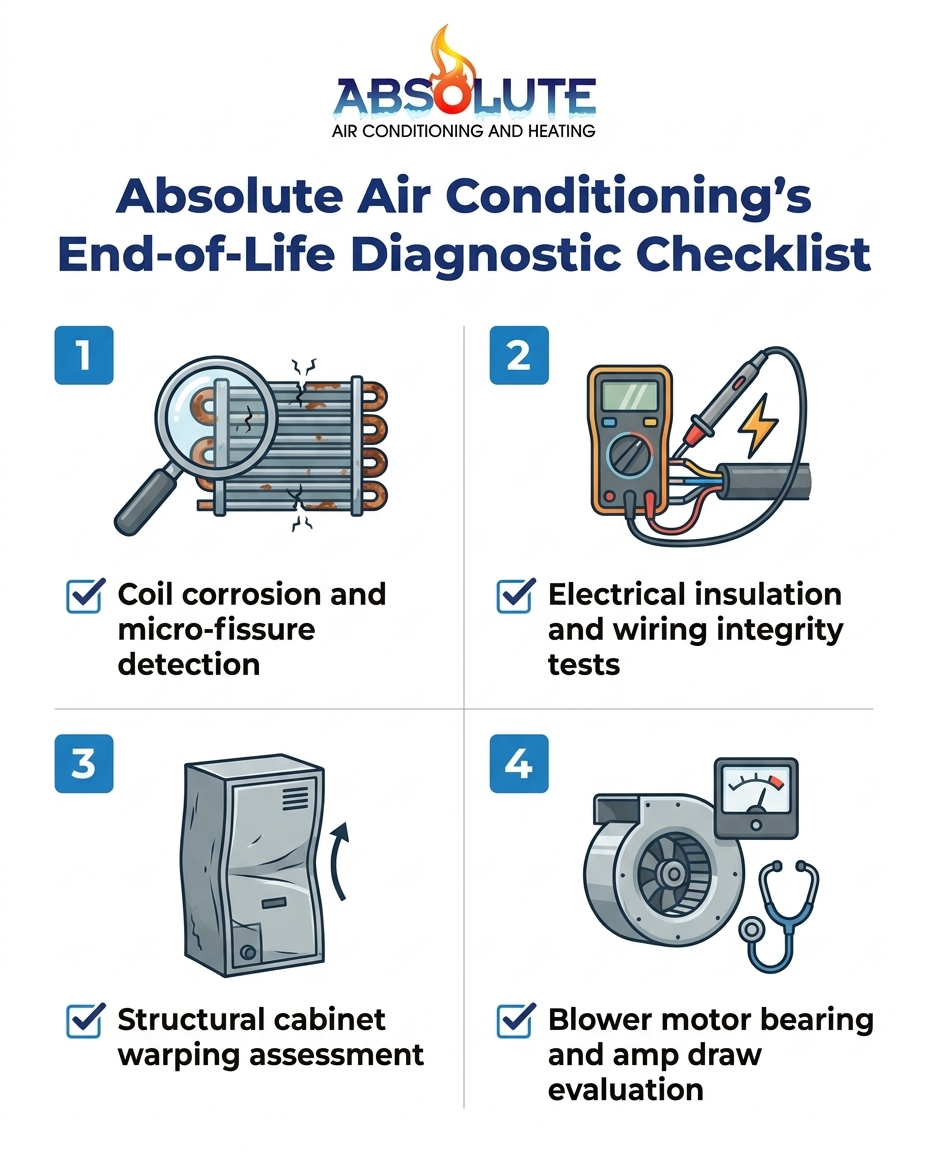
Our methodology for evaluating an aging system relies on a strict, objective checklist. We do not guess; we measure. When our technicians evaluate an air handler, they are specifically looking for irreversible, degraded structural integrity and coil conditions that pose a risk to your home's safety and efficiency. This transparent process ensures that every homeowner is fully informed before any decisions are made.
The diagnostic process involves several critical steps that prove whether a system can be saved or if it has crossed the threshold into condemnation. By showing homeowners the actual readings on our multimeters and the physical condition of the coils, we establish true local authority built on honesty.
Assessing Coil Corrosion and Refrigerant Leaks
The evaporator coil inside your air handler is responsible for absorbing heat. In extreme attic environments, this coil undergoes severe temperature swings. When the system is running, the coil is ice cold; when it shuts off, the 130-degree attic heat immediately hits the metal. This constant, aggressive thermal cycling causes the metal to expand and contract rapidly, eventually leading to micro-fissures and stress fractures.
What we look for:
• Oil spotting: Refrigerant carries a specialized oil. If we see oil residue on the coil fins, it is a definitive sign of an active leak.
• Corrosion buildup: We inspect for heavy rust and formicary corrosion that weakens the copper or aluminum tubing.
• Pressure testing: We use specialized electronic leak detectors to confirm if the coil has lost its structural integrity and is actively venting refrigerant into the airstream.
Evaluating Electrical Insulation and Wiring
Electrical integrity is one of the most critical safety factors in an aging air handler. Prolonged exposure to high heat literally bakes the protective insulation off the wiring. Over time, the plastic and rubber casings become brittle, cracking away to expose bare copper. This is not just an efficiency issue; it is a severe fire hazard.
Our technicians meticulously trace the electrical pathways within the air handler cabinet. We look for scorched terminals, melted wire nuts, and brittle insulation that flakes off when touched. Furthermore, we test the contactors and relays to ensure they are engaging cleanly without pitting or electrical arcing. If the electrical harness has suffered widespread heat degradation, the system is no longer safe to operate, and this verifiable failure point heavily influences the decision to condemn the unit.
Inspecting Structural Integrity and Blower Motor Health
Beyond the coils and wiring, the physical shell of the air handler must be able to withstand the attic's harsh environment. Continuous extreme heat can cause the thin sheet metal of the air handler cabinet to warp and buckle. When the cabinet loses its factory seal, the blower motor begins pulling 130-degree, dust-filled attic air directly into your home's ductwork. This not only destroys your indoor air quality by circulating fiberglass insulation particles, but it also forces your system to work exponentially harder to cool or heat the home.
The diagnostic breakdown of mechanical health:
• Cabinet seal inspection: We check all seams and access panels for signs of warping, air gaps, and compromised gaskets.
• Blower wheel balance: Dust accumulation and heat stress can throw the blower wheel out of balance, leading to aggressive vibrations that tear the assembly apart.
• Amp draw measurement: We use a multimeter to measure the exact electrical current (amps) the blower motor requires to spin. If the motor is drawing significantly more amperage than its rated capacity, it means the internal bearings are failing due to heat-induced lubricant loss.
Finding degraded structural integrity and coil conditions during a diagnostic visit allows us to give you a clear, factual picture of your system's health. Proactive evaluation during routine AC maintenance can catch these structural and mechanical issues before they result in a catastrophic, mid-season failure.
Why the September Transition is the Critical Evaluation Window
Timing is everything when it comes to HVAC diagnostics. The September pre-heating season transition is the most critical evaluation window for Palm Desert homes. After running almost nonstop through the brutal summer months, your attic air handler is at its weakest point. The components have endured thousands of hours of thermal stress, electrical load, and mechanical wear.
As the weather begins to cool, the system must shift its operation to provide heating. This transition forces the blower motor, relays, and circuit boards to operate under different parameters. If the summer heat has left the system vulnerable, demanding it to switch to heating mode often triggers a complete breakdown. Evaluating the system now, rather than waiting for the first cold night, ensures that any irreversible damage is identified early.
Last fall, one local homeowner needed to replace an old, failing unit just as the weather began to change. Our team members Brian, Andrew, and Sam stepped in to fit a new, energy-efficient heat pump. By scheduling their AC installation during the seasonal transition, the homeowner avoided the stress of a mid-winter breakdown and enjoyed a smooth, seamless shift into the heating season. Our technicians test the system's readiness for heating operations by running it through its full sequence, ensuring that every safety limit switch and heating element functions flawlessly after a grueling summer.
Making the Final Call: Repair vs. Condemnation
Synthesizing all of this diagnostic data leads to the final decision-making framework. We do not guess whether a system should be repaired or replaced; we look at the cumulative evidence. When a technician finds a combination of structural cabinet warping, severe coil degradation, and baked electrical wiring, the decision to condemn the unit is based purely on safety and viability.
Our commitment to transparency:
• Visual evidence: We show you the micro-fissures, the brittle wires, and the warped panels.
• Objective readings: We explain what the multimeter amp draw readings mean for your blower motor's remaining lifespan.
• Safety first: If a unit poses a fire hazard or risks severe water damage from a failing drain pan, we clearly outline the risks.
If the diagnostic threshold is crossed and the air handler is condemned, we guide homeowners through exploring new, energy-efficient options tailored to Palm Desert homes with extreme attic temperature exposures. Whether you need a minor component fix or a complete system overhaul, our goal is always your long-term safety, efficiency, and comfort. If the data shows the unit has life left, we will gladly provide the necessary AC repair in Palm Desert to keep it running smoothly.
Frequently Asked Questions About Attic Air Handlers in Extreme Heat
How long does an air handler in attic last in extreme heat?
In extreme heat environments like Palm Desert, an attic air handler typically lasts between 10 and 12 years. The blistering 130+ degree temperatures rapidly accelerate wear on electrical insulation, blower motors, and evaporator coils. While national averages suggest 15 years, the continuous thermal stress in a hot attic significantly reduces that lifespan. Regular, proactive maintenance can help push the system toward the higher end of that range.
When should I replace my attic air handler?
You should replace your attic air handler when a professional diagnostic evaluation reveals irreversible structural or mechanical degradation. If the system requires frequent, major repairs, has severe coil corrosion, or exhibits brittle, baked electrical wiring, it is time for a replacement. Evaluating the unit during the September pre-heating season transition is ideal to prevent a sudden breakdown during the winter.
What are the signs of a failing air handler?
The most common signs of a failing air handler include weak airflow, strange grinding or squealing noises, and inconsistent indoor temperatures. You may also notice a sudden spike in your energy consumption as the blower motor struggles to overcome heat-induced wear. If you spot water stains on your ceiling beneath the unit, it often indicates a cracked drain pan or a freezing coil, requiring immediate professional attention.
How do professionals test an ac unit in attic?
Professionals test an attic AC unit using a strict, objective checklist that includes measuring electrical amp draw, checking refrigerant pressures, and inspecting structural integrity. Technicians use multimeters to test the health of capacitors and blower motors, ensuring they are not overworking. We also perform a thorough visual inspection for micro-fissures on the coils and baked insulation on the wiring harness.
Can attic heat cause my HVAC system to fail prematurely?
Yes, extreme attic heat is one of the primary causes of premature HVAC failure in desert climates. When attic temperatures exceed 130 degrees, the radiant heat bakes the system's electrical components and warps the metal cabinet. This environment forces the system to work much harder to cool your home, leading to accelerated material fatigue and early mechanical breakdowns.
What is the difference between repairing and condemning an air handler?
Repairing an air handler involves replacing individual, viable components—like a capacitor or a blower motor—when the core structure of the unit is still sound. Condemning an air handler occurs when the system has suffered cumulative, irreversible damage, such as widespread coil corrosion, compromised electrical harnesses, and a warped cabinet. Condemnation means the unit is no longer safe or economically viable to keep running, making replacement the only responsible option.
Schedule Your Pre-Season HVAC Evaluation with Absolute Air Conditioning
Do not wait for the first cold night to find out if your aging system survived the summer. The peace of mind that comes from a transparent, objective evaluation is invaluable, especially for Palm Desert homes with extreme attic temperature exposures. By scheduling an inspection during the September pre-heating season transition, you ensure your equipment is safe, efficient, and ready for the months ahead. If you are concerned about degraded structural integrity and coil conditions in your hidden equipment, reach out to our local experts today to book your comprehensive diagnostic evaluation.
Serving the Entire Coachella Valley

How to Tell if Your Attic HVAC Unit is Undersized for Your Home's Heating Load
When the first cold snap hits, a system that runs constantly without warming your house is a major red flag. Find out if your equipment is fundamentally too small or just needs seasonal upkeep.

The Danger of Relying on Emergency Heat Mode During a Palm Desert Cold Snap
When a sudden fall chill hits, flipping your thermostat to emergency heat feels like a quick fix. Instead, you are bypassing your heat pump's efficiency and causing massive utility bills.

Why Absolute AC Recommends Sealing Your Attic Ductwork Before Winter
Unsealed ductwork in your attic can silently drain up to 30% of your home's heated air. Addressing these hidden leaks proactively is the key to maintaining reliable winter comfort in Palm Desert.

