

The Reality of Servicing an Air Conditioner Located in a Blistering Hot Attic
The Hidden Heat Trap: Why Early Fall Doesn't Mean Cool Attics
A common misconception among homeowners is that once the calendar flips to September, the brutal heat trapped inside the upper levels of a home instantly vanishes. The reality of servicing an air conditioner located in a blistering hot attic during the early fall transition is much more complicated than a simple change in the weather forecast. While the mornings might start to feel slightly crisper outdoors, residential attics act as massive solar ovens. They absorb and trap intense thermal energy long after ambient temperatures begin to drop, creating a hidden heat trap right above your ceiling.
When scheduling end-of-season maintenance or addressing a late-summer breakdown, many people expect a quick, in-and-out visit. However, the extreme residual heat requires strict safety protocols for technicians servicing equipment in these enclosed spaces. Understanding how your home's structure retains this heat is the first step in recognizing why these service calls demand a careful, methodical approach rather than a rushed timeline. A thorough inspection of your system during the September / early fall transition requires patience, precision, and a deep respect for the physical environment.
If you are looking to book air conditioning services as the seasons shift, knowing what happens behind the scenes in that superheated space helps set realistic expectations. The attic environment dictates the pace of the work, and prioritizing safety ensures that your equipment receives the high-quality attention it needs to operate efficiently year-round.
The Physics of Attic Heat Retention in Desert Climates
The problem: Homeowners are often surprised to learn that their attic remains dangerously hot even when the outdoor weather begins to cool down. In desert regions, the unique solar angle and prolonged sun exposure mean roofing materials absorb massive amounts of radiant heat throughout the day. This thermal energy is then transferred directly into the attic space.
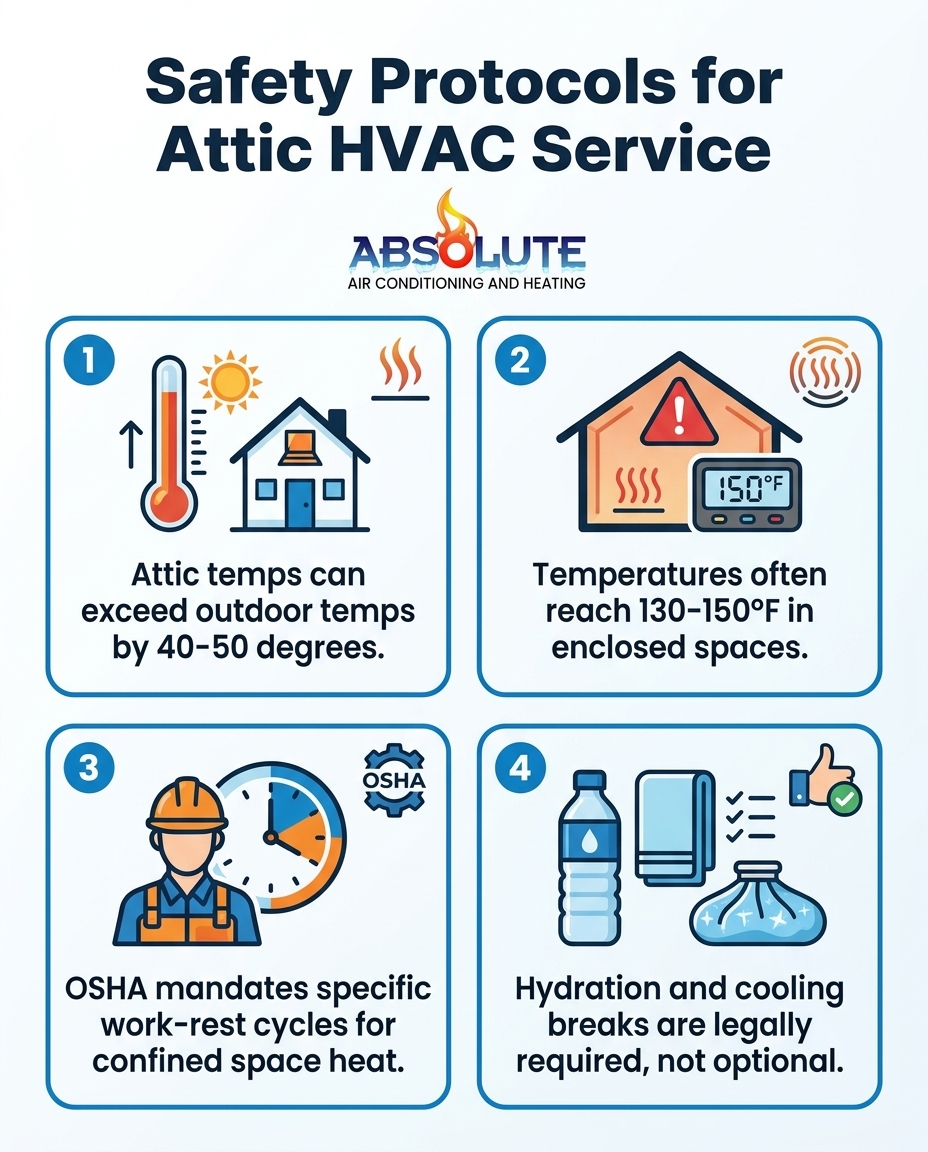
The cause: Because heat rises and attics are heavily insulated to keep that heat from penetrating the living spaces below, the attic itself becomes a highly effective heat sink. It is a typical pattern we see where superheated attic temperatures exceeding outdoor ambient heat by 40 to 50 degrees remain a daily occurrence well into the autumn months. Poor ventilation or blocked soffit vents can further exacerbate this heat trap effect, leaving the air completely stagnant.
The solution: Recognizing the physical reality of this environment explains why technicians must approach attic-based equipment with extreme caution. Knowing exactly what the AC unit in the attic is called—typically the air handler or evaporator coil—helps homeowners understand that this delicate, high-voltage machinery is constantly battling severe environmental stress. Below is a breakdown of how ambient outdoor temperatures compare to enclosed attic temperatures during the early fall.
• 8:00 AM — Ambient Outdoor Temperature (Early Fall): 75°F — Estimated Attic Temperature: 85°F - 95°F — Heat Retention Factor: Low (Overnight Heat Dissipation)
• 1:00 PM — Ambient Outdoor Temperature (Early Fall): 95°F — Estimated Attic Temperature: 125°F - 135°F — Heat Retention Factor: High (Direct Solar Radiation)
• 5:00 PM — Ambient Outdoor Temperature (Early Fall): 90°F — Estimated Attic Temperature: 130°F - 145°F — Heat Retention Factor: Severe (Trapped Radiant Heat)
How Radiant Heat Impacts Hidden Equipment
There is a significant difference between ambient outdoor heat and trapped radiant heat. Ambient heat is the temperature of the air around you, which can be mitigated by a light breeze or shade. Radiant heat, however, is absorbed by physical objects—like roof decking, wooden joists, and the metal casing of your HVAC equipment. The structural design of most homes contributes to delayed cooling in these upper levels, meaning the machinery itself is hot to the touch long after the sun goes down.
Navigating Confined Spaces with an Air Handler in the Attic
Accessing and repairing HVAC components located above the ceiling is a physically demanding task. Homes throughout the Palm Desert / Coachella Valley often feature specific architectural styles, such as low-pitched roofs, that create exceptionally tight attic clearances. This architectural reality severely compounds the heat issue, turning routine maintenance into a challenging logistical operation.
Physical constraints: Technicians rarely have the luxury of standing upright when servicing an air handler in an attic. The work typically involves crawling on hands and knees, balancing carefully on narrow wooden joists to avoid stepping through the drywall ceiling, and operating with limited artificial lighting. Maneuvering heavy tools, replacement motors, and sensitive diagnostic equipment in these tight, superheated quarters requires intense physical exertion and intense focus.
Accelerated heat exhaustion: The absolute lack of airflow in a confined space accelerates the risk of heat exhaustion. When the air is completely stagnant, the human body cannot cool itself effectively through evaporation. These physical constraints inherently slow down the diagnostic and repair processes. Every movement must be calculated and deliberate. Rushing through a tight, dark, and dangerously hot space is not an option for professional technicians who are dedicated to doing the job correctly.
Protecting the home: Navigating these confined spaces safely also protects your property. Carrying bulky, dirty equipment through a narrow attic access hatch requires a slow, methodical approach to ensure walls, floors, and ceilings are not damaged during the service visit.
Mandatory Safety Protocols and Work-Rest Cycles
Prolonged exposure to extreme heat indexes in confined spaces is incredibly dangerous. Professional HVAC companies do not view safety guidelines as optional suggestions; they are non-negotiable requirements. Absolute Air Conditioning and Heating's commitment to technician safety is a mark of a responsible, high-quality service provider, ensuring that the people working on your home are protected, alert, and capable of delivering precision work.
1. Pre-Work Site Assessment: Before any tools are brought upstairs, technicians assess the attic's current temperature and ventilation status. If superheated attic temperatures exceeding outdoor ambient heat reach a critical threshold, the team must plan their approach accordingly.
2. Strict Work-Rest Cycles: Technicians follow structured schedules, often working for 15 to 20 minutes in the extreme heat before descending to a cooler area for a mandatory recovery period. These pauses in work are legally required safety measures, not inefficiencies.
3. Active Hydration Monitoring: Working in environments that routinely exceed 130 degrees leads to rapid fluid loss. Mandatory hydration protocols ensure technicians replace lost fluids and electrolytes continuously throughout the service call.
4. Staggered Diagnostic Phases: Complex repairs are broken down into smaller, manageable phases. A technician might diagnose an electrical fault, retreat to cool down while retrieving the necessary replacement parts, and then return to complete the installation.
Understanding OSHA Heat Illness Prevention
The physiological limits of working in 130-plus degree environments are well documented by occupational safety organizations. When the body's core temperature rises too quickly, cognitive function declines, which can lead to critical errors when handling high-voltage wiring or combustible gases. Professional companies mandate strict adherence to these guidelines because a safe technician is an effective technician.
How Extreme Heat Impacts Service and Repair Timelines
If you have ever wondered why a late-season AC repair takes longer than expected, the answer lies directly in the physical constraints and safety protocols discussed above. Pacing the work ensures absolute precision. Rushed work in extreme heat inevitably leads to critical errors, missed diagnostic steps, or improperly secured components.
One local homeowner experienced the realities of extreme heat when their old AC unit began malfunctioning during a late-summer heat wave where temperatures averaged 116 degrees. To keep the failing unit running safely until a permanent solution was viable, a technician came out twice, carefully managing the intense environmental conditions. The new unit was successfully installed a week later, providing much-needed relief once the bulk of the intense heat subsided.
Technicians must sometimes make multiple trips up and down the attic stairs, or even split complex repairs across the cooler parts of the day. If a major component fails during the heat of the afternoon, the safest and most effective approach might be to diagnose the issue immediately, but schedule the heavy labor of replacing the part for the following morning. Emphasizing safety ultimately protects your equipment from hasty, improper fixes.
When you schedule AC repair in Palm Desert during the September / early fall transition, understanding this timeline helps eliminate frustration. The extra time taken on the job site is a direct reflection of a thorough, careful, and safe approach to restoring your home's comfort.
Proactive Steps Before Scheduling Routine AC Maintenance
While homeowners should never attempt to open or service the high-voltage air handler themselves, there are several proactive steps you can take to prepare your home for a fall tune-up. By helping to mitigate the extreme conditions in your attic, you allow the technician to perform their work more efficiently and safely.
• Schedule early in the day: Request maintenance appointments for the early morning hours. This gives the attic the entire night to dissipate trapped heat, creating a much safer environment for the technician.
• Clear all access points: Before the technician arrives, remove boxes, clothing, or furniture blocking the attic pull-down stairs or closet access hatch. Minimizing their setup time reduces their overall exposure to the heat.
• Ensure proper ventilation: Check that your soffit vents, ridge vents, or gable vents are not blocked by insulation or debris. Proper airflow helps dissipate trapped heat year-round in the Palm Desert / Coachella Valley.
• Leave the power on: Unless instructed otherwise, leave your HVAC system powered on before the technician arrives so they can accurately observe its current operating state and diagnose any active issues.
Taking these simple steps before the arrival of a professional for routine AC maintenance ensures the visit goes as smoothly as possible, protecting both the worker and your home's interior.
The Value of Specialized Training in Extreme Conditions
Servicing HVAC equipment is highly technical work. Doing so while under physical duress in a 130-degree environment requires an entirely different level of advanced training. Technicians must be able to accurately diagnose complex electrical and mechanical issues while actively managing their own physiological stress.
Experienced teams know how to communicate effectively and manage large, complex projects safely over multiple days. Another local customer needed a large installation project during the fall transition, requiring two new A/C and furnace systems. The team installed both systems over two days, meeting all high expectations through professional conduct and a deeply respected approach to the harsh conditions.
Absolute Air Conditioning and Heating's communicative leadership and specialized training result in clean worksites and high-quality outcomes, even during complex, multi-day projects. Professional transparency—explaining the "why" behind the timeline to the homeowner—builds trust. Quality craftsmanship simply takes time, especially when battling superheated attic temperatures exceeding outdoor ambient heat.
Frequently Asked Questions About Attic AC Service
Is it safe for HVAC techs to work in a hot attic?
It is only safe when strict work-rest cycles and hydration protocols are followed to prevent heat exhaustion. Professional technicians are trained to monitor their physical limits and take legally required cooling breaks. Without these mandatory safety measures, working in enclosed spaces during extreme heat is incredibly dangerous. Reputable companies will always prioritize these protocols over rushing a job.
Why does it take longer to service an AC unit in the attic?
Confined spaces, extreme temperatures, and mandatory safety breaks inherently extend the time required for diagnostics and repair. Technicians cannot move as quickly when balancing on joists in a 130-degree environment as they can when working on an outdoor unit. Especially during the September / early fall transition, residual heat forces technicians to pace their work to ensure accuracy and safety.
How hot is too hot for an AC unit in the attic?
While HVAC equipment is built to withstand significant heat, temperatures exceeding 130 to 150 degrees can strain electronic components, dry out capacitors, and make human access incredibly dangerous. When an attic reaches these extreme thresholds, the system has to work significantly harder to cool the conditioned air inside the handler. Proper attic ventilation is critical to keeping these temperatures within a manageable range.
Why is my attic AC unit sweating?
Condensation occurs when the cold air inside the unit meets the extreme ambient heat and humidity of the surrounding attic space. Just like a glass of ice water on a warm day, the stark temperature difference causes moisture to form on the exterior of the air handler or ductwork. If this sweating becomes excessive, it usually points to compromised insulation around the unit or a clogged condensate drain line that requires professional attention.
How can I help cool down my attic before HVAC service?
Schedule your service for the early morning and ensure existing attic vents are unobstructed to allow overnight heat dissipation. You can also run an attic exhaust fan if your home is equipped with one, which helps pull stagnant, hot air out of the space. However, never attempt to open the HVAC unit itself or set up unapproved cooling devices near high-voltage equipment.
Ensuring Safe and Effective Care for Your Attic HVAC System
Understanding the reality of attic heat fosters better communication and realistic expectations between homeowners and technicians. When you know that the space above your ceiling in the Palm Desert / Coachella Valley operates like a solar oven well into the autumn months, it becomes clear why professional service takes time. Adhering to strict safety protocols ultimately ensures a higher quality, longer-lasting repair, protecting your expensive equipment from the dangers of rushed workmanship.
By preparing your home properly and trusting the process, you help facilitate a smooth service experience. When you are ready to ensure your system is prepared for the changing seasons, scheduling your AC repair in Palm Desert with a team that prioritizes safety, transparency, and precision is the smartest choice you can make for your home's long-term comfort.
Serving the Entire Coachella Valley

How to Tell if Your Attic HVAC Unit is Undersized for Your Home's Heating Load
When the first cold snap hits, a system that runs constantly without warming your house is a major red flag. Find out if your equipment is fundamentally too small or just needs seasonal upkeep.

The Danger of Relying on Emergency Heat Mode During a Palm Desert Cold Snap
When a sudden fall chill hits, flipping your thermostat to emergency heat feels like a quick fix. Instead, you are bypassing your heat pump's efficiency and causing massive utility bills.

Why Absolute AC Recommends Sealing Your Attic Ductwork Before Winter
Unsealed ductwork in your attic can silently drain up to 30% of your home's heated air. Addressing these hidden leaks proactively is the key to maintaining reliable winter comfort in Palm Desert.

