

Addressing the Musty Smell from Your Attic Air Handler After Summer Humidity
Noticing a Foul Odor? The Late Summer AC Transition
September is here, and if you find yourself addressing the musty smell from your attic air handler after summer humidity, you are not alone. After running almost non-stop through the intense summer months, many Palm Desert homeowners notice a sudden, foul odor coming from their air vents just as the weather begins its late summer transition. As local HVAC experts, our team at Absolute Air Conditioning and Heating frequently receives calls about this distinct, damp scent that hits you the very moment the system kicks on, instantly turning a comfortable, cool living space into an unpleasant environment.
The concrete problem you are facing is deciding whether this is just a minor, harmless filter issue or something that requires professional condensate pan sanitization. A foul smell is your HVAC system's way of signaling that something hidden out of sight needs immediate attention. Ignoring the odor will not make it go away; in fact, as the system continues to run, the underlying issue usually compounds, pushing more contaminated air into your home.
Before the winter heating season arrives, getting a proper diagnosis is absolutely critical. Whether you need comprehensive air conditioning services or targeted AC repair in Palm Desert, identifying the root biological cause of the odor ensures your home stays fresh, healthy, and ready for the shifting seasons.
Understanding the Biology of the 'Dirty Socks Smell from AC'
If your house suddenly smells like a damp locker room, you are likely experiencing what the heating and cooling industry calls "Dirty Sock Syndrome." This is the common, descriptive term for microbial growth thriving inside your equipment. To understand why this dirty socks smell from AC happens, we need to look at the basic biology and mechanics of how your system operates during periods of heavy use.
How Moisture Gets Trapped in the Condensate Pan
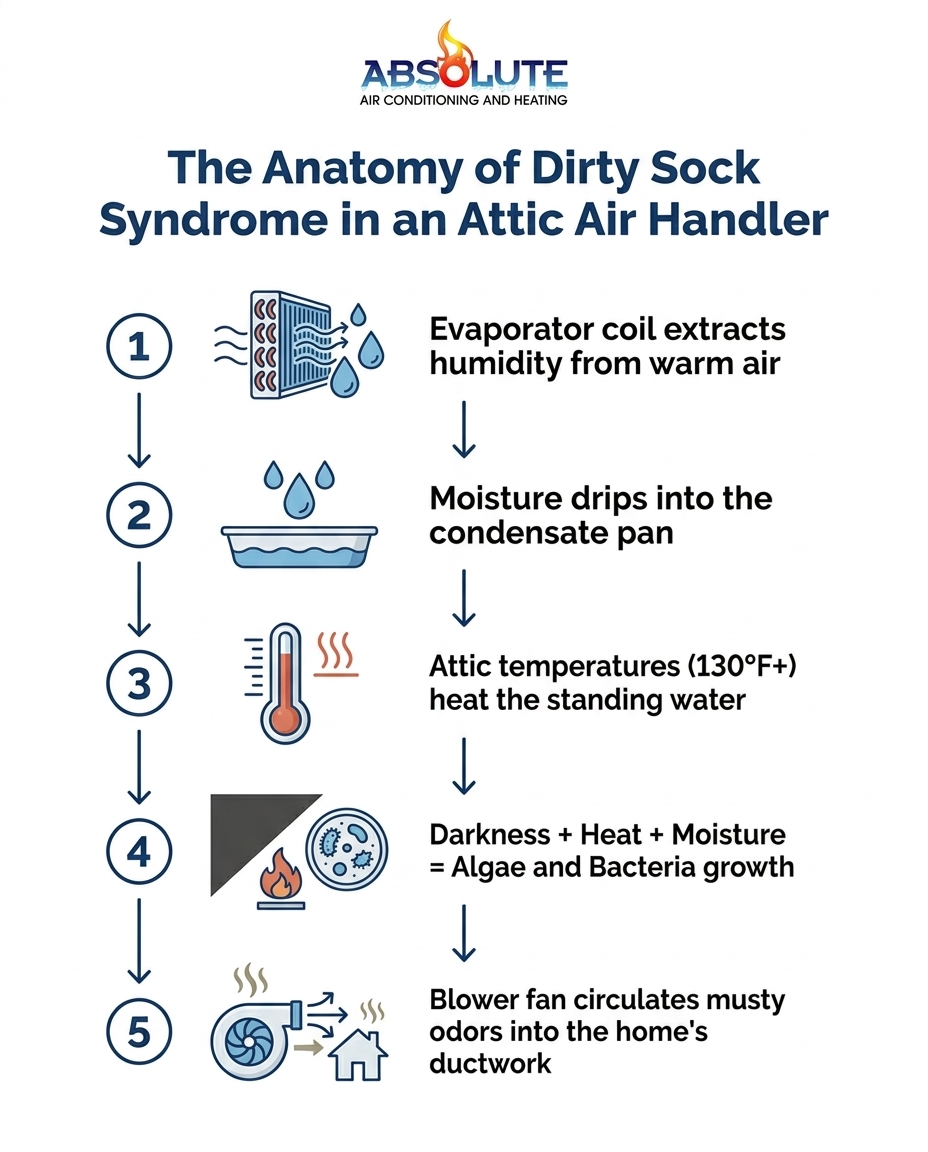
Your evaporator coil has a dual job: it cools the indoor air and extracts ambient humidity from it. As warm air passes over the freezing cold metal coils, condensation naturally forms on the surface. This moisture drips down into a shallow tray located directly beneath the coil, known as the condensate pan. Under normal, optimal conditions, this water flows smoothly down a connected PVC drain line and safely out of your house.
However, in our experience servicing Coachella Valley homes, we often find that dust, pet dander, and other airborne debris can easily bypass standard filters and mix with this water, creating a sludge that causes a partial blockage. When the drain line slows down, standing water accumulates in the pan. Instead of draining away efficiently, that trapped moisture sits in the dark enclosure of the air handler, waiting for the right conditions to cultivate biological growth.
The Microbial Growth Process
Standing water alone does not create an odor. The problem occurs when that water is combined with the absolute darkness inside your air handler. Spores, bacteria, and algae naturally exist in the air all around us. When they get pulled into your return vents and land in that stagnant water, the environment is perfectly primed for them to multiply rapidly.
The biological timeline typically looks like this:
• Initial trapping: Dust and organic matter settle into the standing water in the condensate pan.
• Spore introduction: Airborne bacteria and algae spores enter the system and find the nutrient-rich water.
• Colony formation: In the dark, damp environment, these microorganisms begin to rapidly multiply and form a biofilm or "slime" over the water and coil.
• Odor release: As these colonies grow and feed, they release volatile organic compounds (VOCs).
These VOCs are the actual source of the foul odor. Every time your blower fan turns on, it picks up these biological odors and circulates them directly through your ductwork and into every room of your house.
How Palm Desert Heat Turns Your Attic Into an Incubator
The physical location of your equipment plays a massive role in how quickly these musty odors develop. An indoor closet unit sits in a climate-controlled space, usually staying around 75 degrees. An attic installation, however, faces entirely different environmental extremes. Attics in the Palm Desert area can easily exceed 130 to 150 degrees during the peak of summer, as the roof absorbs and radiates the sun's intense energy downward.
This extreme ambient heat acts as a powerful biological accelerator. When you have an air handler sitting in a 140-degree attic, the standing water inside the condensate pan warms up significantly. You are essentially turning your hidden equipment into a high-temperature incubator. Occasional spikes in late-summer humidity add even more moisture to the equation, feeding the algae and bacteria exactly what they need to thrive and expand their colonies.
Because our technicians at Absolute Air Conditioning and Heating spend countless hours working in Coachella Valley attics, we have deep, localized expertise in how this extreme climate impacts hidden HVAC equipment. We understand that a system designed for a mild coastal climate behaves very differently when subjected to our intense desert heat. If you want to learn more about how this specific environment affects your system's efficiency and lifespan, understanding your attic AC unit is a great place to start. The unique combination of intense radiant heat, complete darkness, and trapped moisture means that microbial growth happens much faster here than in almost any other region.
The September Shift: Why Condensate Odors Peak in Early Fall
The timing of this sudden musty odor is not a coincidence. September marks a very specific seasonal transition in our area. Your cooling system has been running almost continuously since May, constantly extracting moisture from the indoor air. By the time the late summer transition arrives, the sheer volume of water that has passed through your condensate pan is staggering.
A pattern we see often during this September shift is that lingering humidity leaves residual moisture in the pan even as the system starts cycling slightly less frequently due to cooler evenings. This extended downtime between cooling cycles gives the bacterial colonies a chance to bloom undisturbed. One local homeowner who has relied on our team for ongoing service over the years noticed a similar issue during a past fall transition. When our technicians arrived to investigate, we identified that the late-season humidity had caused a massive algae bloom in their attic unit, requiring immediate professional sanitization.
Addressing this issue before the winter heating season begins is absolutely critical. When you turn on your furnace or heat pump for the first time, you do not want it blowing warm air over a stagnant, bacteria-filled pan, which can amplify the smell even further. If odors persist even after basic troubleshooting, it is time to evaluate your home's overall air quality. Upgrading your indoor air quality solutions can help neutralize these biological pollutants before they circulate through your living spaces.
The Risks of DIY Maintenance on Hidden Attic Equipment
When you notice a foul smell coming from the vents, your first instinct might be to grab a bottle of bleach, find a ladder, and head up the attic stairs to clean it out yourself. However, attempting DIY maintenance on hidden attic equipment carries significant risks to both your personal safety and the integrity of your HVAC system.
First, consider the physical danger. Navigating an unconditioned, 130-degree attic requires balancing on narrow wooden joists while dealing with severe heat exhaustion risks. One wrong step can send your foot straight through the ceiling drywall, turning a simple cleaning attempt into a major home repair project.
Second, modern HVAC systems are highly sensitive and complex. Using improper tools or harsh household chemicals can easily corrode the delicate aluminum fins of the evaporator coil or crack the plastic condensate pan. During routine pre-heating-season checkups, our technicians thoroughly inspect every detail on a customer's system and provide honest advice without unnecessary up-selling. We have seen firsthand how a well-meaning homeowner can accidentally crack a drain pan or cause a refrigerant leak while trying to scrub a coil. A trained Absolute Air Conditioning and Heating technician checks every detail safely, ensuring the unit is sanitized without risking catastrophic water damage.
Consider the stark differences between DIY attempts and professional care:
• Clearing Drain Lines — DIY Approach Risks: Pushing debris further in, causing a hard clog and ceiling leaks. — Professional Approach Benefits: Using high-suction vacuums to completely remove the blockage safely.
• Sanitizing the Pan — DIY Approach Risks: Using bleach, which corrodes metal coils and degrades plastic pans. — Professional Approach Benefits: Applying specialized, non-corrosive biocides that prevent future growth.
• Accessing the Unit — DIY Approach Risks: Risking heat stroke in a 130+ degree attic and falling through the ceiling. — Professional Approach Benefits: Trained navigation, proper safety gear, and efficient, clean execution.
To keep your system running efficiently and safely, scheduling routine AC maintenance is always the smartest choice, especially when dealing with hidden attic equipment.
Comprehensive FAQ: Resolving Attic Air Handler Odors
Why does my attic air handler smell musty in late summer?
It smells musty because months of condensation have created a breeding ground for algae and bacteria in the drain pan. Throughout the long summer, your system constantly extracts humidity from the air, keeping the pan wet. By late summer, any dust or organic matter trapped in that water has had ample time to rot and cultivate microbial growth. The resulting odors are then blown directly into your living space every time the fan runs. In our experience, the late-summer transition provides the perfect mix of residual moisture and heat to make these odors peak.
What causes dirty sock syndrome in an ac unit in attic?
Dirty sock syndrome is caused by microbial growth on the evaporator coil and in the standing water of the condensate pan. When you place an air handler in a dark, unconditioned attic, the extreme heat accelerates this biological process significantly. The bacteria feed on dust particles trapped in the moisture, multiplying rapidly and releasing the volatile organic compounds that create that signature dirty socks smell from AC vents. Because the attic environment is so much hotter than the rest of the house, it acts as a powerful incubator for this specific type of microbial life.
Why shouldn't I clean my attic AC condensate pan myself?
Cleaning it yourself risks exposure to extreme attic temperatures, potential damage to delicate coils, and accidental flooding if the drain line is completely blocked. Household chemicals like bleach can eat away at the metal components of your evaporator coil, leading to expensive refrigerant leaks and system failures. Furthermore, professionals use specialized, non-corrosive biocides and high-powered vacuums to clear lines safely without putting your ceiling at risk of water damage. Trusting a professional ensures the job is done safely and correctly.
How do I get rid of the musty smell in my air conditioner?
The smell is eliminated by having a professional clear the condensate drain line, sanitize the pan, and clean the evaporator coil thoroughly. Masking the scent with air fresheners, candles, or vent sprays is completely ineffective because it ignores the root biological cause of the odor. A trained technician will physically remove the algae and bacteria, treat the interior surfaces to prevent immediate regrowth, and ensure the moisture is draining properly out of the house. This comprehensive approach is the only way to permanently remove the smell.
Is a musty smelling AC dangerous?
While not immediately life-threatening, a musty AC circulates biological pollutants like mold spores and bacteria that can aggravate allergies and asthma. The EPA notes that poor indoor air quality can lead to respiratory irritation, frequent headaches, and unexplained fatigue. If anyone in your home suffers from respiratory issues, eliminating the source of these biological contaminants should be a top priority before the winter months trap that air indoors. Breathing clean air is essential for your family's overall comfort and health.
Can a dirty filter cause a musty smell instead of the condensate pan?
Yes, a severely clogged or damp air filter can produce odors, which is why checking the filter is always the very first diagnostic step. A filter that has absorbed excess humidity can take on a stale, cardboard-like scent that mimics other system issues. However, if you change the filter and the intense, biological "dirty socks" odor persists, the issue is almost certainly located deeper inside the air handler's condensate pan or evaporator coil, requiring professional attention.
Restore Fresh Air to Your Home Before Fall
A foul odor coming from your vents is much more than just a passing nuisance; it is a clear indicator of biological growth hiding deep within your system. What truly satisfies homeowners is understanding exactly why their system smells, realizing it is a very common post-summer issue, and knowing the safe, professional steps to resolve it without attempting dangerous DIY repairs. Eliminating the biological source is the only way to achieve lasting freshness.
If the odor persists after a simple filter change, do not wait for the problem to resolve itself. Reach out to our local experts at Absolute Air Conditioning and Heating to ensure your hidden attic equipment is thoroughly sanitized, draining properly, and fully prepared for the upcoming fall heating season.
Serving the Entire Coachella Valley


Why We Recommend Scheduling Your Pre-Heating Tune-Up Before the October Rush
Waiting for the first cold snap to test your furnace often leads to long service delays. Take a behind-the-scenes look at how local HVAC supply chains operate in the fall.

Evaluating the Switch from a Traditional Attic AC to a Heat Pump System This Fall
If your aging air conditioner barely survived the summer, you face a crucial choice before winter. See why a unified heat pump offers better year-round efficiency than standard gas combos.

Will Adding Insulation Around Your Attic AC Unit Actually Lower Your Cooling Bill?
Wrapping your attic air handler in a thermal blanket seems like a smart way to cut costs during early fall heat. Here is why this common myth damages your system and what actually works.

