
Heating Maintenance in La Quinta, CA
Inconsistent Heating Performance During Chilly Desert Nights
Is your heating system blowing cold air or making strange noises just as the evening temperatures in La Quinta begin to drop? When your furnace or heat pump fails to transition smoothly from the scorching summer to the cooler winter months, it disrupts your home comfort and drives up energy bills. Contact us today to schedule your comprehensive inspection or to learn about our flexible financing options.
Absolute Air Conditioning and Heating provides thorough maintenance services designed to catch small issues before they become expensive breakdowns. Homeowners often neglect their heating units because the desert climate prioritizes cooling, but a neglected heater can become a safety hazard or a financial drain during the winter. Our certified technicians ensure your equipment operates at peak efficiency, safeguarding your investment and your indoor air quality.
- Lower your monthly utility bills by ensuring your system runs without mechanical resistance.
- Prevent premature system failure and avoid the high cost of emergency replacements.
- Protect your home from safety hazards such as carbon monoxide leaks and electrical faults.
- Enjoy peace of mind with our certified technicians, backed by a satisfaction guarantee and transparent service protocols.
What Is Included in a Professional Heating Tune-Up
A heating tune-up is a rigorous technical inspection and cleaning process, not a superficial glance at the unit. Over time, heat pumps and furnaces accumulate desert dust, vibrate loose essential electrical connections, and suffer from wear and tear on moving parts. A professional maintenance visit restores the system to manufacturer specifications.
Comprehensive heating maintenance addresses the three pillars of HVAC health: safety, efficiency, and longevity. The service focuses on the specific components that take the most abuse during operation.
- Safety Inspection and Testing:
- The technician inspects the heat exchanger for cracks. In gas furnaces, a cracked heat exchanger is a critical safety failure that can allow carbon monoxide to enter the living space.
- Gas pressure and burner combustion are tested to ensure the fuel is burning cleanly and efficiently.
- Safety switches and limit controls are tested to verify they will automatically shut the system down in the event of overheating or failure.
- Carbon monoxide detectors near the unit are checked for proper operation.
- Cleaning and Airflow Optimization:
- Blower components are cleaned and adjusted. A dirty blower wheel reduces airflow, forcing the motor to work harder and overheat.
- Evaporator and condenser coils are inspected (for heat pumps) to ensure heat transfer is not blocked by debris.
- Air filters are inspected and replaced if necessary. In La Quinta, fine desert sand often clogs filters faster than the national average, restricting airflow and straining the system.
- Ductwork connections at the unit are checked for leaks that might be dumping heated air into the attic or crawlspace.
- Electrical and Mechanical Calibration:
- All electrical connections are tightened. Loose connections can cause voltage fluctuations that burn out motors and control boards.
- The thermostat is calibrated to ensure it reads the indoor temperature accurately, preventing the system from over-cycling.
- Moving parts, such as motor bearings, are lubricated to reduce friction and eliminate grinding noises.
- Capacitors are tested for proper microfarad ratings to ensure the motors have enough torque to start and run reliably.
How the Maintenance Process Works
We utilize a structured approach to servicing your heating system to ensure no component is overlooked. This systematic process minimizes disruption to your day while maximizing the technical depth of the service. The goal is to return your system to a "factory-fresh" state as much as possible.
- Arrival and Initial Assessment:
- The technician arrives on time with a fully stocked truck, ready to address common issues immediately.
- The process begins with a discussion about any specific concerns you have noticed, such as odd smells, cold spots in the house, or rising energy bills.
- The system is turned on to monitor its startup cycle, listening for irregular sounds and observing the ignition sequence.
- Deep System Audit:
- Power is cut to the unit to safely inspect internal components.
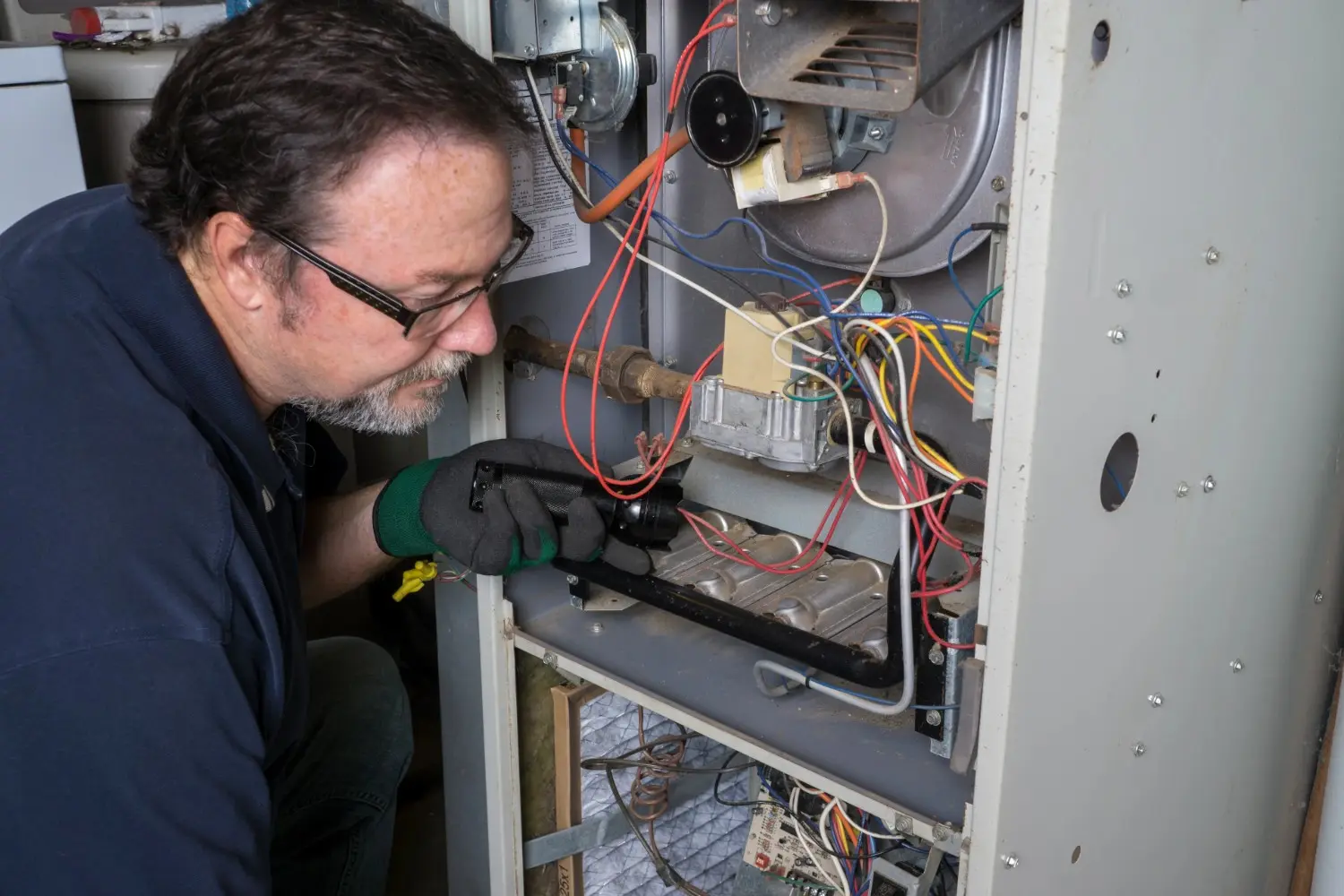
- Panels are removed to access the blower, burners, and electrical compartments.
- Diagnostic tools are used to measure amperage, voltage, and gas pressure against the manufacturer's rating plate data.
- Absolute Air Conditioning and Heating technicians document the condition of each component, noting any parts that are showing signs of imminent failure.
- Cleaning and Adjustment Phase:
- Debris is removed from the interior of the cabinet.
- Sensors, such as the flame sensor, are polished to ensure the system detects heat properly and stays lit.
- Pilot lights (on older systems) or hot surface igniters are checked and cleaned.
- Performance Testing and Reporting:
- The system is powered back on and run through a full heating cycle.
- Temperature rise is measured. This calculates the difference between the air entering the return vent and the air leaving the supply vents; it must fall within a specific range for the unit to be considered safe and efficient.
- A detailed report is provided, outlining what was done, the current health of the system, and any recommendations for repairs if critical issues were found.
Deciding Between Repair and Replacement
During a maintenance visit, a technician may uncover issues that require more than a simple tune-up. Homeowners must then decide whether to invest in repairs or consider replacing the heating unit entirely. Making this decision requires analyzing the age of the unit, the cost of the repair, and the future reliability of the system.
- The 50% Rule:
- If the cost of the repair approaches 50% of the value of a new system, replacement is generally the smarter financial move. Investing heavy capital into an aging asset rarely yields a good return.
- Consider the frequency of recent repairs. If you have required service calls multiple times in the last two years, the system is likely entering its end-of-life phase.
- System Age and Efficiency:
- Furnaces and heat pumps typically last 12 to 15 years. If your unit is over 12 years old and facing a major component failure (like a compressor or heat exchanger), replacement is often recommended.
- Newer systems offer significantly higher AFUE (Annual Fuel Utilization Efficiency) ratings. Upgrading from an 80% efficient furnace to a 95% or higher model can result in immediate savings on monthly gas bills.
- Safety and Comfort Considerations:
- A cracked heat exchanger is a non-negotiable replacement trigger for most homeowners due to the carbon monoxide risk. Repairing this component is often cost-prohibitive compared to a new unit warranty.
- If your current system results in uneven heating—where some rooms are boiling while others are freezing—ductwork issues or an improperly sized unit may be the culprit. Maintenance cannot fix incorrect sizing; replacement is the only true solution.
Local Regulations and Climate Factors
Operating a heating system in the Coachella Valley presents unique challenges compared to other regions. While winters are mild, the temperature swing from day to night is drastic, and local building codes impact how maintenance and repairs must be handled.
- California Title 24 Compliance:
- California has some of the strictest energy efficiency standards in the country. When maintaining or repairing systems, technicians must ensure compliance with Title 24 regulations.
- This includes verifying that ductwork is sealed properly and that thermostats are programmable or smart-enabled to reduce energy waste.
- Desert Climate Impact:
- The primary enemy of HVAC systems in this region is dust and sand. Fine particulates bypass standard filters and accumulate on the blower wheel and coil. This creates an insulating layer that prevents the system from heating or cooling effectively.
- Because many homes use heat pumps (which handle both heating and cooling), the equipment runs year-round. This double duty means maintenance should be performed twice a year—once for cooling in spring and once for heating in the fall—to prevent burnout.
- Utility Providers and Rebates:
- Local utility providers often offer rebates for upgrading to high-efficiency heat pumps or performing duct sealing.
- Regular maintenance ensures you remain eligible for these programs and keeps your consumption in lower tiers, avoiding punitive rates during peak usage times.
Why Professional Execution Matters
The difference between a functioning heater and an optimized heating system lies in the technical execution of the maintenance service. Homeowners require a service provider that looks beyond the obvious to identify the subtle inefficiencies that cost money over time.
- Certified Expertise:
- Technicians undergo rigorous training to understand the thermodynamics of heating systems. This ensures that every adjustment made is based on science and manufacturer specifications, not guesswork.
- Professional handling of refrigerants (for heat pumps) and gas lines (for furnaces) prevents environmental hazards and leaks.
- Warranty Protection:
- Most HVAC manufacturers require proof of annual maintenance to keep warranties valid. Skipping professional service can void the warranty, leaving you liable for the full cost of parts if a major component fails.
- Professional documentation serves as proof of care if you ever need to file a claim.
- Holistic Home Health:
- A professional assesses the entire envelope of the home. They look at how the heating system interacts with ventilation, insulation, and thermostat placement.
- This approach solves root causes rather than treating symptoms. For example, rather than constantly resetting a limit switch, a professional finds out why the system is overheating in the first place.
Your heating system is essential for comfortable living during the cooler months. Don't wait for a breakdown to think about the health of your furnace or heat pump. Secure your comfort and safety now.
Proactive Care That Keeps Your Home Comfortable All Winter
Routine heating maintenance is the most effective way to prevent unexpected breakdowns, reduce energy waste, and ensure safe operation when desert nights turn cold. A professionally tuned system delivers consistent warmth, operates more efficiently, and gives you confidence that every component is working as intended. With proven expertise and meticulous attention to detail, Absolute Air Conditioning and Heating helps homeowners protect their comfort, safety, and long-term HVAC investment.
Take control of your indoor climate today. Contact Absolute Air Conditioning and Heating to schedule your precision heating maintenance

