

HVAC Installation in La Quinta, CA
Is Your Outdated AC Failing to Keep Up with the Desert Heat?
Dealing with the sweltering desert heat in La Quinta can be tough, especially if your AC isn't up to par and leaves your home feeling uncomfortable. Discover how our quick, reliable HVAC installation can bring you relief from the heat, fast. Contact us today to schedule your assessment or inquire about available financing options to get your system replaced immediately.
- Experience rapid installation — often same-day — to cool your home sooner.
- Choose energy-efficient units that reduce monthly bills and enhance comfort.
- Receive a full installation by certified professionals, complete with a solid warranty.
All installations are fully covered by warranty and convenient financing options are available.
What You Can Expect From a Modern HVAC Installation
When you invest in a new HVAC system, you are purchasing more than just a metal box; you are investing in the long-term comfort and safety of your property. Modern systems are designed to handle the extreme thermal loads found in the Coachella Valley without consuming the excessive energy that older units require. Upgrading your system addresses the root causes of uneven cooling, high humidity, and skyrocketing utility bills.
Absolute Air Conditioning and Heating focuses on delivering a seamless transition from your old, failing unit to a high-efficiency system. The goal is to minimize downtime so you are not left without climate control during peak temperatures. A professional installation encompasses a complete evaluation of your home’s thermal characteristics, ensuring that the new machinery communicates effectively with your thermostat and ductwork.
Key improvements you will notice immediately include:
- Consistent Temperature Control: New systems eliminate hot and cold spots, maintaining a uniform temperature throughout every room in the house.
- Quiet Operation: Modern variable-speed motors and sound-dampening technology operate significantly quieter than the rattling units of the past.
- Improved Air Quality: Advanced filtration capabilities in modern units trap desert dust and allergens more effectively, contributing to a healthier indoor environment.
- Smart Integration: New systems often pair with smart thermostats, allowing you to control your cooling schedule remotely and optimize energy usage based on your lifestyle.
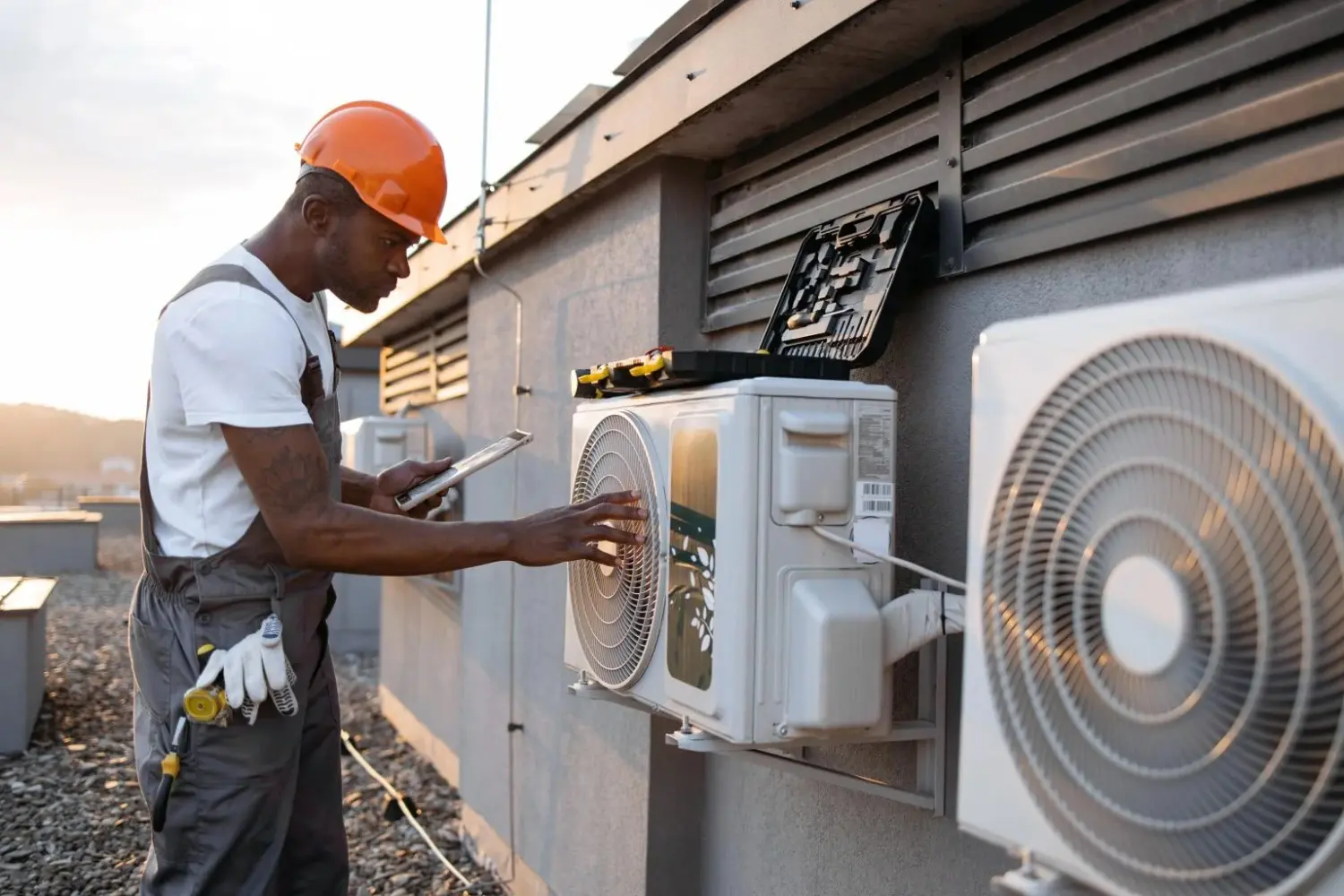
Our Comprehensive Installation Process
A correct installation is the most critical factor in the lifespan and efficiency of your HVAC system. Even the highest-rated equipment will fail prematurely if it is not installed according to manufacturer specifications and local building codes. Our approach ensures that every component is calibrated for the specific demands of the local climate.
The installation workflow typically follows these steps:
- Site Evaluation: Technicians perform a comprehensive evaluation to determine the exact cooling requirements of your home. This assessment considers square footage, insulation levels, window orientation, and local heat exposure. This ensures the unit is neither undersized (running constantly without cooling) nor oversized (short-cycling and failing to dehumidify).
- Protection of Property: Before any physical work begins, the workspace is prepared to protect your flooring and personal property. Drop cloths and protective coverings are utilized to ensure the installation area remains clean and undamaged throughout the process.
- Safe Removal of Existing Equipment: The old unit is disconnected from the electrical grid and refrigerant lines. Certified technicians reclaim any remaining refrigerant in compliance with environmental regulations to prevent venting harmful chemicals into the atmosphere. The old hardware is then removed and disposed of properly.
- System Installation and Connection: The new indoor and outdoor units are positioned and leveled. Technicians connect the refrigerant lines, high-voltage electrical wiring, and low-voltage control wiring. Special attention is given to the brazing of copper lines to prevent future leaks, a common issue in rushed installations.
- Ductwork and Airflow Verification: The connection between the new unit and existing ductwork is sealed to prevent air loss. Technicians verify that the static pressure inside the ducts is within the manufacturer's specified range, ensuring the blower motor does not overwork.
- System Commissioning and Testing: Once connected, the system is not just turned on; it is commissioned. This involves charging the system with the precise amount of refrigerant, measuring temperature splits (the difference between supply and return air), and testing all safety controls. The system is run through a complete cycle to verify performance before the job is marked complete.
Making the Choice: Repair the Old Unit or Install a New One?
Homeowners often struggle to decide whether to pour more money into a repair or commit to a full replacement. In the high-heat environment of the desert, an unreliable unit is a liability. Making the right financial decision requires looking at the age of the unit, the cost of the repair, and the potential energy savings of a new system.
Use the following guidelines to determine if replacement is the smarter financial move:
- The 50% Rule: If the cost of the repair approaches 50% of the value of a new system, replacement is generally the better option. Putting expensive parts into an old system does not guarantee that another component won't fail next month.
- Equipment Age: HVAC systems in extreme heat climates typically last 10 to 15 years. If your unit is over 10 years old and requires a major repair (like a compressor or blower motor), technology has likely advanced enough that a new unit will pay for itself through energy savings within a few years.
- Rising Energy Bills: As internal components wear down, they require more electricity to do the same amount of work. If your summer cooling bills have increased significantly despite consistent usage habits, your unit’s efficiency has degraded. A new system with a higher SEER2 rating can reduce energy consumption by 20% to 40%.
- Refrigerant Type: If your old unit utilizes R-22 (Freon), it is obsolete. R-22 is no longer produced, making recharge costs exorbitant. Upgrading to a system that uses R-410A or newer eco-friendly refrigerants is necessary for long-term serviceability.
- Comfort and Reliability: If your current system requires frequent service calls or fails to keep the house cool on the hottest days of the year, it is struggling to meet the cooling load. Peace of mind is a significant factor; a new system provides reliability and warranty protection that an aging unit cannot.
Navigating Local Requirements and Climate Factors
Installing an HVAC system in La Quinta involves more than just plugging in a machine. The specific environmental conditions and regulatory landscape require a contractor who understands local compliance and climate challenges. Ignoring these factors can lead to code violations, reduced efficiency, and potential fines when selling the property.
Permits and Building Codes
Strict adherence to building codes is required for all HVAC replacements. This includes obtaining the necessary permits before work begins and passing a final inspection by city officials.
- Permits ensure that the electrical connections are safe and that the gas piping (for furnaces) is leak-free.
- An unpermitted installation may void manufacturer warranties and can cause significant complications during a home sale, as inspectors will flag unauthorized work.
- We handle the entire permitting process, ensuring your installation meets all safety standards and legal requirements.
Heat Load and Seasonality
The intense heat in this region puts extreme stress on air conditioning components.
- Capacity Sizing: Systems must be sized for "design temperatures" that reflect the local summer highs, not national averages. An undersized unit will run 24/7 and fail to drop the indoor temperature to a comfortable level.
- Insulation and Ductwork: The extreme heat in attics can heat up the air inside your ducts before it reaches your living space. Evaluating and potentially upgrading duct insulation is often part of a successful installation in this area.
Utility Rebates and Incentives
Local utility providers, such as Southern California Edison (SCE), often offer rebates and incentives for homeowners who upgrade to high-efficiency heat pumps or air conditioners.
- These programs are designed to reduce the load on the electrical grid during peak summer hours.
- To qualify, equipment usually must meet specific SEER2 (Seasonal Energy Efficiency Ratio) and EER2 standards.
- Utilizing these rebates can significantly offset the upfront cost of a new installation.
Why Professional Installation Matters for Long-Term Efficiency
The efficiency rating on the box (SEER or SEER2) represents the potential of the equipment, but that potential is only realized through flawless installation. Studies show that improper installation can reduce a system's efficiency by up to 30%. This means you could pay for a high-efficiency unit but receive standard efficiency performance due to poor workmanship.
Professional installation addresses critical factors that general handymen or uncertified technicians often overlook:
- Refrigerant Charge: An incorrect refrigerant charge (either too low or too high) forces the compressor to work harder, shortening its lifespan and increasing electricity usage. Precision gauges are required to dial this in to factory specifications.
- Airflow Balance: If the system pushes more air than the ducts can handle, it creates high static pressure that can blow out blower motors. Conversely, too little airflow can cause the evaporator coil to freeze up. Certified installers measure and adjust airflow to match the system’s design.
- Proper Sizing of Electrical Components: Ensuring that breakers and wire gauges are correctly sized for the new unit prevents fire hazards and nuisance tripping. Modern high-efficiency units often have different electrical requirements than the older units they replace.
- Warranty Registration: Most manufacturers require proof of installation by a licensed contractor to validate the parts warranty. Professional installers ensure all paperwork is filed correctly so you are protected for the next 10 years.
Securing Your Home Comfort
Upgrading your heating and cooling system is a significant decision that impacts your daily life and financial well-being. By choosing a professional installation, you ensure that your home remains a sanctuary against the desert heat. A modern, efficiently installed system provides consistent cooling, lower energy bills, and the peace of mind that comes with reliable performance.
Don't wait for your old unit to fail completely in the middle of a heatwave. Absolute Air Conditioning and Heating is ready to help you transition to a system that meets the demands of the climate and your budget.
Ready to upgrade your comfort and lower your energy costs? Contact us now to schedule your comprehensive HVAC estimate.

