
Troubleshooting Your Air Handler in the Attic: First Startup Quirks vs. Real Problems
The First Fall Startup: What to Expect from Your Attic HVAC System
You finally switch the thermostat from cooling to heating, expecting a wave of comforting warmth, but instead, your home fills with a distinct burning smell and strange noises from above. Mastering home maintenance tips and troubleshooting is essential when your heating system acts up during this crucial transition. Turning on your heating system for the first time after eight months of dormancy often brings unexpected surprises that can put any homeowner on edge. Homeowners frequently notice a distinct burning odor or unusual rattling sounds coming from the ceiling, leading to immediate concern about fire hazards or broken equipment.
It is critical to distinguish between normal seasonal startup quirks and signs of mechanical failure. During the November transition to colder desert nights, your system is forced to shift gears rapidly. Understanding how your attic environment impacts the equipment will help you make the right call, ensuring you do not panic over a harmless dust burn-off while also not ignoring a genuine safety risk. By taking a methodical approach to evaluating your system's behavior, you can protect your home and your peace of mind.
For comprehensive support transitioning your system between seasons, exploring professional Air Conditioning Services ensures your equipment is properly calibrated for the months ahead.
The Mechanics of Seasonal Dormancy
To understand why the first fall startup is so jarring, you have to look at what your system has been doing for the better part of a year. In a standard heat pump or electric furnace setup, the heating elements sit completely inactive throughout the long summer. While the blower motor runs daily to circulate chilled air, the actual heat strips, heat exchangers, and reversing valves remain untouched and unpowered. This extended period of inactivity allows environmental factors to take a toll on the dormant components.
When you finally demand heat, you are asking mechanical parts that have been sitting still for eight months to instantly perform at peak capacity. Relays click over, high-voltage electricity flows into cold metal, and thermal expansion begins immediately. This sudden jolt of activity is the root cause of almost every first-startup quirk you will experience. Knowing what happens inside that metal cabinet is the first step in effective troubleshooting.
Why Your Air Handler in the Attic Emits a Burning Smell
The Problem: Within minutes of turning on the heat for the first time, a strong, dusty, burning odor begins pouring out of your supply vents, often smelling like a toaster that has been left on too long.
The Cause: During the long cooling season, the heating elements inside your system sit entirely dormant. While the system filters out a massive amount of airborne debris, microscopic particles inevitably slip through. Dust, pet dander, fabric fibers, and skin cells naturally accumulate on the heat strips and heat exchangers over these months. Because attics in Palm Desert and the broader Coachella Valley routinely exceed 130°F during the peak of summer, this extreme ambient heat aggressively bakes the settled dust onto the dormant heating components.
When the heating cycle finally engages in late fall, those heat strips glow red hot almost instantly. The baked-on dust incinerates all at once, creating a distinct, pungent odor. The enclosed, pressurized nature of the attic space often amplifies the smell as the blower motor forcefully circulates it through the ductwork and into your living areas. If you are unsure about what exactly is housed up there generating this smell, learning what the AC unit in the attic is called can help you better understand your home's hidden equipment.
The Solution: The most effective response is patience and observation. Because this is a physical burn-off of accumulated organic matter, the only way out is through. The system must run long enough to incinerate the debris entirely. Opening a few windows to allow cross-ventilation will help clear the air in your home while the system completes this natural, albeit unpleasant, seasonal process.
The 15-Minute Rule: Normal Dust Burn-Off vs. Safety Concerns
When faced with a burning smell, your primary goal is to evaluate the situation safely without attempting dangerous DIY diagnostics on high-voltage equipment. The "15-Minute Rule" provides clear, safe parameters for homeowners to follow when nighttime temperatures dropping into the 40s force them to turn on the heat.
1. Note the exact time you turned the system on: Do not rely on guesswork. Look at the clock the moment you engage the heating cycle.
2. Monitor the smell's intensity: A standard dust burn-off smell will peak in the first five minutes and then begin to steadily dissipate.
3. Wait for the 15-to-30-minute mark: Under normal circumstances, the burning dust odor should completely clear within 15 to 30 minutes of continuous operation.
4. Evaluate the air quality: Once the time has elapsed, the air coming from the vents should smell neutral and warm. If you are continually struggling with excessive airborne dust making this burn-off worse every year, integrating proper indoor air quality solutions can drastically reduce the debris settling on your components.
Signs It Is Time to Power Down
While dust burn-off is harmless, other odors indicate a critical mechanical or electrical failure. If you experience any of the following, turn the system off immediately at the thermostat and do not turn it back on until a professional has inspected it:
• An intensifying odor: A smell that grows stronger and more pungent rather than fading away after the first ten minutes.
• Acrid, chemical, or ozone-like odors: The smell of melting plastic, burning rubber, or an electrical "fishy" smell indicates melting wire insulation or failing electrical components.
• Visible smoke: A light haze is occasionally possible with heavy dust, but distinct, localized smoke coming from the vents or the attic is an emergency.
• Tripping circuit breakers: If the burning smell is accompanied by a tripped breaker associated with the HVAC equipment, you have a hard electrical short that requires immediate professional intervention.

Decoding Unusual Noises from Your Attic Equipment
Beyond alarming smells, the first fall startup often comes with a symphony of strange sounds. When dormant equipment is suddenly forced to run, the physical stress on the metal and moving parts is immense. Extreme summer temperatures can prematurely dry out factory lubricants in bearings and joints, making the fall startup particularly noisy for residents in Palm Desert and the broader Coachella Valley.
Thermal Expansion Popping: Mild clicking, ticking, or popping sounds are usually harmless. This is simply the normal expansion and contraction of metal ductwork and the air handler cabinet as they rapidly heat up and cool down. As the metal adjusts to the new temperature extremes, it shifts slightly, creating a rhythmic ticking that usually fades once the system reaches a steady operating temperature.
Blower Motor Squealing: A high-pitched squealing, screeching, or grinding noise from the blower motor is a clear warning sign. This typically indicates failing motor bearings or, in older systems, severe belt wear. Absolute Air Conditioning and Heating brings specialized expertise in diagnosing systems that have endured extreme Southern California desert heat, recognizing when a motor has been compromised by thermal stress rather than just normal wear and tear.
Delayed Ignition Banging: If you have a gas furnace connected to your air handler, a loud boom or bang upon startup is a serious issue known as delayed ignition. This occurs when gas builds up in the combustion chamber before the igniter successfully lights it, causing a small explosion. This can crack the heat exchanger and release carbon monoxide into the home. If you hear this, shut the system down and immediately schedule professional AC repair services.
Rattling and Vibrating: A persistent rattle often means a panel on the air handler has come loose, or a piece of debris has made its way into the blower wheel. While not usually an emergency, a severely unbalanced blower wheel can eventually tear itself apart, so persistent vibration should always be investigated by a technician.
Dealing with Lukewarm Air and Sluggish Performance
The Problem: The system turns on, the thermostat indicates that it is heating, and the blower is pushing air, but the air coming out of the vents is stubbornly lukewarm. The house takes hours to warm up, or fails to reach the target temperature at all.
The Cause: There are several reasons a system might struggle to produce sufficient heat on the first cold night. If you have a heat pump, the reversing valve—the component responsible for switching the flow of refrigerant from cooling to heating—may be stuck after sitting in the cooling position for eight months. Alternatively, the auxiliary heat strips might be failing to engage. Furthermore, a heavily soiled air filter from the long, dusty summer cooling season will severely restrict warm airflow. When nighttime temperatures dropping into the 40s cause a sudden thermal loss in the home, an inefficient, sluggish heating system will struggle to overcome the deficit.
The Solution: Start with the simplest fix: check and replace your air filter. A suffocated system cannot heat your home properly. If you use a heat pump, be aware that these systems occasionally enter a brief defrost cycle in cold weather, which temporarily alters the air temperature coming from the vents; wait twenty minutes to see if the warm air returns. If the filter is clean and the air remains lukewarm after an hour, the system's internal mechanisms, such as the reversing valve or the refrigerant charge, need professional recalibration.
• Air is barely blowing — Likely Cause: Clogged filter or failing blower motor — Required Action: Replace filter; call technician if unresolved
• Air is consistently lukewarm — Likely Cause: Stuck reversing valve or low refrigerant — Required Action: Requires professional diagnostics
• System runs constantly without heating — Likely Cause: Failed auxiliary heat strips — Required Action: Requires professional electrical repair
• Brief periods of cool air — Likely Cause: Normal heat pump defrost cycle — Required Action: Wait 15-20 minutes for cycle to end
Pre-Winter Maintenance: Protecting Your Attic Heating Components
Transitioning from troubleshooting to proactive care is the best way to ensure your system survives the winter. While changing your air filter and keeping vents unblocked are great homeowner tasks, true preventative care requires a certified expert. Professional maintenance is the only safe way to verify electrical connections, test high-voltage components, and check safety limits in an attic unit. Attempting to open the air handler cabinet to clean components yourself exposes you to lethal voltage and risks voiding your manufacturer warranty.
During a pre-winter tune-up, technicians can safely clean baked-on dust from heat strips to minimize those alarming startup odors. They use specialized tools to measure the amperage draw on the blower motor, ensuring it hasn't been fatally weakened by the summer heat. Routine inspections catch worn blower motors, failing capacitors, and sticking reversing valves before they cause a complete breakdown on a freezing night.
Addressing these issues in late fall, right around the November transition to colder desert nights, ensures reliable, safe heating throughout the winter. An attic that fluctuates wildly in temperature puts immense strain on wiring insulation and electrical contacts. A technician will tighten every connection, ensuring that the vibrations from the system haven't shaken anything loose during the summer. This level of meticulous care is what separates a system that lasts a decade from one that requires premature replacement.
Keep Your Home Comfortable and Safe This Winter
Navigating home maintenance tips and troubleshooting during the fall transition doesn't have to be a source of anxiety. A brief burning smell during the first fall startup is usually just harmless dust burn-off that clears up quickly. However, persistent odors, strange grinding noises, or consistently poor heating performance mean it is time for an expert assessment. Do not let a minor maintenance issue turn into a mid-winter breakdown that leaves your family shivering.
Taking action now ensures that when the desert temperatures plummet, your system responds with safe, reliable warmth. Learn more about ensuring your system is ready for the season ahead by exploring professional AC installation in Palm Desert and comprehensive maintenance options that guarantee your total peace of mind.
Frequently Asked Questions
Why does my attic air handler smell like burning dust?
During the summer, dust settles on the dormant heating elements inside your air handler. When you turn on the heat for the first time in the fall, these elements get incredibly hot, instantly incinerating the accumulated dust and sending that burning smell through your vents.
When should I call a professional for a strange heater smell?
You should call a professional if the burning smell lasts longer than 30 minutes, or if it smells like melting plastic, burning rubber, or ozone. These acrid odors indicate an electrical failure or melting wire insulation, which requires immediate professional attention and an emergency system shutoff.
What maintenance does an attic air handler need before winter?
An attic air handler requires a professional inspection of its electrical connections, safety limits, and heating elements. A technician will clean the heat strips to reduce startup odors, check the blower motor's amp draw, and verify that the reversing valve operates smoothly before the cold weather sets in.
Is it safe to have an air handler in the attic?
Yes, it is perfectly safe when the system is professionally installed and routinely maintained. However, because attics experience extreme temperature fluctuations, the equipment is subjected to heavier thermal stress, making annual inspections critical to prevent electrical issues or unnoticed water leaks from the condensate pan.
How long does the burning smell last when you turn on the heater?
A normal dust burn-off smell should peak within the first five minutes and completely dissipate within 15 to 30 minutes of continuous operation. If the odor persists beyond this timeframe or grows stronger, turn the system off and schedule a diagnostic visit.
How does extreme summer heat affect dormant heating components in the attic?
Extreme attic temperatures, often exceeding 130°F, can aggressively bake settled dust onto the heating elements and prematurely dry out factory lubricants in the blower motor bearings. This intense thermal stress makes the dormant parts more brittle and prone to noisy, sluggish operation during the first fall startup.
Serving the Entire Coachella Valley

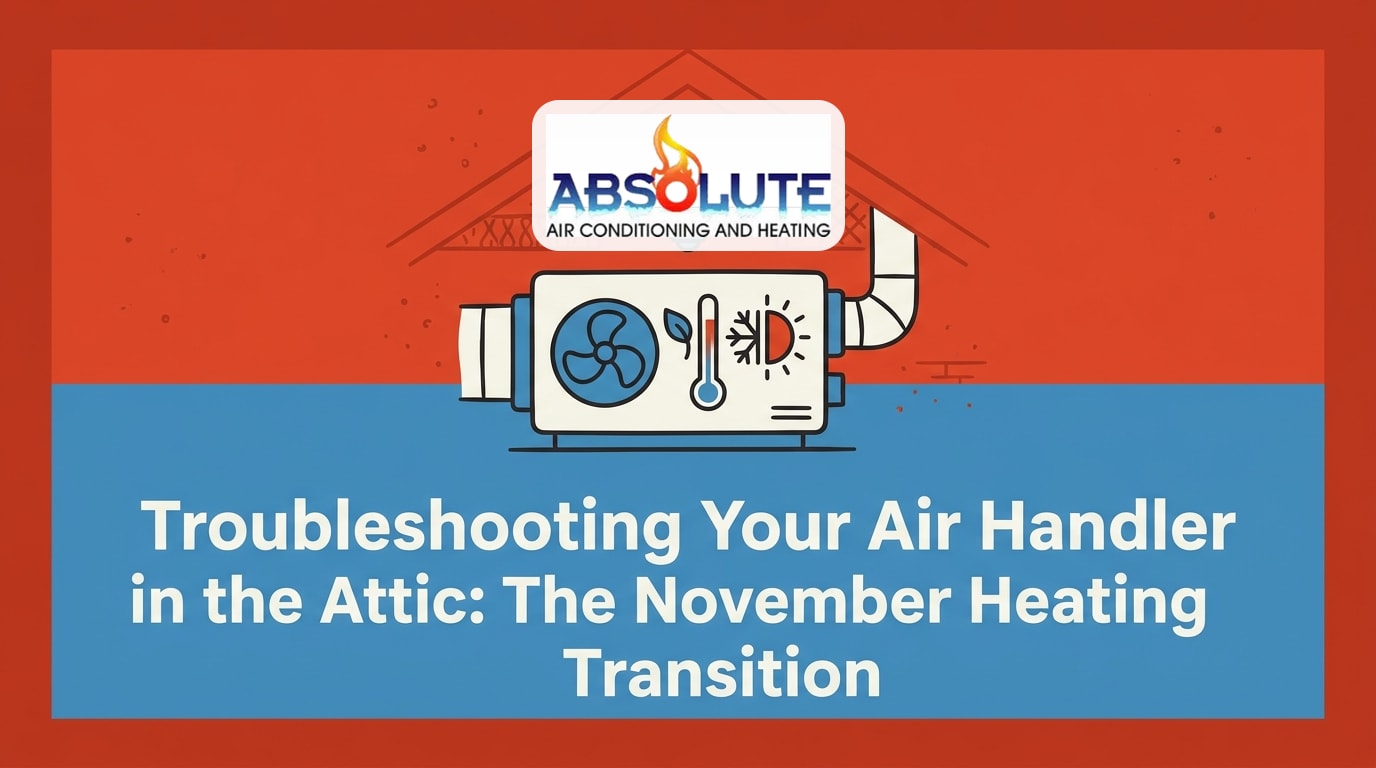
Troubleshooting Your Air Handler in the Attic: The November Heating Transition
Is that burning smell normal? Get clear answers with these home maintenance tips and troubleshooting steps to decide when to call a pro for your attic heater.

Why Does My Air Handler in the Attic Smell Like Burning?
Why does your heater smell on the first cold night? We get common homeowner questions answered about harmless dust burn-off versus dangerous electrical faults.

Air Handler in the Attic: Troubleshooting Seasonal Burning Smells
Smelling burning dust from your heater? Get clear answers on what is normal with these home maintenance tips and troubleshooting steps before calling a pro.

