

Heat Pump Service in Thousand Palms, CA
Is Your Heat Pump Failing During Peak Desert Temperatures?
As Thousand Palms hits peak summer temperatures, ensuring your heat pump is in top condition becomes critical for the safety and comfort of your home. A malfunction during a heatwave is not just an inconvenience; it requires immediate professional intervention to restore a habitable environment. Contact us immediately to schedule a diagnostic visit or inquire about our flexible financing options.
At Absolute Air Conditioning and Heating, we understand that desert climates place extreme demands on HVAC systems, requiring specialized maintenance and rapid repair protocols. When your system struggles against 100°F+ weather, you need a technical partner who can diagnose the root cause—whether it is airflow restriction, refrigerant leaks, or electrical failure—and implement a permanent fix.
- Rapid, same-day service availability to restore your comfort fast.
- Transparent pricing structures with no hidden fees or surprise upcharges.
- Comprehensive maintenance protocols designed to extend your unit’s lifespan in harsh climates.
Fully licensed and guaranteed work—plus available financing options—ensures you get the service you need without delay.
Comprehensive Heat Pump Services for Year-Round Comfort
Heat pumps are unique because they handle both heating and cooling, meaning they operate year-round without the seasonal break that a standalone furnace or air conditioner might get. In the Coachella Valley, where the cooling load is massive and winter nights can still get chilly, this continuous operation accelerates wear and tear. Our service is designed to address the specific mechanical stresses placed on these dual-function systems.
When you engage professional service, you are securing a systematic evaluation of the entire thermodynamic cycle of your equipment. We do not simply swap filters and leave; we perform a deep-dive analysis of the system's ability to transfer heat effectively. This includes verifying the integrity of the reversing valve—the critical component that switches the unit between heating and cooling modes—and ensuring the compressor is drawing the correct amperage.
The scope of our service includes:
- Refrigerant Charge Verification: We check superheat and subcooling levels to ensure the refrigerant charge is precise. Incorrect levels can lead to compressor failure or frozen coils, especially during high-load days.
- Electrical Component Inspection: Heat/cool cycles cause wires to expand and contract, leading to loose connections. We tighten all electrical terminals, test capacitors for proper microfarad ratings, and inspect the contactor for pitting or burning.
- Airflow and Static Pressure Testing: We measure the static pressure in your ductwork to ensure the blower motor is not being overworked. Proper airflow is essential for the heat exchange process.
- Coil Cleaning and Debris Removal: The outdoor condenser coil is prone to accumulating dust, sand, and debris common in desert environments. We clean these coils to maximize heat rejection capabilities.
- Defrost Board Analysis: We test the defrost cycle to ensure the unit does not freeze up during colder winter operation, a common issue that can damage the outdoor fan.
The Service Process: Diagnostics, Repair, and Maintenance
Understanding how a professional service visit is conducted helps you prepare for the appointment and ensures you know exactly what work is being performed on your property. Our process is structured to be efficient, minimizing disruption to your day while ensuring technical accuracy.
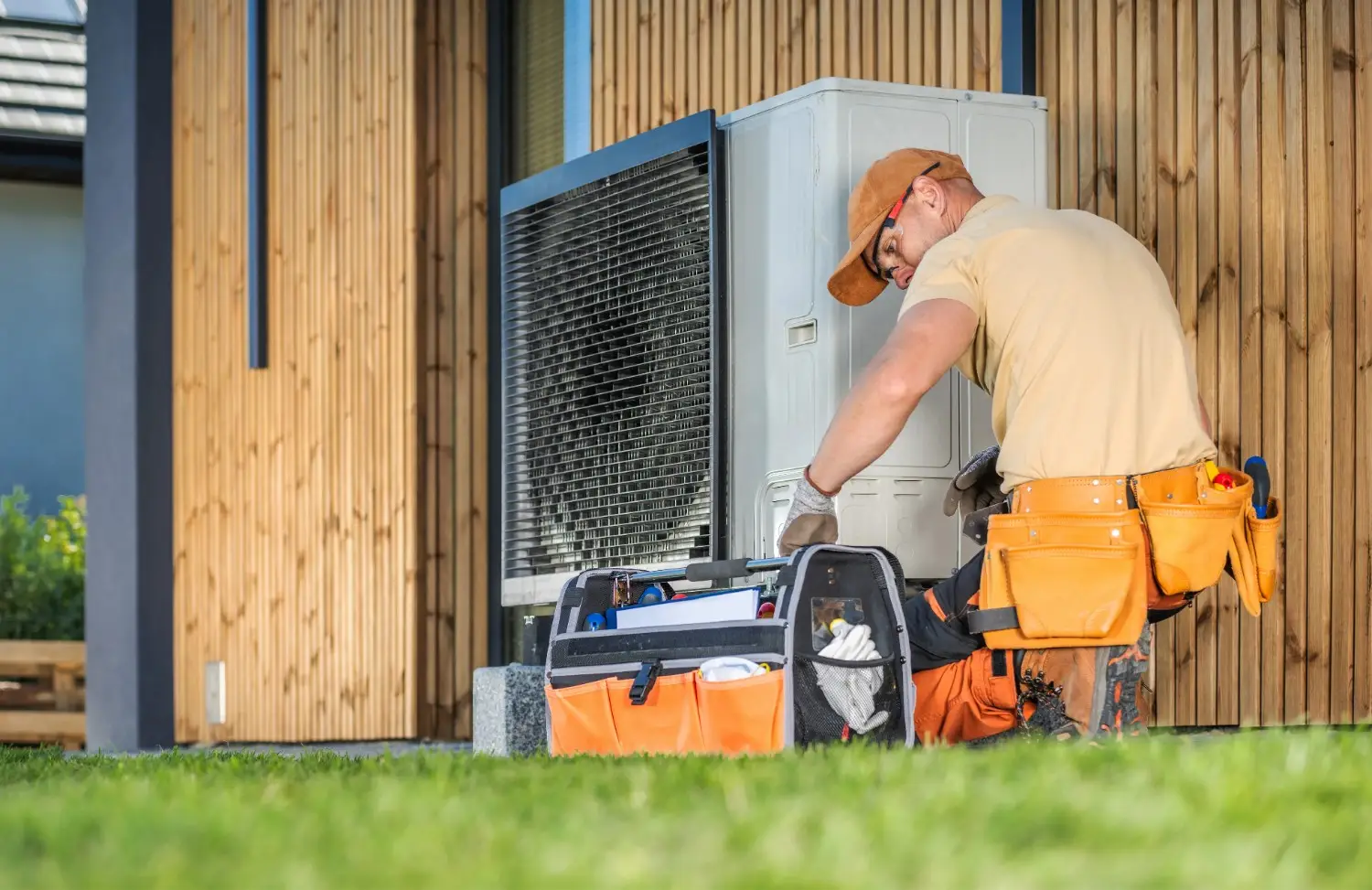
- Initial Assessment and Safety Check: Upon arrival, the technician begins by assessing the immediate environment and performing a safety check. This includes turning off power at the disconnect box before opening any panels. We listen for unusual noises like grinding or hissing that indicate mechanical failure.
- System Diagnostics: Using advanced diagnostic tools, we isolate the issue — try our HVAC troubleshooter first. If the system is not cooling, we check the refrigerant pressures and the compressor. If the airflow is weak, we inspect the blower motor and belt tension. This step distinguishes between a minor component failure and a major system breakdown.
- Clear Explanation and Quote: Once the problem is identified, you receive a detailed explanation of the failure and a written quote for the repair. We explain exactly what part failed, why it failed, and what is required to fix it. There is no ambiguity regarding costs.
- Execution of Repairs: With your approval, we proceed with the repair. Our trucks are stocked with common parts like capacitors, contactors, and hard start kits to aim for a first-visit resolution. For major repairs involving refrigerant, we adhere to strict EPA recovery and charging standards.
- System Testing and Verification: After the repair is complete, we do not just leave. We run the system through a full cycle, monitoring temperature splits (the difference between supply and return air temperature) to verify performance. We ensure the thermostat is communicating correctly with the air handler and the outdoor unit.
- Site Cleanup: We treat your property with respect, removing all old parts, packaging, and debris created during the service.
Repair vs. Replacement: Making the Right Financial Decision
One of the most difficult decisions homeowners face is determining when to stop repairing an aging unit and when to invest in a new system. This decision should be based on data and financial logic rather than emotion. While we offer comprehensive repairs, there are mathematical tipping points where replacement becomes the more prudent financial choice.
You should consider replacement if:
- The 50% Rule: If the cost of the repair approaches 50% of the value of a new system, replacement is generally the better option. Investing heavy capital into a degrading asset often leads to diminishing returns.
- Age of the Unit: In extreme climates like Thousand Palms, heat pumps have a typical lifespan of 10 to 15 years. If your unit is over 12 years old and requires a major component like a compressor or reversing valve, the risk of secondary failures increases significantly.
- Refrigerant Type: If your older system utilizes R-22 refrigerant (Freon), repair costs will be exorbitant due to the phase-out of this chemical. upgrading to a system that uses R-410A or newer refrigerants is a necessary step for future serviceability.
- Frequency of Breakdowns: If you have required professional service more than twice in the last two years, the system has likely become unreliable. Frequent breakdowns indicate that multiple components are reaching the end of their lifecycle simultaneously.
- Efficiency Ratings (SEER2 and HSPF2): Modern heat pumps are significantly more energy-efficient than models manufactured a decade ago. Upgrading to a higher SEER2 unit can result in substantial monthly energy savings, effectively offsetting the monthly cost of a new installation over time.
Navigating Local Climate Challenges and Regulations
Operating a heat pump in the Coachella Valley presents specific challenges that do not exist in milder climates. The extreme heat requires equipment that is properly sized and installed according to strict local standards.
Desert Heat and Equipment Strain
The primary challenge in this region is the sheer duration of the cooling season. Systems run for longer cycles and at higher pressures. This heat can cause oil breakdown in the compressor and dry out electrical insulation. Maintenance in this area must focus heavily on heat rejection—keeping coils clean and fans running at optimal speed is non-negotiable. Neglecting the outdoor unit in a sandy environment leads to rapid efficiency loss as the coils become impacted with dust.
Permits and Title 24 Compliance
In California, HVAC work is heavily regulated to ensure energy efficiency and safety.
- Permitting: Major repairs and all unit replacements require proper permitting. This ensures the installation meets safety codes and prevents future liability issues when selling the home.
- Title 24: California’s energy code (Title 24) dictates specific requirements for duct sealing, refrigerant charge verification, and airflow. A compliant installation often requires a HERS (Home Energy Rating System) rater to verify the work. We handle the technical documentation to ensure your system meets these rigorous state standards.
- Rebates and Incentives: Local utility providers often offer rebates for upgrading to high-efficiency heat pumps. These programs change frequently and often require specific SEER ratings or installation by a licensed contractor to qualify.
Electrical Utility Considerations
With high electricity rates, efficiency is paramount. We check your system’s amp draw against the manufacturer’s specifications. A system drawing higher than rated amps is a sign of resistance and impending failure, and it costs you more to operate every hour it runs.
Why Professional Expertise Matters
When your cooling system fails, the technician who arrives at your door matters as much as the equipment itself. Absolute Air Conditioning and Heating employs technicians who are specifically trained in heat pump technology, which differs significantly from standard air conditioning.
Heat pumps utilize a reversing valve and often complex control boards to manage defrost cycles and auxiliary heat strips. A general handyman or an inexperienced technician may misdiagnose a bad defrost board as a bad fan motor, leading to unnecessary parts replacement and unresolved issues.
- Diagnostic Accuracy: We utilize digital manifolds and electronic leak detectors to pinpoint issues with precision. Guesswork is eliminated from the equation.
- Stocked Mobile Warehouses: Our service vehicles carry a vast inventory of universal and OEM parts. This logistical preparation enables us to resolve a high percentage of service calls immediately, without waiting for supply houses to open.
- Warranty Preservation: Most equipment manufacturers require proof of maintenance by a licensed professional to honor warranties. Our documentation provides the paper trail you need to keep your manufacturer’s warranty valid.
- Safety Protocols: HVAC systems involve high-voltage electricity, high-pressure refrigerants, and combustion risks (if dual-fuel). Our team follows strict safety protocols to protect your home and family during every service visit.
Call Us Now
Ensuring your heat pump can handle the demands of the desert climate requires proactive care and rapid, professional response when issues arise. Don't wait for a complete system failure during the hottest part of the day.
Secure your comfort and system efficiency today—contact us to schedule your service or consultation.

