
HVAC Maintenance in Thousand Palms, CA
Immediate HVAC Help for Unexpected Breakdowns
When your AC stops on the hottest day of the year, every minute counts, and delaying service can turn a minor discomfort into a safety hazard. Absolute Air Conditioning and Heating promises quick, reliable HVAC maintenance with 24/7 availability to restore your home's comfort immediately. Contact us now to schedule a technician or inquire about financing options for urgent repairs.
In the extreme heat of Thousand Palms, CA, your cooling system is the most critical appliance in your home. Waiting days for an appointment is not an option when indoor temperatures begin to climb rapidly. We prioritize rapid response times and thorough system evaluations to ensure your unit is not just running, but running efficiently.
- 24-hour service available — get help when you need it most.
- Experienced technicians ensure efficient and correct repairs.
- Competitive pricing with clear, upfront cost estimates.
- All services backed by a comprehensive warranty and proper licensing.
What Our Service Includes: Fast Diagnosis and Swift Fixes
Effective HVAC maintenance goes far beyond a simple filter change. It involves a comprehensive analysis of the system's thermodynamics, electrical integrity, and mechanical operation. When we perform maintenance or diagnostic services in the Coachella Valley region, we execute a rigorous checklist designed to identify potential points of failure before they leave you without air conditioning.
Electrical Component Inspection and Tightening
Loose electrical connections are a leading cause of system failure and fire hazards. Vibration from normal operation can cause wires to loosen over time, leading to arcing or burnt wires. Our technicians inspect the contactor, capacitor, and all wiring terminals. We measure voltage and amperage on motors to ensure they are drawing the correct amount of power. A compressor drawing too many amps is often a sign of impending failure, and catching this early allows for a preventative fix rather than a complete system replacement.
Refrigerant Level and Pressure Verification
Your air conditioner relies on a precise charge of refrigerant to transfer heat effectively. If the system is undercharged, likely due to a micro-leak, the evaporator coil can freeze, causing the compressor to overheat. Conversely, an overcharged system increases internal pressure, stressing the components. We measure superheat and subcooling levels to ensure the refrigerant charge matches the manufacturer's exact specifications for your specific make and model.
Coil Cleaning and Airflow Optimization
The condenser coil, located in the outdoor unit, releases the heat removed from your home. In dusty desert environments, these coils become impacted with dirt, sand, and debris. This insulation layer prevents heat transfer, forcing the system to run longer and harder to achieve the same cooling effect. We clean the coils to restore maximum heat rejection capabilities. Simultaneously, we inspect the blower motor and evaporator coil indoors to ensure airflow is unrestricted, preventing strain on the mechanical components.
Condensate Drain Line Clearing
As your AC cools the air, it also dehumidifies it, collecting moisture in a drain pan. If the drain line becomes clogged with algae or dust, water can back up, triggering safety switches that shut off the system or causing water damage to your property. We flush and vacuum the condensate line to ensure proper drainage, verifying that safety float switches are operational.
Our Maintenance Process: Ensuring Your Comfort Step-by-Step
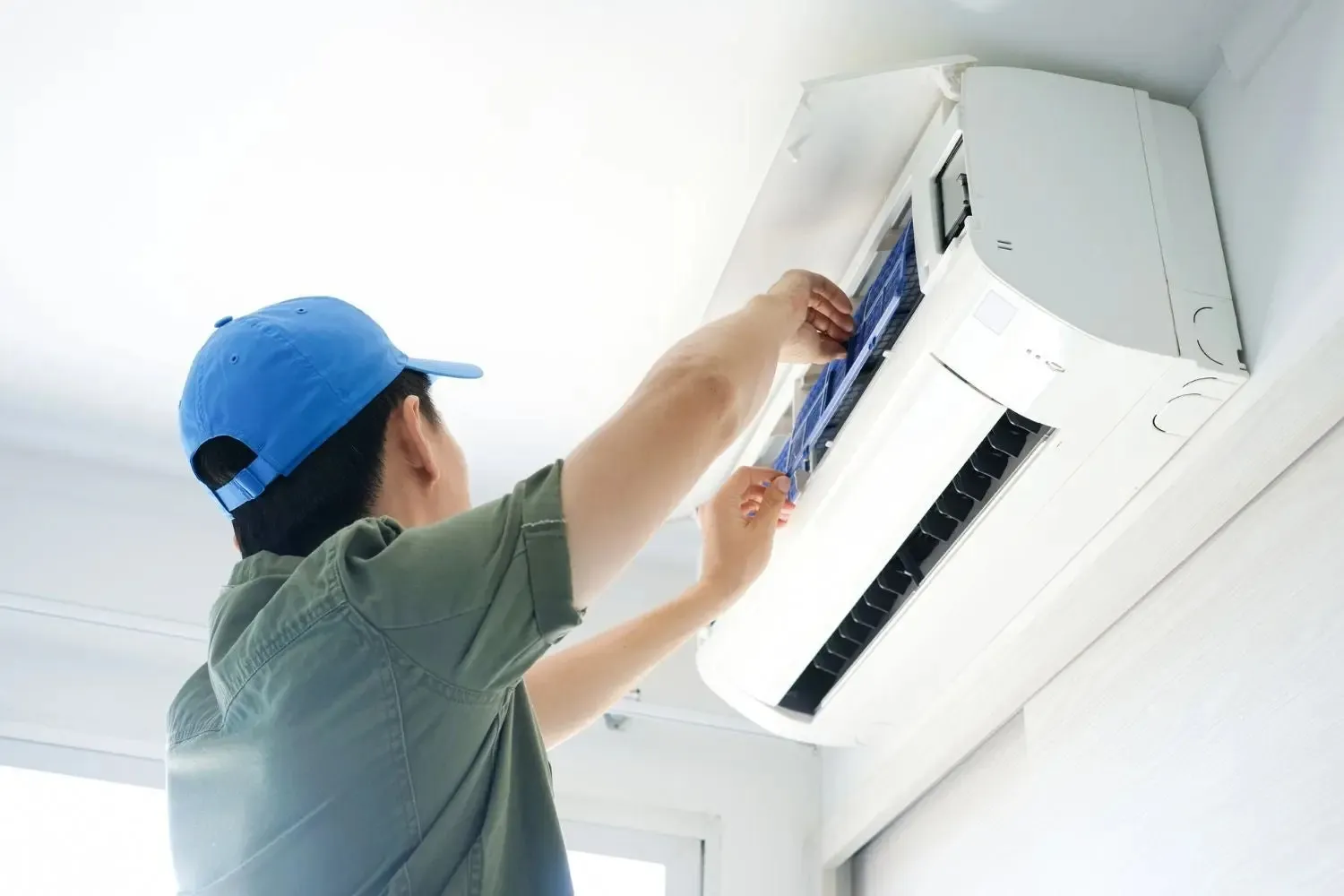
We utilize a structured, repeatable process for every service call to ensure no component is overlooked. This systematic approach guarantees consistent results and minimizes the chance of callbacks or missed issues.
Initial Assessment and Safety Check
First, the technician arrives and performs a visual inspection of the thermostat and the general condition of the equipment. We check for obvious signs of wear, such as rusted panels or unusual noises. Before touching any internal components, we disconnect power to ensure a safe working environment and inspect the area for gas leaks (in the case of heating units) or electrical hazards.
System Testing and Data Collection
Next, we power on the system to collect baseline performance data. We measure the temperature drop across the evaporator coil (the "split") to see if the unit is actually cooling the air. We utilize digital gauges to read system pressures and temperature probes to assess airflow efficiency. This data tells us exactly how the system is performing compared to its design benchmarks.
Cleaning and Calibration
Once the baseline is established, we proceed to the physical work. We shut the system down to clean electrical contacts, lubricate moving parts like fan bearings (if applicable), and wash the outdoor coils. We check the thermostat calibration to ensure it is reading the indoor temperature accurately, adjusting the anticipation settings if necessary to prevent short-cycling.
Final Verification and Reporting
Finally, we restart the system and observe it through a full cooling cycle. We verify that the pressures have stabilized and that the amperage draws are within normal range. After the service is complete, we provide a detailed report outlining what was done, the current status of the equipment, and any recommendations for repairs or proactive part replacements.
Is it Time to Repair or Replace? Your Guide to HVAC Decisions
One of the most difficult decisions homeowners face is determining when to stop pouring money into an aging system and invest in a new one. While maintenance can extend the life of your unit, there comes a point of diminishing returns. We help you make this decision based on data and financial logic rather than guesswork.
The 50% Rule
A general guideline used in the industry is the 50% rule. If the cost of the necessary repair approaches 50% of the value of a new system, replacement is generally the better financial option. For example, if you need a compressor replacement on a 12-year-old unit, the cost is significant enough that investing those funds into a new system with a warranty often makes more sense.
Frequency of Breakdowns
If you find yourself calling for service more than once a year for different issues, your system is likely reaching the end of its reliable lifespan. Constant repairs—replacing a capacitor one month, a fan motor the next, and a contactor later—add up quickly. In these scenarios, a new system eliminates the unpredictability and the cumulative cost of piecemeal repairs.
Energy Efficiency Limitations
Older HVAC units often have SEER (Seasonal Energy Efficiency Ratio) ratings of 10 or 12. Modern standards require higher efficiency, often starting at SEER2 14.3 or higher in the Southwest region. Replacing a 15-year-old unit with a modern high-efficiency system can result in immediate utility bill reductions of 20% to 40%. If your energy bills are steadily climbing despite regular maintenance, the equipment's mechanical efficiency has likely degraded beyond recovery.
Refrigerant Type Availability
Many older systems utilize R-22 refrigerant (Freon), which has been phased out of production due to environmental regulations. Supplies are dwindling, and the cost of R-22 has skyrocketed. If your older unit develops a refrigerant leak, the cost to recharge it can be exorbitant. In contrast, new systems use R-410A or newer refrigerants like R-454B, which are readily available and more environmentally friendly. If your R-22 system leaks, replacement is almost always the only viable option.
Navigating Thousand Palms Climate: HVAC Considerations
The distinct climate of the Coachella Valley presents unique challenges for HVAC equipment that go beyond standard operation. In Thousand Palms, the extreme summer temperatures and specific environmental factors require a tailored approach to maintenance and system care.
Extreme Thermal Load
During the peak of summer, ambient temperatures frequently exceed 100°F and can reach 115°F or higher. This creates a massive "thermal load" on your AC unit. Standard maintenance schedules that work in cooler coastal climates are insufficient here. Capacitors, which help start the motors, are particularly susceptible to heat degradation. We recommend checking capacitance levels more frequently in this region to prevent sudden failure during a heatwave.
Sand and Dust Infiltration
The desert environment means high levels of airborne particulate matter, including fine sand and dust. This debris bypasses standard fiberglass filters and accumulates on wet evaporator coils, turning into a mud-like substance that blocks airflow. This restricts the system’s ability to "breathe," causing the blower motor to work harder and overheat. We emphasize the use of high-quality pleated filters and suggest shorter replacement intervals for residents in this area.
Low Humidity Considerations
While the heat is intense, the humidity is generally low. This affects how the system feels and operates. However, during the monsoon season, humidity spikes can occur. Your system needs to be sized and tuned correctly to handle the latent heat (humidity) removal effectively when these spikes happen, ensuring your home doesn't feel clammy or muggy even when the temperature setpoint is met.
Title 24 and Local Compliance
California’s Title 24 energy standards are among the strictest in the nation. When performing significant repairs or replacements, specific protocols regarding duct sealing and refrigerant charge verification must be followed. Our team is well-versed in these local codes, ensuring that any work performed on your property is compliant with state and local regulations, which is vital for maintaining home value and passing future inspections.
Trusted by Residents for Consistent Comfort
Choosing a service provider involves looking for technical expertise and operational reliability. Modern HVAC systems are complex machines integrating advanced electronics and variable-speed motors. Absolute Air Conditioning and Heating employs technicians who undergo continuous training to stay ahead of industry advancements. We understand that in a desert climate, air conditioning is a necessity for health and safety, not just a luxury.
Our approach focuses on transparency. We do not incentivize our technicians to upsell unnecessary parts. Instead, we focus on the root cause of the issue. If a part has failed, we explain why it failed and check for underlying issues that might have caused it. For instance, a failed blower motor might be the symptom of undersized ductwork. By addressing the root cause, we prevent recurring issues.
We also prioritize truck stock inventory. Our service vehicles are stocked with the most common universal parts, including capacitors, contactors, control boards, and fan motors. This preparation allows us to resolve a high percentage of service calls on the very first visit, eliminating the need for you to wait for parts to be ordered while your home heats up.
Proactive Care Plans
For homeowners looking to avoid the stress of emergency breakdowns, regular maintenance is the most effective strategy. Seasonal tune-ups—once in the spring for cooling and once in the fall for heating—keep the system within factory specifications. This proactive approach allows us to spot wearing parts, such as a fraying belt or a bulging capacitor, and replace them during a scheduled visit rather than during an emergency outage.
Assessing Ductwork Integrity
In many homes in the area, ductwork runs through unconditioned spaces like attics or crawlspaces. If these ducts have leaks, you are essentially paying to cool your attic while dust from the attic is pulled into your living space. Our maintenance inspections include a review of accessible ductwork to ensure that the cold air you are paying for is actually being delivered to your living rooms and bedrooms. Sealing these leaks is one of the most cost-effective ways to improve system performance and indoor air quality.
Addressing Hard Water Issues
For systems that utilize water, such as evaporative coolers or certain hybrid systems, the local hard water can be detrimental. Mineral buildup (scale) can clog pumps and distribution pads quickly. We utilize specific descaling procedures and recommend filtration solutions where necessary to protect the mechanical components from the corrosive effects of mineral-heavy water.
When your comfort is on the line, you need a partner who understands the urgency of the situation and the technical requirements of your equipment. We provide the expertise required to navigate repair versus replace decisions, ensuring your home remains a sanctuary against the desert heat.
Call Now
Don't wait for a total system failure to get the help you need. Get your system inspected, repaired, or serviced by experts today.

