

HVAC Installation in Cathedral City, CA
Enduring the Heat? Install Your New HVAC Today!
Caught in the Cathedral City heat wave with a failing AC? Absolute Air Conditioning and Heating offers rapid, reliable installations to bring back your comfort. Living in the desert means a functional air conditioning system is a necessity, not a luxury, and waiting days for a replacement is simply not an option when indoor temperatures rise to dangerous levels. Contact us immediately to schedule an on-site assessment or ask about our available financing options to get your system running without delay.
Immediate benefits of professional installation include:
- Same-day HVAC installation options to prevent sleepless, sweltering nights.
- Certified technicians ensure efficient and correct setup, maximizing the lifespan of the unit.
- All installations come with a full manufacturer warranty and labor guarantee for total peace of mind.
We are licensed and fully insured, backing every job with extensive warranties and flexible financing options to fit your budget.
Comprehensive System Installation: What is Included
When you invest in a new HVAC system, you are purchasing more than just a metal box; you are investing in a completely integrated climate control solution designed to withstand the extreme temperatures of the Coachella Valley. A proper installation sets the baseline for the next 10 to 15 years of performance. The focus is on selecting equipment that matches the specific thermal characteristics of your property.
The installation package covers several critical components:
- Equipment Selection and Sizing: Technicians do not simply swap the old unit for a new one of the same size. Technicians perform a comprehensive evaluation to ensure the new system handles the specific heat load of your home without short-cycling. This includes selecting the correct tonnage and SEER2 rating to meet California energy efficiency standards.
- Complete System Integration: The service includes the installation of the outdoor condenser, the indoor air handler or furnace, and the evaporator coil. If you are upgrading to a heat pump, the reversing valve and auxiliary heat strips are configured to handle the mild winters effectively.
- Ductwork and Airflow Assessment: New high-efficiency systems require specific static pressure levels to operate correctly. The team inspects existing ductwork for leaks, disconnects, or undersized returns that could choke the new system. Modifications are made to the plenum or transition ducts to ensure seamless airflow.
- Thermostat and Control Setup: Modern systems often require smart thermostats or communicating control centers to manage variable-speed motors and two-stage cooling. The installation includes the wiring, mounting, and programming of these controls to ensure the user interface is intuitive and fully functional.
- Safety and Disposal: The service includes the safe recovery of old refrigerant according to EPA regulations, disconnection of electrical and gas lines, and the complete removal and disposal of the old equipment. The workspace is left clean, with no debris left behind.
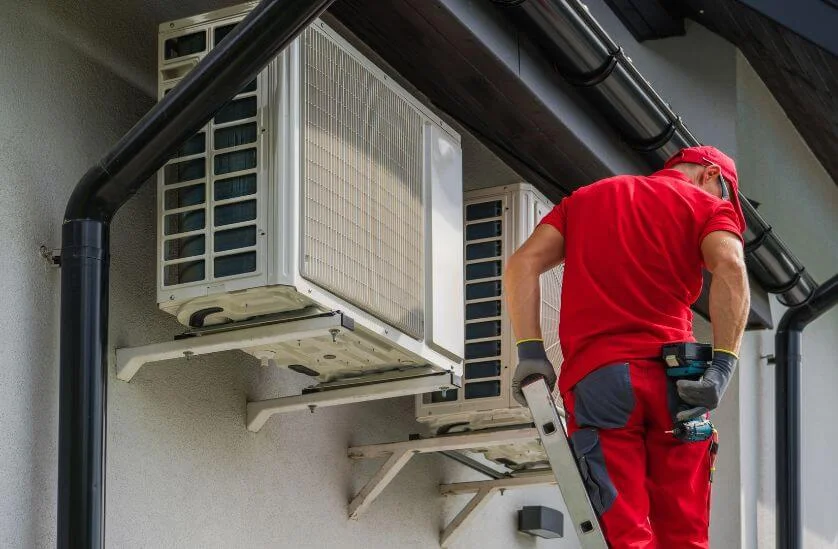
The Installation Process: From Assessment to Airflow
A professional installation follows a rigorous, step-by-step protocol to ensure the system operates at peak efficiency from the moment it is turned on. This process is designed to be efficient, minimizing disruption to your daily routine while adhering to strict technical standards.
The execution phase involves the following steps:
- Site Preparation and Protection: Technicians arrive with drop cloths and shoe covers to protect flooring and furniture. The area around the indoor and outdoor units is cleared to provide safe access. Power to the existing HVAC circuits is shut off at the breaker panel and the disconnect box to ensure electrical safety.
- Refrigerant Recovery and Dismantling: Before the old unit can be moved, the existing refrigerant is pumped out into recovery cylinders. This prevents harmful chemicals from venting into the atmosphere. Once the lines are clear, the old condenser and air handler are disconnected from the electrical whip, thermostat wires, and plenum connection.
- Positioning and leveling: The new outdoor pad is leveled or replaced to prevent vibration and noise. The condenser is positioned to allow for proper clearance and airflow. Indoors, the air handler is mounted securely, ensuring it is level to allow for proper condensate drainage.
- Brazing and Line Set Connection: The copper refrigerant lines (the line set) are connected to the new equipment. Technicians use nitrogen purging during the brazing process to prevent oxidation inside the pipes, which can damage the compressor. A vacuum pump is then used to remove all moisture and air from the lines, creating a deep vacuum measured in microns.
- Electrical and Drainage Connections: High-voltage wiring is connected to the disconnect box and the unit, ensuring all fuses and breakers are the correct amperage. Low-voltage control wires are connected to the thermostat. The condensate drain line is piped with the necessary traps and safety float switches to prevent water damage in case of a clog.
- System Charging and Startup: The refrigerant charge is weighed in according to the manufacturer’s subcooling and superheat specifications. The system is powered on, and technicians verify that the fan rotation, motor amp draw, and temperature splits are within the correct range.
Repair vs. Replace: Making the Financial Decision
Deciding between repairing an aging unit and investing in a new installation is often a matter of mathematics and long-term reliability. While a repair might seem cheaper upfront, recurring issues and inefficiency often make replacement the more prudent financial choice, especially in regions with high cooling demands — view tax rebates available.
Consider replacement when the following conditions are met:
- The 50% Rule: If the cost of the repair approaches or exceeds 50% of the value of the current system, replacement is generally the smarter option. Investing half the cost of a new machine into an old one that may fail again soon results in diminishing returns.
- Frequency of Breakdowns: If the system has required multiple repairs in the last two seasons, it has likely entered the end-of-life failure curve. Continually replacing capacitors, motors, or contactors is a sign that the major components are wearing out.
- Age and Refrigerant Type: Units older than 10-15 years often operate on lower efficiency standards and may use R-22 refrigerant, which has been phased out and is prohibitively expensive to restock. Newer systems utilize R-410A or newer refrigerants and offer significantly higher SEER ratings, which directly lowers monthly energy bills.
- Rising Energy Bills: A sudden or gradual increase in electricity costs without a change in usage patterns indicates the system is losing efficiency. As compressors and coils age, they must work harder to produce the same amount of cooling. A modern system can cut cooling costs by 20% to 40% immediately.
- Uneven Comfort and Noise: If certain rooms remain hot while others are cold, or if the unit runs loudly and struggles to maintain the set temperature during peak heat, the mechanical components are likely compromised beyond simple repair.
Local Factors: Permits, Compliance, and Desert Climate
Operating an HVAC system in Cathedral City involves specific logistical and regulatory considerations that do not apply to other regions. The extreme heat requires equipment that is rated for high-ambient temperatures, and the state of California enforces strict building codes regarding energy consumption.
Key local considerations include:
- Title 24 and HERS Testing: California’s Title 24 energy standards require that new HVAC installations meet specific efficiency criteria. This often involves Home Energy Rating System (HERS) testing by a third-party verifier. They check for duct leakage and verify that the refrigerant charge and airflow meet state standards. Compliance is mandatory for permitting.
- Permitting Requirements: Installation of a new central air conditioning unit requires a building permit from the local city department. This ensures the electrical work is up to code and the installation is safe. Professional installers handle the permit application and coordinate the final inspection with city officials.
- Desert Climate Sizing: Standard "rules of thumb" for sizing AC units often fail in the desert. The sustained temperatures above 100°F require a system with a higher sensible cooling capacity. Technicians account for the intense solar gain on the roof and windows.
- Filtration and Dust Control: High winds in the valley kick up significant amounts of dust and sand. Installations should prioritize tight duct sealing to prevent attic dust from entering the air stream. Recommendations often include upgrading to 4-inch media filters or electronic air cleaners to handle the local particulate matter.
Absolute Air Conditioning and Heating ensures every project complies strictly with local codes and is optimized for the harsh desert environment, preventing future liability or inspection failures for the homeowner.
Why Technical Precision Matters
The longevity and efficiency of an HVAC system are determined more by the quality of the installation than the brand of the equipment. A top-tier unit installed poorly will perform worse than a mid-range unit installed perfectly. The focus remains on technical precision, adherence to manufacturer specifications, and respect for the homeowner’s property.
Differentiators in installation quality involve:
- Proper Airflow Balancing: Simply hooking up the machine is not enough. The static pressure must be measured to ensure the blower motor is not overworking. Restricted airflow is the leading cause of premature compressor failure.
- Advanced Diagnostics Tools: Utilizing digital manifolds and micron gauges ensures the refrigerant levels are exact and the system is free of non-condensables. This precision prevents efficiency loss and internal corrosion.
- NATE-Certified Technicians: Installations are performed by technicians who have undergone rigorous testing and certification (North American Technician Excellence). This validates their knowledge of thermodynamics, electrical circuits, and safety protocols.
- Respect for Property: The installation process is invasive, but professionals minimize the impact. This means using drop cloths, wearing boot covers, and ensuring all old equipment and packaging are removed from the premises.
- Detailed Post-Installation Walkthrough:
The job is not complete until the homeowner understands the new system. Technicians explain how to operate the thermostat, how to change filters, and what maintenance schedule is required to keep the warranty valid.
Investing in a new heating and cooling system is a significant decision that impacts daily comfort and financial health. Ensure the job is done right the first time with a team that prioritizes technical accuracy and rapid response.
Secure your comfort against the desert heat today. Contact us now to schedule your installation estimate and take advantage of our current financing offers.
Secure Lasting Comfort With a Professional HVAC Installation
Extreme Cathedral City heat demands an HVAC system you can rely on without hesitation. A professionally installed system delivers immediate relief, long-term energy savings, and the confidence that your home is protected against harsh desert conditions for years to come. From comprehensive home evaluation to code-compliant installation and final system calibration, Absolute Air Conditioning and Heating ensures every detail is handled correctly the first time. Don’t risk prolonged discomfort or rising energy bills—contact us today to schedule your HVAC installation estimate and restore dependable, efficient comfort to your home.

