

Ductless Installation in Cathedral City, CA
Resolve Cooling Inefficiency and Comfort Gaps with Ductless Systems
Facing unbearable summer heat spikes or chilly winter nights in Cathedral City? A ductless air conditioning system could be your solution to year-round comfort. When central systems fail to distribute air evenly, or when ductwork is simply not an option, ductless mini-splits provide a targeted, efficient alternative. Absolute Air Conditioning and Heating provides precise installation services to restore control over your indoor climate.
Contact us today to schedule your site evaluation or discuss financing options.
- Achieve consistent temperatures in every room without the need for invasive or extensive ductwork renovations.
- Enjoy significantly lower energy bills with high-efficiency systems designed to tackle desert climates.
- Get your system installed quickly, often with far less downtime than traditional HVAC replacements.
We offer comprehensive warranties and flexible financing options to ensure your home comfort upgrade fits your budget.
What You Receive With a Professional Ductless Installation
When you invest in a ductless mini-split system, you are purchasing more than just hardware; you are buying a customized climate solution. Unlike central air conditioning, which relies on a rigid network of ducts that can leak up to 30% of your conditioned air, a ductless system delivers air directly into the zone where it is needed.
The scope of a professional installation involves selecting the right capacity for your specific space. In the desert environment, undersized units will run constantly without reaching the set temperature, while oversized units will short-cycle, leading to humidity issues and wear on the compressor. A proper install includes a load calculation that accounts for room size, window orientation, and insulation levels.
Your installation package generally includes:
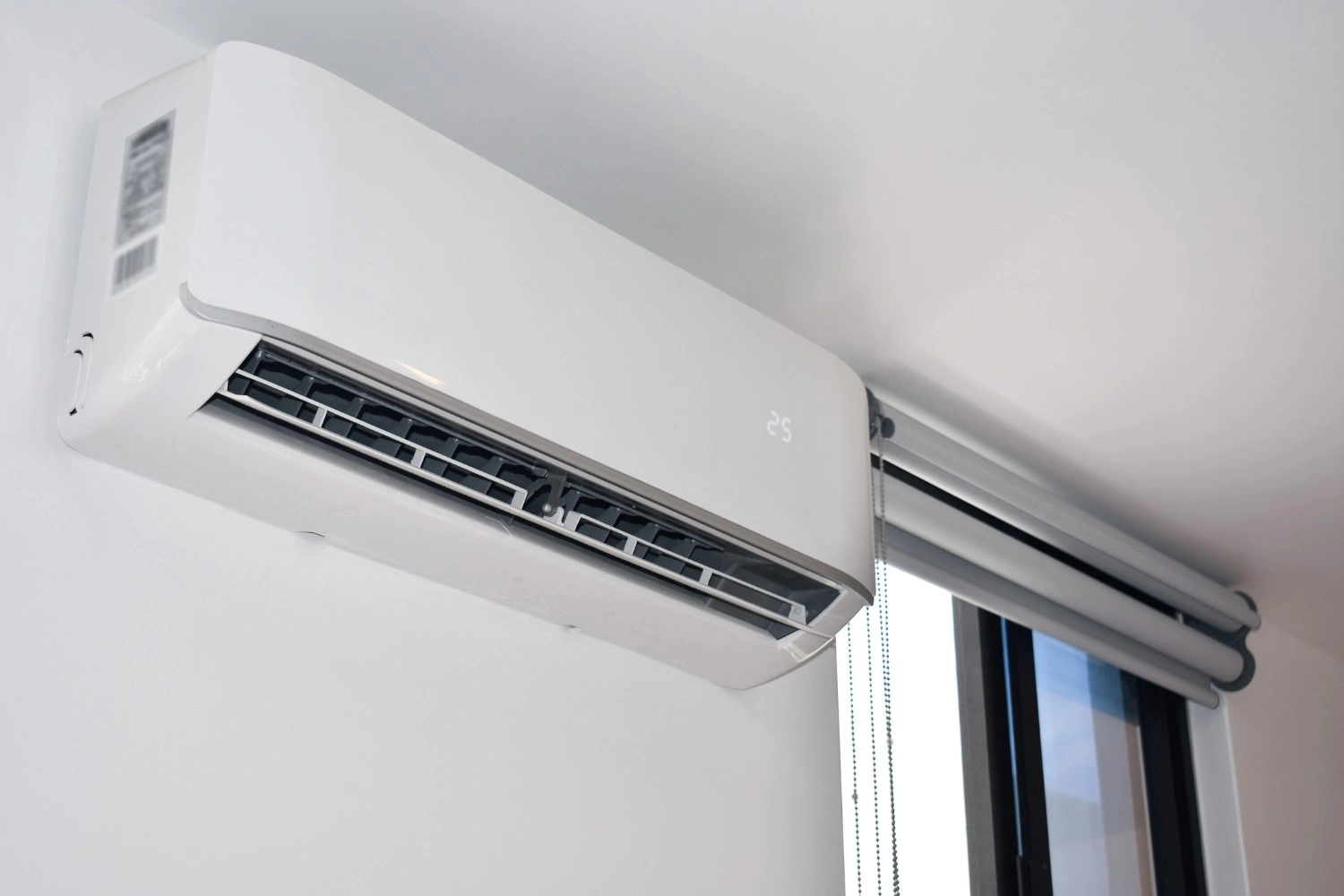
- Indoor Handling Units: These are the wall-mounted, floor-mounted, or ceiling-cassette units that distribute air. They are whisper-quiet and operate independently, allowing for zoning.
- Outdoor Condenser: This unit houses the compressor. In modern multi-zone systems, a single outdoor unit can support multiple indoor heads, reducing the footprint in your yard.
- Line Sets and Cabling: Insulated copper tubing connects the indoor and outdoor units, carrying the refrigerant. These are housed in protective line hide covers to ensure the exterior of your home looks neat.
- Smart Control Integration: Most modern ductless systems come with handheld remotes or wall thermostats and can often be integrated into smart home systems for remote management via smartphone apps.
The Ductless Installation Process: From Assessment to Airflow
Installing a ductless system is significantly less invasive than installing central air, but it requires technical precision to ensure efficiency and longevity. The process is streamlined to minimize disruption to your daily routine.
Site Evaluation and Mapping
- The technician begins by identifying the optimal location for the indoor unit. It must be high on a wall for optimal air distribution but accessible for filter cleaning.
- The outdoor unit location is selected based on airflow requirements and proximity to the indoor unit to minimize line set length.
- Electrical capacity is checked to ensure your panel can handle the new equipment.
Mounting the Indoor Unit
- A mounting plate is secured to the interior wall. This plate must be perfectly level to ensure proper drainage of condensate water.
- A small hole, typically three inches in diameter, is drilled through the exterior wall. This is the only structural modification required.
- The hole is angled slightly downward to the outside to assist with gravity drainage.
Running Lines and Connections
- The refrigerant lines, drain tube, and communication cables are bundled and passed through the drilled hole.
- The indoor unit is hooked onto the mounting plate, concealing the hole and connections completely.
- Outside, the technician installs "line hide" or trunking to protect the exposed lines from the sun and weather.
Setting the Outdoor Unit
- The condenser is placed on a composite pad or mounted to the wall using brackets to keep it off the ground and away from debris.
- Refrigerant lines are connected to the outdoor valves.
- The system is pressure-tested with nitrogen to ensure there are no leaks in the flare connections.
Vacuum and Startup
- A vacuum pump removes all moisture and air from the lines. This is a critical step; moisture left in the lines can freeze or corrode the compressor.
- Refrigerant is released into the system.
- The unit is powered on, and the technician verifies temperature differentials and airflow.
When to Choose Ductless Replacement Over Central Repair
Homeowners often face a difficult choice when an existing heating and cooling system begins to fail. While repairing a central unit is the default reaction, there are specific scenarios where switching to or supplementing with a ductless installation is the superior financial and functional decision.
Scenario: High Energy Bills from Duct Loss
If your home has older ductwork, you may be paying to cool your attic or crawlspace due to leaks and poor insulation. In Cathedral City, where summer usage is heavy, this efficiency loss accumulates rapidly. Ductless systems bypass ducts entirely, meaning 100% of the cooling power you pay for is delivered to the living space. If your ducts require thousands of dollars in sealing or replacement, a ductless system is often the smarter investment — check for tax rebates available.
Scenario: The "Hot Room" or Add-On
Many homes have that one room that never gets cool enough, or a new addition (like a garage conversion or sunroom) that isn't connected to the central system. Extending ductwork to these areas is expensive and often disrupts the balance of the existing HVAC system. A single-zone ductless unit solves this problem instantly without impacting the rest of the house.
Scenario: Empty Nesters and Zoning
If you live in a large home but only occupy a few rooms regularly (such as the master bedroom and living room), cooling the entire square footage is wasteful. Central systems are generally "all or nothing." Ductless systems allow for true zoning. You can keep the bedroom at a crisp 70 degrees while leaving the unused guest rooms at 80 degrees, resulting in massive energy savings.
Scenario: Noise Sensitivity
As central AC units age, they often become louder, vibrating through the ductwork and floorboards. Ductless indoor units are engineered to run at decibel levels comparable to a quiet library. If mechanical noise is disrupting your sleep or work, replacement with a mini-split system offers an immediate upgrade in quality of life.
Local Installation Considerations for Cathedral City
Installing HVAC equipment in the Coachella Valley requires specific attention to environmental factors. The extreme heat load and specific local codes influence how a system must be configured.
Electrical and Permitting Requirements
- Any significant HVAC installation requires a permit to ensure the work meets safety codes. This includes verifying that the electrical circuit dedicated to the AC unit is properly sized.
- Disconnect boxes must be installed within sight of the outdoor unit for safety during maintenance.
- Professional installers handle the permitting process to ensure your installation is compliant with local regulations, avoiding fines or issues during a future home sale.
Combating the Desert Heat
- Sizing is Critical: The standard "rule of thumb" for BTUs per square foot often fails in desert climates. The heat gain from windows and the lack of shade must be calculated precisely. An undersized unit will run continuously, driving up electricity costs and shortening the lifespan of the compressor.
- Condenser Placement: Whenever possible, the outdoor unit should be installed on the north or east side of the home to minimize direct exposure to the afternoon sun. If this isn't possible, shade structures (that do not block airflow) may be recommended to improve efficiency.
- Drainage: In dry climates, condensate production is lower than in humid areas, but it still occurs. Proper routing of the drain line is essential to prevent water from pooling near the foundation or creating mud hazards.
Insulation and Sealing
- The efficiency of a ductless system is maximized when the building envelope is sealed. In older local homes, ensuring that windows and doors are properly weather-stripped will help the mini-split maintain temperature without overworking.
Professional Installation vs. DIY Risks
While DIY kits are available, ductless installation involves handling high-voltage electricity and EPA-regulated refrigerants. The risks associated with improper installation are high and can end up costing more than professional service in the long run.
- Warranty Protection: Most manufacturers expressly state that their warranties are valid only if the equipment is installed by a licensed HVAC contractor. A DIY installation usually voids the parts warranty immediately. If a compressor fails six months in, you would be responsible for the full replacement cost.
- Refrigerant Handling: The refrigerant lines must be flared and torqued to exact specifications. If a leak occurs, the system will lose cooling capacity and the compressor will overheat. Furthermore, venting refrigerant into the atmosphere is a violation of federal law. Professionals use gauges and recovery machines to handle these chemicals safely.
- Proper Drainage: One of the most common callbacks for amateur installs is water damage indoors. If the indoor unit is not perfectly level, or if the drain line has a kink or insufficient slope, water will back up and drip down the interior wall. This can damage drywall and flooring before you even notice the issue.
- Long-Term Support: Absolute Air Conditioning and Heating ensures that your system is not only installed correctly but also set up for long-term performance. We test all modes of operation, demonstrate how to clean the reusable filters, and explain the remote control functions so you get the most out of your investment immediately.
Take Control of Your Indoor Climate
Upgrading to a ductless air conditioning system offers a pathway to superior comfort, reduced energy consumption, and precise temperature control. Whether you are looking to cool a single room or fit your entire home with a zoned solution, the technology is robust and proven.
Don't let the heat dictate your comfort level. A professional installation ensures that your new system operates at peak efficiency for years to come, providing relief when you need it most.
Ready to transform your home’s comfort? Contact us today to start your ductless installation project.

