
AC Maintenance in Palm Springs, CA
Protect Your Comfort When Temperatures Spike
Extreme temperatures in Palm Springs, CA can push your cooling system to its breaking point, often leading to unexpected failures right when you need relief the most. Contact us today or apply for financing to secure your system immediately.
Absolute Air Conditioning and Heating provides rapid, comprehensive maintenance services designed to withstand the harsh desert climate. We understand that a functioning air conditioner is not a luxury here; it is a necessity for health and safety.
- Restore peak performance immediately with prioritized scheduling.
- Increase your system’s energy efficiency and prolong its lifespan with thorough tune-ups.
- Reduce monthly cooling costs by identifying power-draining issues early.
Our services are backed by industry-leading warranties and flexible financing options to ensure your home remains cool without financial stress.
Comprehensive System Diagnostics and Tune-Up Scope
When you schedule a maintenance visit, you are paying for a rigorous inspection and calibration process, not a quick visual check. In a desert environment, dust, sand, and extreme heat accelerate wear on mechanical components. Our technicians focus on the specific stressors that affect units in this region. We systematically address the critical components that dictate the efficiency and longevity of your HVAC equipment.
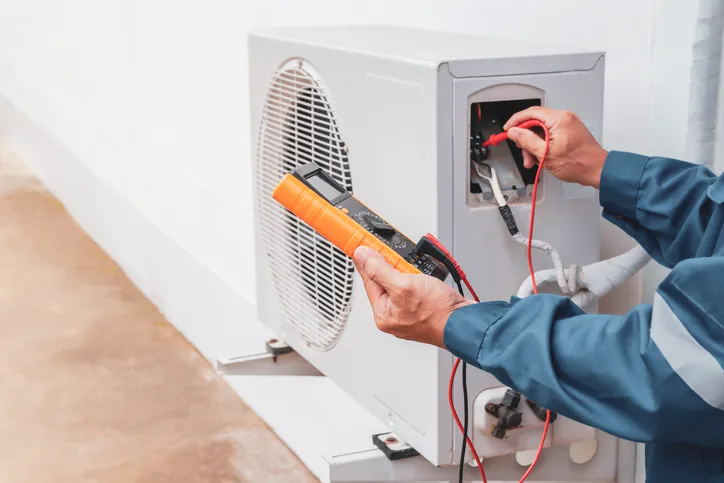
The maintenance scope includes a deep analysis of the following areas:
- Refrigerant Level and Pressure: We measure refrigerant levels to ensure they match manufacturer specifications. Low refrigerant often indicates a leak and causes the compressor to overheat, while overcharged systems struggle to remove heat effectively.
- Evaporator and Condenser Coils: Dust accumulation acts as an insulator on your coils. We inspect and clean these components to ensure proper heat transfer. In our local climate, sand buildup on the outdoor condenser is a primary cause of system inefficiency.
- Electrical Connections and Safety Controls: Vibration can loosen electrical connections over time, leading to arcing or component failure. We tighten all connections, measure voltage and amperage on motors, and test safety controls to prevent fire hazards.
- Thermostat Calibration: A miscalibrated thermostat causes your unit to run longer than necessary. We verify that the temperature reading on your wall matches the actual temperature in the room, adjusting as needed for precise cycle control.
- Blower Motor and Airflow: We inspect the blower motor for proper operation and check the belt tension if applicable. Restricted airflow strains the system, so we also assess the condition of your air filter and ductwork connections.
- Lubrication of Moving Parts: Friction creates heat and wear. We apply lubricant to motors and bearings where necessary to reduce resistance and electricity usage.
- Condensate Drain Line: Clogged drain lines can cause water damage to your property and increase indoor humidity levels. We flush the line to ensure moisture is properly removed from your home.
The Maintenance Process: What to Expect
We have refined our maintenance protocol to be efficient and minimally intrusive while delivering maximum technical value. The goal is to leave your system running better than we found it, with documented proof of its condition.
- Initial Assessment: The technician arrives and discusses any specific concerns you have noticed, such as strange noises, uneven cooling, or rising utility bills.
- System Shutdown and Safety Check: We cut power to the unit to safely inspect high-voltage components. This is when capacitors and contactors—parts prone to failure in high heat—are tested.
- Cleaning and Adjustment: We proceed with cleaning the outdoor unit, clearing debris from the cabinet, and washing the coils. Internal components are dusted, and mechanical adjustments are made to belts and fans.
- Performance Testing: Once cleaned and adjusted, the system is powered back on. We monitor the system through a full cooling cycle, measuring temperature splits (the difference between air entering and leaving the vents) to verify cooling capacity.
- Reporting: You receive a detailed report outlining the work performed. If we identify worn parts that are close to failure, we provide a clear explanation and options for repair, allowing you to make proactive decisions before a breakdown occurs.
Repair vs. Replacement: Making the Right Financial Decision
Homeowners often face the difficult choice between continuing to maintain an aging unit or investing in a new system. While regular maintenance extends the life of your AC, there is a point of diminishing returns where replacement becomes the more improved financial strategy. We help you navigate this decision using concrete data rather than guesswork.
Consider the following factors when evaluating your current system:
- Age of the Equipment: Most air conditioners in our region last between 10 and 15 years due to the heavy workload. If your unit is approaching or exceeding this age range, major components like the compressor are at higher risk of failure.
- Frequency of Repairs: If you have required multiple repairs in the last two years, or if the cost of a current repair approaches 50% of the value of a new system, replacement is generally the smarter investment.
- Refrigerant Type: Older systems utilizing R-22 (Freon) are becoming prohibitively expensive to service due to environmental phase-outs. Upgrading to a system that uses R-410A or newer refrigerants eliminates this cost variable.
- Energy Efficiency Ratings (SEER): Older units often have SEER ratings of 10 or 12. Modern systems start around 14 and go much higher. Replacing a 10 SEER unit with a 16 SEER unit can reduce cooling costs significantly, offsetting the monthly cost of financing a new installation — see tax rebate offers.
- Comfort Consistency: If your current unit struggles to maintain the set temperature during the hottest part of the day, or if you experience hot and cold spots throughout the house, the system may be undersized or losing compression.
Local Climate Factors Impacting Your AC
Operating an air conditioning system in Palm Springs presents unique challenges that generic maintenance guidelines do not address. The environment here is hostile to mechanical equipment, and understanding these local factors is key to maintaining a comfortable home.
- Extreme Ambient Temperatures: During summer peaks, the temperature difference between the outdoor air and the desired indoor temperature is massive. This high "delta T" requires the compressor to work at maximum capacity for extended periods. Maintenance ensures the compressor oil remains viscous and the internal windings do not degrade under this thermal stress.
- Sand and Dust Infiltration: The desert wind carries fine particulate matter that penetrates the outdoor condenser cabinet. Unlike standard dirt, this dust can cement onto wet coils, forming a barrier that prevents heat release. Regular chemical cleaning of the coils is critical here to prevent head pressure from rising to dangerous levels.
- Low Humidity and Latent Load: While our climate is dry, the "sensible heat" load (actual temperature change) is incredibly high. However, during monsoon season, humidity can spike. A well-maintained system must be able to switch between handling dry heat and occasional humidity effectively.
- Utility Peak Hours: Local utility providers often have peak pricing hours. A system that has not been tuned up will draw more amps to do the same amount of work. Maintenance ensures your unit runs as efficiently as possible, mitigating the financial impact of peak-hour energy rates.
- Permitting and Regulations: When significant repairs or replacements are needed, local building codes may dictate specific requirements for efficiency and refrigerant handling. We adhere strictly to all local regulations to ensure your system remains compliant and safe.
Why Technical Precision Matters
In the HVAC industry, the quality of the maintenance is entirely dependent on the skill of the technician. Absolute Air Conditioning and Heating employs technicians who are trained to look beyond the obvious. We utilize advanced diagnostic tools to read the health of your system’s internal components without invasive guesswork.
- Capacitor Health: In high heat, capacitors are the most common component to fail. A weak capacitor can still start a motor but will cause it to overheat and burn out prematurely. We test capacitors under load to detect weakness before they fail completely.
- Contactor Pitting: The electrical switch that turns your compressor on and off gets pitted and burnt over time. This causes voltage drops and resistance. We inspect these contacts microscopically to ensure clean electrical flow.
- Ductwork Integrity: Even a perfectly running AC cannot cool a home if the ductwork is leaking conditioned air into the attic. We visually inspect accessible ductwork for tears or disconnected joints that waste energy.
Securing Your Comfort for the Season
Waiting until your air conditioner stops working to call for service is a strategy that often results in higher costs and longer wait times. The demand for cooling services rises in direct correlation with the thermometer. By scheduling preventative maintenance, you secure your place in our schedule and ensure your system is prepared for the heavy lifting required during the summer months.
A well-maintained system operates quieter, cools faster, and costs less to run. It provides peace of mind that your home will remain a sanctuary against the heat. We prioritize transparency in our pricing and clarity in our reporting, so you always know the exact status of your cooling equipment.
Ensure your air conditioning system is ready to handle the demands of the Palm Springs climate. Contact us now to book your comprehensive maintenance service.

