
Heating Repair in Palm Springs, CA
Quick and Reliable Heating Repair Services
Struggling with inadequate heating during Palm Springs' chilly nights? Our experienced technicians are ready to deliver fast and efficient heating repairs any time you need. Call us immediately to schedule a diagnostic visit and restore warmth to your home.
When your heating system fails, you need a solution that is both rapid and effective, ensuring your home remains comfortable despite the desert temperature drops.
- Rapid response and servicing for any heating emergencies.
- Experienced technicians ensuring high-quality repair and maintenance.
- Full coverage of Palm Springs and surrounding areas.
- Licensed, insured, and always ready, with transparent pricing and no hidden fees.
Expert Heating Repair When You Need It Most
The desert climate presents a unique challenge for homeowners. While days can be scorching, the temperature drops significantly once the sun sets, making a functional heating system a necessity rather than a luxury. When a furnace or heat pump fails, the discomfort is immediate. Homeowners in Palm Springs require a service provider that understands the urgency of these situations and provides technical excellence without delay.
A heating malfunction rarely happens at a convenient time. It often occurs during the first cold snap of the season or late at night when the system is working hardest to combat the dropping outdoor temperatures. Delaying repairs can lead to further damage to the unit, potential safety hazards, and prolonged discomfort for your family. Professional intervention is required to accurately diagnose the root cause of the failure—whether it is an ignition problem, a failed motor, or a thermostat calibration issue—and resolve it permanently.
We prioritize getting your system back online quickly. Our trucks are stocked with common parts to facilitate same-day repairs whenever possible. By focusing on accurate diagnostics, we avoid the "band-aid" fixes that lead to repeat breakdowns. We address the core mechanical or electrical failure to ensure your system runs reliably for the rest of the season.
What Our Heating Repair Services Include
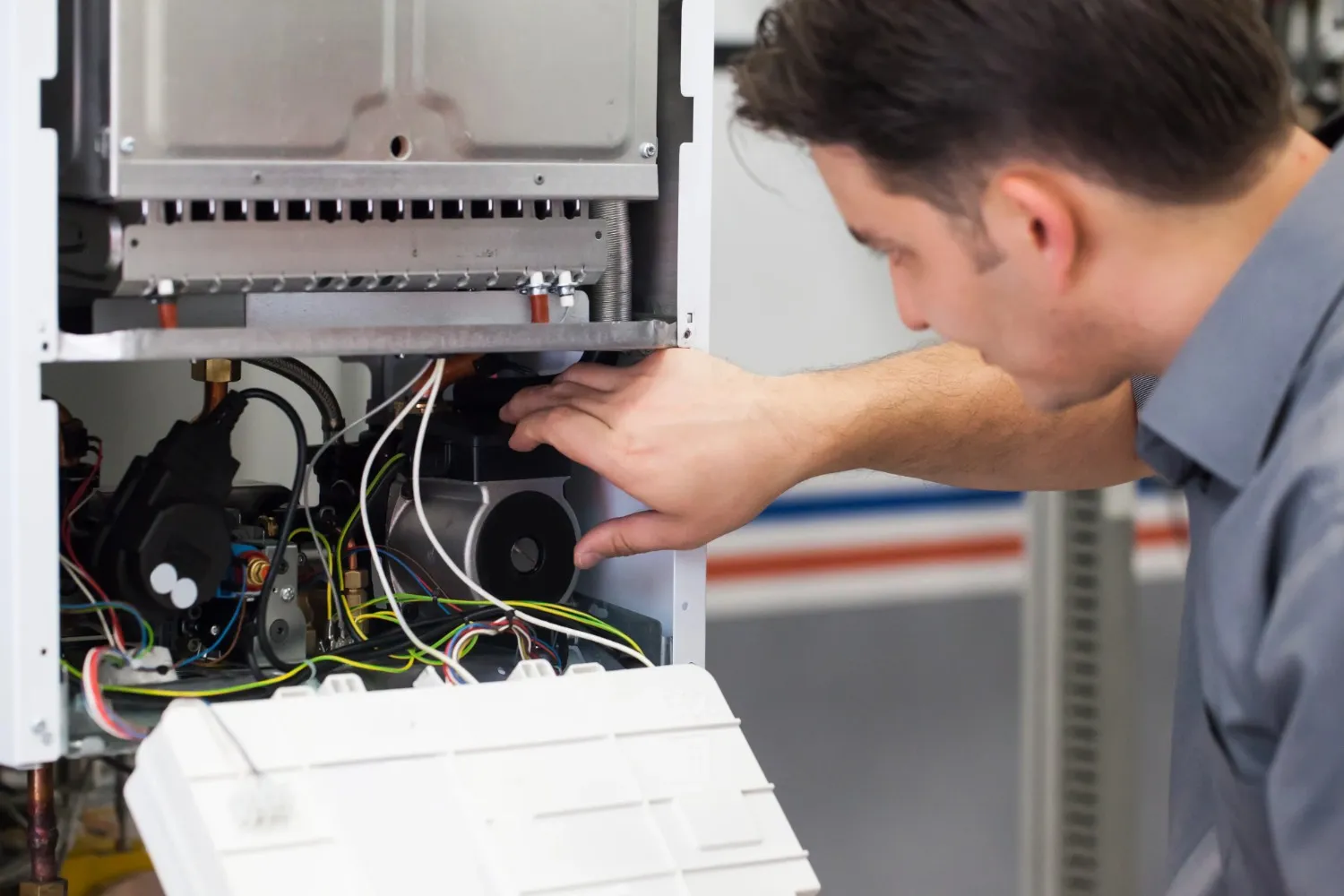
Effective heating repair goes beyond simply swapping out a broken part. It involves a comprehensive analysis of the entire HVAC system to ensure efficiency, safety, and longevity. Modern heating systems are complex, integrating advanced electronics with mechanical components. A thorough repair service covers every aspect of the unit's operation.
Comprehensive System Diagnostics
The repair process begins with a complete system evaluation. Technicians use advanced diagnostic tools to test electrical connections, measure airflow, and inspect mechanical components. This step is critical for identifying not just the obvious symptom, but the underlying cause. For example, a furnace that keeps shutting off might have a faulty sensor, or it could be suffering from restricted airflow due to a clogged filter or duct issue. Accurate diagnostics prevent unnecessary parts replacement and ensure the right fix is applied the first time.
Furnace Ignition and Pilot Control
Gas furnaces rely on precise ignition sequences to operate safely. Issues with the pilot light, electronic igniter, or flame sensor are common causes of heating failure.
- Cleaning and adjusting flame sensors to ensure the gas valve opens correctly.
- Replacing cracked or worn-out hot surface ignitors.
- Troubleshooting thermocouple issues in older pilot light systems.
- Verifying the gas valve operation to ensure proper fuel delivery.
Blower Motor and Airflow Restoration
If the heat is on but the air coming from the vents is weak, the issue often lies with the blower motor or the air distribution system. The blower motor is responsible for circulating warm air throughout the house.
- Inspection of the blower motor for overheating or bearing failure.
- Replacement of capacitors that help the motor start and run efficiently.
- Adjustment of fan belts and pulleys to ensure smooth operation.
- Clearing obstructions in the blower wheel that reduce air volume.
Heat Pump Component Repair
In many desert homes, heat pumps serve as both heating and cooling sources. These systems have unique components that require specialized attention.
- Testing the reversing valve, which switches the unit from cooling to heating mode.
- Inspecting the defrost board to ensure the outdoor unit does not freeze up during colder nights.
- Checking refrigerant levels, as a leak can severely impact heating performance.
- Testing the auxiliary heat strips to ensure emergency heating is available if the heat pump cannot keep up.
Thermostat and Control Wiring
Sometimes the heating unit is perfectly fine, but the signal from the thermostat is interrupted. Modern smart thermostats and traditional units alike can experience calibration drift or wiring faults.
- Recalibrating thermostats to match the actual room temperature.
- Repairing low-voltage wiring shorts that prevent the heater from receiving the "on" signal.
- Upgrading controls to ensure better communication between the thermostat and the furnace or air handler.
Your Repair Journey: From Call to Comfort
Navigating a heating breakdown should be a straightforward and transparent process. Homeowners need to know exactly what to expect from the moment they reach out for help until the moment heat is restored. We have streamlined our workflow to minimize downtime and maximize clarity.
- Initial Consultation and Scheduling: The process starts with your request for service. The support team gathers details about the symptoms—strange noises, lack of heat, or short cycling—and dispatches a qualified technician to your location. Priority is often given to situations involving complete system failure during extreme weather.
- On-Site Assessment: Upon arrival, the technician performs a safety check and a full diagnostic evaluation. This involves testing voltage, checking gas pressure, and visually inspecting the heat exchanger. The goal is to isolate the problem and check for any secondary issues that might cause future trouble.
- Clear Explanation and Quote: Before any work begins, you receive a detailed explanation of the findings. The technician presents the repair options along with a flat-rate price. This ensures you understand the scope of work and the cost involved, eliminating surprises on the final bill.
- Execution of Repairs: Once authorized, the technician proceeds with the repair. This may involve retrieving parts from the service vehicle, disassembling the unit, and installing new components. Industry-standard practices are followed to ensure the repair meets manufacturer specifications.
- System Testing and Validation: After the repair is complete, the system is not just turned on; it is tested through a full heating cycle. The technician verifies that the temperature rise is within limits, the burner flame is steady, and the airflow is balanced.
- Clean Up and Final Report: The work area is cleaned, and any old parts are removed. You receive a final report detailing the work performed, warranty information on the new parts, and recommendations for maintaining the system to prevent future breakdowns.
Deciding Between Repair and Full Replacement
One of the most difficult decisions a homeowner faces is whether to invest in repairing an aging system or to opt for a replacement. While Absolute Air Conditioning and Heating focuses on restoring your current unit whenever feasible, there are mathematical and practical tipping points where replacement becomes the more prudent financial choice.
The 50% Investment Rule
A common industry standard used to guide this decision is the 50% rule. If the cost of the necessary repairs approaches or exceeds 50% of the value of a new system (or the depreciated value of the current one), replacement is often recommended. Putting significant money into a dying system is often referred to as "throwing good money after bad."
Age of the Equipment
Heating systems have a finite lifespan. Gas furnaces typically last between 15 and 20 years, while heat pumps usually last 10 to 15 years due to their year-round usage.
- If a unit is under 10 years old, repair is almost always the best option unless a major component like the heat exchanger has failed out of warranty.
- If a unit is over 15 years old, parts may be obsolete or expensive, and efficiency has likely degraded significantly.
Frequency of Breakdowns
Reliability is a key factor in comfort. If you find yourself calling for repairs multiple times in a single season, the cumulative cost of service calls and parts will quickly outpace the monthly cost of a new, warrantied system. Chronic breakdowns also indicate that multiple internal components are reaching the end of their lifecycle simultaneously.
Energy Efficiency and Operating Costs
Older systems generally have lower AFUE (Annual Fuel Utilization Efficiency) or HSPF (Heating Seasonal Performance Factor) ratings. A furnace from 15 years ago might operate at 70% efficiency, meaning 30 cents of every dollar spent on gas is wasted. Modern systems often exceed 90% efficiency. If your energy bills in Palm Springs are spiking despite moderate usage, the system's inefficiency might justify a replacement to capture long-term savings — see tax rebates.
Adapting to Palm Springs Climate: What You Need to Know
The desert environment creates specific stresses on HVAC equipment that differ from other regions. Understanding these local factors helps in maintaining a robust heating system that can handle the unique demands of the Coachella Valley — read our blog for more insights.
The Day-to-Night Temperature Swing
The most defining characteristic of the local climate is the diurnal temperature variation. It is not uncommon for temperatures to swing 30 to 40 degrees between day and night. This forces HVAC systems to switch rapidly between cooling and heating modes, or to ramp up heating aggressively after sunset.
- This thermal expansion and contraction can loosen electrical connections and stress metal components like the heat exchanger.
- Regular maintenance must focus on tightening connections and checking for stress fractures in metal parts.
Dust and Sand Infiltration
Fine desert dust is a persistent enemy of heating efficiency. It bypasses low-quality filters and accumulates on blower wheels, evaporator coils, and secondary heat exchangers.
- Dust buildup on the blower wheel acts as weight, causing the motor to work harder and overheat.
- Clogged filters restrict airflow, causing the heat exchanger to overheat and potentially crack.
- Repairs in this region frequently involve deep cleaning of internal components to restore factory-level airflow.
Local Codes and Safety
California has strict building codes and environmental regulations regarding HVAC systems.
- Permitting: Major repairs or component replacements often require adherence to specific local codes to ensure safety.
- NOx Emissions: Regulations regarding nitrogen oxide emissions influence the types of furnaces that can be installed and repaired in the region.
- Gas Safety: Because many local homes use natural gas, ensuring the integrity of gas lines and flue pipes is a non-negotiable safety protocol. Technicians must be vigilant about checking for carbon monoxide leaks, which can be exacerbated by the "tight" construction of modern energy-efficient homes.
Why Trust Us with Your Heating Needs?
Selecting a service provider is about finding a partner who values technical accuracy and honest communication. We operate with a commitment to getting the job done right, ensuring that your home remains a sanctuary against the desert cold.
- Licensed and Insured: We operate fully within state and local regulations, carrying the necessary insurance to protect your property and our workers. This provides peace of mind that you are dealing with a legitimate professional entity.
- Stocked Service Vehicles: Our goal is to complete repairs on the first visit. Our vehicles carry a wide inventory of universal and OEM parts, reducing the need to order components and leave you in the cold.
- Technical Expertise: Our team undergoes regular training to stay updated on the latest heating technologies, from variable-speed furnaces to high-efficiency heat pumps. We have the tools to diagnose complex electronic issues that others might miss.
- Transparent Communication: You will never be pressured into a service you do not need. We present the facts, explain the mechanical reality of your system, and allow you to make an informed decision based on clear, upfront pricing.
We understand the specific heating dynamics of Palm Springs and build our services to meet the high expectations of local homeowners. Whether it is a minor sensor adjustment or a major component overhaul, we approach every job with the same level of dedication and detail.
If your heating system is acting up or has shut down completely, do not wait for the temperature to drop further. Contact us today to secure your appointment and ensure your home stays warm and safe.
Reliable Heating Repair That Restores Comfort Quickly
Loss of heat often traces back to system controls, ignition, or airflow problems. With heating repair in Palm Springs, CA, Absolute Air Conditioning and Heating identifies and fixes issues at the source using professional diagnostics and durable parts. We restore system reliability with minimal delay.
Solve heating issues with repairs done by experienced professionals.

