
HVAC Maintenance in Palm Springs, CA
Is Your Cooling System Failing to Keep Up with Desert Temperatures?
Facing inconsistent cooling or a complete system breakdown during a heatwave creates immediate stress and discomfort. If your system struggles to maintain the set temperature or cycles on and off rapidly, you need professional intervention immediately. Contact us or apply for financing online to restore your indoor climate today.
Absolute Air Conditioning and Heating provides rapid, comprehensive maintenance to ensure your equipment operates at peak efficiency when you need it most.
- Quick response times and on-site diagnostics to identify performance issues immediately.
- NATE-certified technicians equipped to service all major makes and models.
- Transparent, flat-rate pricing structures with no hidden service fees.
All services are backed by a satisfaction guarantee and flexible financing options are available for major repairs or replacements.
Comprehensive HVAC Maintenance Protocols
Effective climate control in the Coachella Valley requires more than a simple filter change. A high-performance tune-up involves a rigorous inspection and calibration of the entire mechanical system. Residents in Palm Springs know that the demanding climate puts immense strain on air conditioning units, necessitating a deep-dive approach to maintenance.
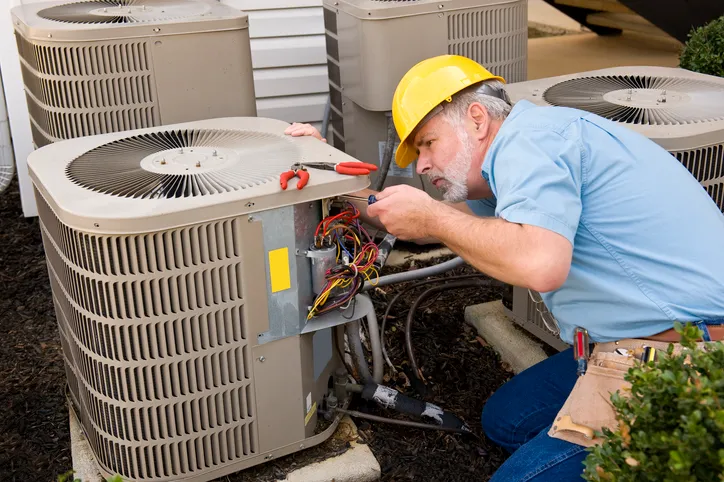
Our service technicians perform a multi-point inspection designed to catch small inefficiencies before they evolve into catastrophic failures. This process restores the system to factory specifications, ensuring that airflow, refrigerant levels, and electrical components function in unison.
Airflow and Filtration Analysis
Restricted airflow is the leading cause of compressor failure. We assess the static pressure within the ductwork and the air handler to ensure air moves freely across the evaporator coil.
- Inspection of the blower motor amp draw to ensure it is not overheating.
- Cleaning or replacement of standard air filters.
- Assessment of supply and return registers for blockages.
- Verification of zone damper operations if applicable.
Electrical Component Safety Check
Loose connections and worn electrical parts create fire hazards and cause intermittent outages.
- Tightening of all electrical connections to prevent voltage drops.
- Measurement of voltage and amperage on all motors.
- Inspection of the capacitor for bulging or inability to hold a charge.
- Testing of the thermostat calibration to ensure accurate temperature readings.
- Evaluation of the contactor for pitting or burning.
Refrigerant and Coil Optimization
The efficiency of the heat exchange process dictates your energy bills.
- Cleaning of the condenser coil to remove desert dust, sand, and debris that act as insulation.
- Inspection of the evaporator coil for mold or dust buildup.
- Measurement of refrigerant levels (Superheat and Subcooling) to ensure the system is not under or overcharged.
- Leak detection search if refrigerant levels are low.
Mechanical Integrity Inspection
Moving parts require lubrication and balance to operate quietly and efficiently.
- Lubrication of motor bearings and other moving parts to reduce friction.
- Inspection of fan blades for cracks or balance issues.
- Checking the condensate drain line for algae or sediment blockages that could cause water damage.
- Testing safety controls and limits to ensure the system shuts down properly in an emergency.
The Maintenance Process: From Scheduling to Completion
Understanding what happens during a service visit helps you plan your day. The goal is to minimize disruption to your household while maximizing the technical thoroughness of the visit.
- Scheduling and Arrival: Your appointment is confirmed with a clear time window. You receive a notification when the technician is en route to your property. Upon arrival, the technician reviews any specific concerns you have noticed regarding noise, smell, or temperature fluctuations.
- System Assessment: The technician cycles the system to observe its operation. This initial run test reveals immediate auditory or visual cues regarding the system's health. They then proceed to shut off power to the unit to safely begin the internal inspection.
- Cleaning and Calibration: This is the core of the service. Using specialized brushes and vacuums, the technician removes debris from the outdoor unit. Gauges are attached to measure pressures. Electrical meters are used to test components. Adjustments are made in real-time to bring the system back to manufacturer specifications.
- Reporting and Recommendations: Once the physical work is complete, the technician restarts the system to verify performance improvements. You receive a detailed report outlining what was done, the current status of vital components, and any recommendations for proactive repairs. This report serves as a health record for your HVAC system, which is vital for warranty validity.
Deciding Between Repair, Maintenance, or Replacement
Determining whether to invest in a tune-up, a significant repair, or a full system replacement is a financial calculation based on asset age and efficiency. While maintenance extends the life of a unit, there is a point of diminishing returns.
When to Stick with Maintenance
If your system is under ten years old and has a history of reliable performance, routine maintenance is the correct path.
- The unit maintains temperature but energy bills have slightly increased.
- The system is still under the manufacturer's parts warranty.
- You have not required a major repair (like a compressor or motor) in the last two years.
- The SEER rating is relatively close to current standards.
When to Consider Repair
Specific component failures do not always signal the end of the unit's life.
- The cost of the repair is less than 50% of the value of a new system.
- The system is between 10 and 12 years old but has been well-maintained.
- The breakdown is due to a discrete, replaceable part like a fan motor or capacitor, rather than a systemic leak or compressor failure.
When Replacement is the Logical Choice
Absolute Air Conditioning and Heating advises considering replacement when the cost of operation outweighs the cost of a new installation.
- The system utilizes R-22 (Freon) refrigerant, which is phased out and prohibitively expensive to restock.
- The unit is over 15 years old.
- You are facing a major component failure (compressor or heat exchanger).
- Your energy bills are significantly higher than neighbors with similar square footage.
- The system requires frequent repairs (more than once a season).
Regional Considerations for HVAC in the Coachella Valley
Operating an HVAC system in Palm Springs presents unique challenges that do not exist in milder climates. The extreme thermal load and environmental factors dictate specific maintenance necessities.
Extreme Thermal Load
In this region, air conditioners often run for 16 to 20 hours a day during the summer. This high runtime accelerates the wear and tear on capacitors and contactors. Standard maintenance schedules meant for coastal cities are insufficient here. We focus heavily on heat dissipation components to ensure the system doesn't overheat while trying to cool your home.
Sand and Dust Infiltration
The desert environment means airborne particulates are a constant threat. Sand and fine dust accumulate rapidly on condenser coils. When these coils are coated in dust, they cannot release heat effectively. This forces the compressor to work harder, driving up amperage and electricity costs. Frequent, professional coil cleaning is mandatory in this area to prevent premature compressor burnout.
Utility Costs and Efficiency
With some of the highest electricity rates in the country during peak usage hours, system efficiency is a financial priority. A system running at 80% efficiency due to lack of maintenance is effectively throwing money away. Calibrating the refrigerant charge and airflow ensures you are getting every BTU of cooling you pay for.
Permit and Regulation Compliance
Local building codes regarding HVAC installations and modifications are strict to ensure safety and energy conservation. When repairs turn into alterations, or when replacements are necessary, adherence to Title 24 energy standards is required. Professional providers navigate these regulatory requirements to ensure your system is compliant and your home insurance remains valid.
Technical Expertise and Service Standards
Selecting a service provider is about risk management. You need a team that understands the specific load calculations required for desert homes and has the technical certification to back up their work.
- Certified Technical Teams: Technicians undergo rigorous training and certification processes. This ensures they can diagnose complex issues involving inverter-driven compressors, communicating thermostats, and variable-speed air handlers.
- Inventory and Availability: Service trucks are stocked with universal parts and common specific components to maximize the chance of a first-visit fix. Relationships with local supply houses ensure that specialty parts can be sourced quickly to minimize downtime.
- Warranty Preservation: Most equipment manufacturers require proof of annual maintenance to honor their warranties. Professional documentation provided after every service visit ensures you remain protected if a major component fails within the warranty period.
- Safety and Liability: Hiring a licensed and insured contractor protects the homeowner from liability in case of injury on the property. It also ensures that all handling of high-voltage electricity and pressurized refrigerants is done according to safety codes.
Optimize Your Comfort and Efficiency
Delaying maintenance leads to decreased comfort, higher energy bills, and the risk of sudden failure during the hottest days of the year. A proactive approach to HVAC care protects your investment and ensures your home remains a sanctuary against the desert heat.
Secure your system’s performance today. Contact us to schedule your comprehensive maintenance service.

